






Black Gold Side Cabinet
A black gold side cabinet brings together deep ebonised surfaces and rich gilt highlights to anchor a room with architectural weight.
Black Gold Side Cabinet
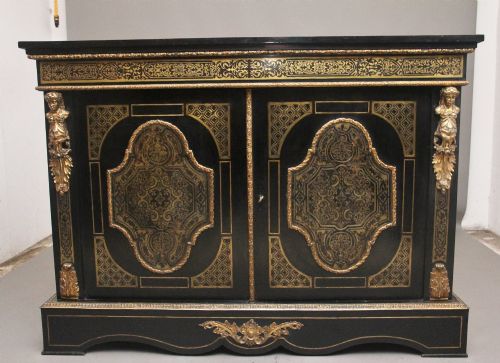
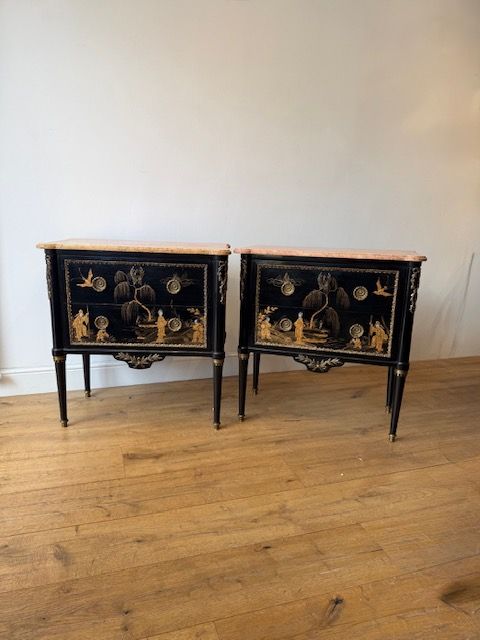
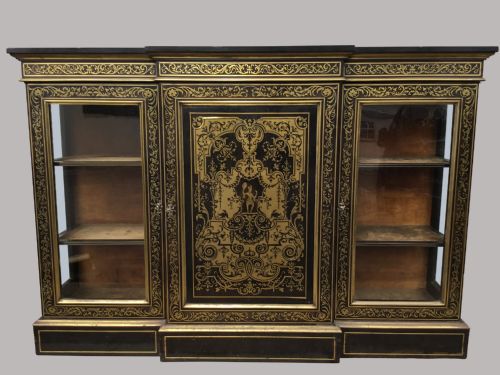
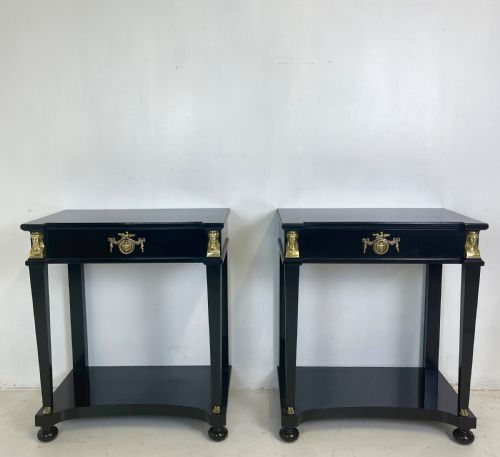
When you search for a black gold side cabinet, you are looking at nineteenth-century ebonised timber work, Victorian pier cabinets, and nineteen-twenties chinoiserie lacquered pieces. These forms range from serpentine credenzas and breakfront cabinets to cocktail cabinets and marble-topped commodes.
The version you are most likely to meet on this page is the nineteenth-century ebonised boulle cabinet mounted in ormolu, alongside French Napoleon III designs and Regency chinoiserie lacquered examples.
These items served historically to display porcelain or store precious items in formal drawing rooms, combining practical surface space with dramatic visual presence.
Materials and construction methods
Construction relies heavily on ebonised wood and ebony foundations enriched with brass and tortoiseshell boulle marquetry, or finished with lacquered chinoiserie schemes.
Mounts of ormolu, gilt bronze, and gilt metal provide structural framing and decorative accents, frequently paired with inset marble tops or ceramic plaques.
Current listings feature pieces spanning the Regency period, the Victorian era, and nineteen-twenties Art Deco.
Assessing quality and execution
The distinction between tiers rests upon the precision of the brass inlay work, the crispness of the gilt bronze mounts, and the depth of the ebonised finish.
Superior examples demonstrate meticulous hand-chiselling on metal mounts and stable, seamless joinery across complex breakfront or serpentine carcases.
The Black Gold Side Cabinet Glossary
- Ebonised wood
- Timber stained or treated to imitate dense, black ebony. This dark finish became immensely popular during the nineteenth century for furniture requiring high contrast with metallic mounts.
- Boulle marquetry
- An elaborate form of marquetry developed by André-Charles Boulle utilising precise cut-outs of brass and tortoiseshell. The technique creates interlocking patterns of dark ground and metallic gleam.
- Ormolu
- Gilded bronze used extensively for mounts and decorative trim on nineteenth-century cabinetry. The process involves applying a mercury and gold amalgam to bronze before firing.
- Chinoiserie
- European theatrical interpretations of Chinese and East Asian artistic traditions. It appears on lacquered cabinets and chiffoniers with characteristic painted motifs.
- Pier cabinet
- A narrow display cabinet specifically designed to stand against the wall space between windows. These pieces often feature glass doors and velvet-lined interiors.
Black Gold Side Cabinet: Frequently Asked Questions
Where should I place a side cabinet?
These pieces suit living rooms, hallways, or dining spaces where their dark finishes and metallic mounts create a focal point against neutral walls. Their narrow proportions often allow them to sit comfortably in transitional architectural spaces.
Ensure the piece is protected from direct sunlight to preserve the ebonised surfaces and delicate marquetry work over time.
How do I care for ebonised wood?
Dust regularly with a soft, dry cloth and avoid modern aerosol polishes that can build up a residue on the dark finish. Keep the timber away from direct heat sources to prevent shrinkage or cracking.
Periodic application of appropriate wax maintains the lustre of the wood without harming the surrounding metal mounts.
What is a credenza?
A credenza is a low-profile cabinet historically used for serving food or displaying decorative objects. Nineteenth-century versions frequently incorporate serpentine fronts and rich ormolu mounts.
They offer substantial surface area and enclosed storage, making them practical for modern living areas.
How do I identify Napoleon III furniture?
Napoleon III pieces date from the mid-to-late nineteenth century and frequently draw inspiration from earlier French royal styles. Look for ebonised finishes, elaborate boulle work, and heavy gilt metal mounts.
These designs prioritise visual opulence and decorative presence over strict historical revivalism.