




Antique Boulle Marquetry
Antique boulle marquetry pieces combine rich tortoiseshell and gleaming brass inlay on dark wood, bringing unmistakable nineteenth-century French splendour to a room.
Antique Boulle Marquetry
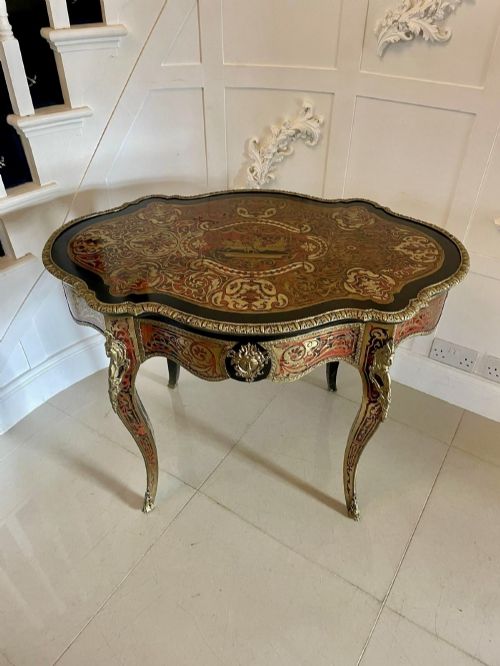
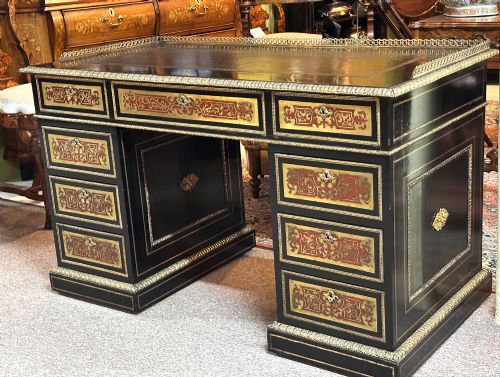
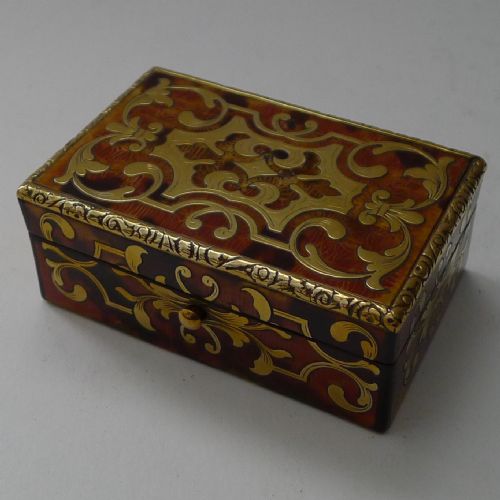
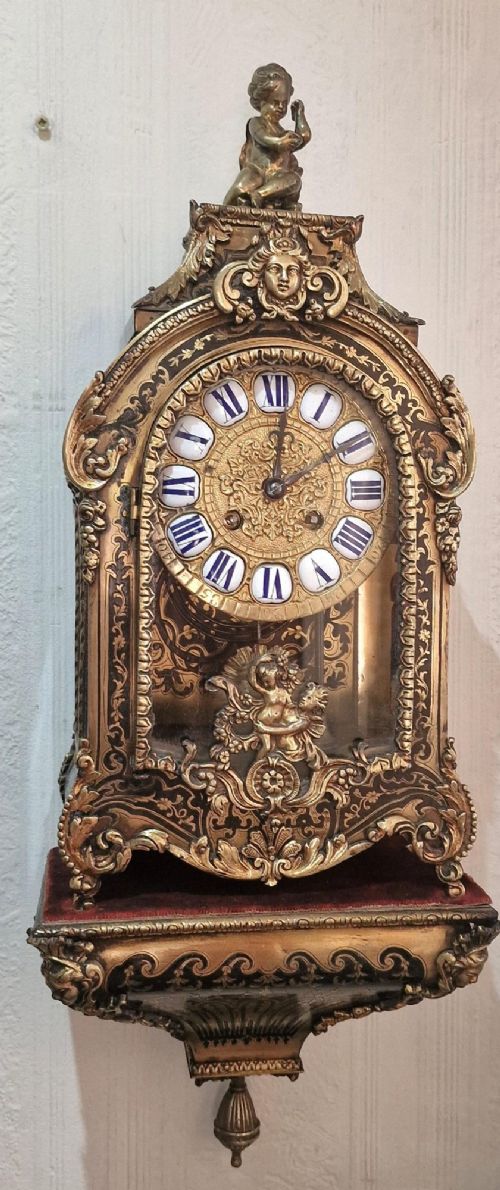
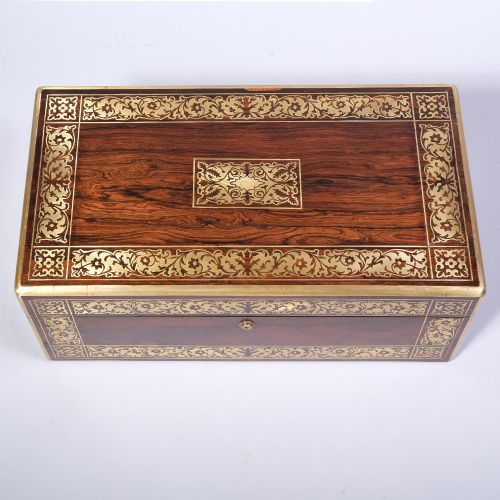
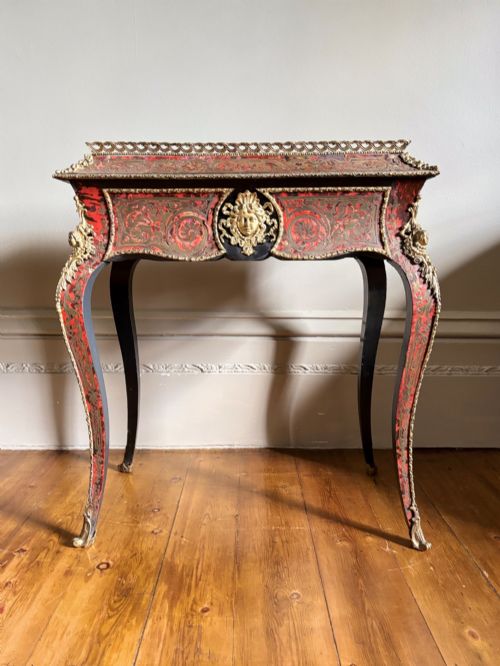
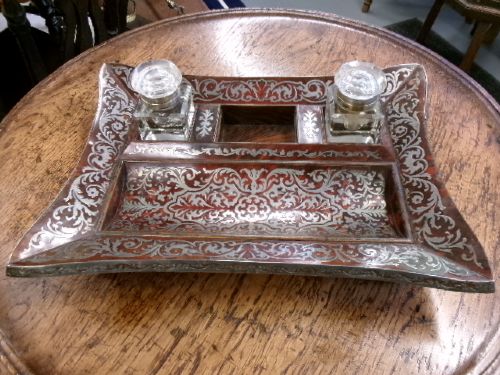
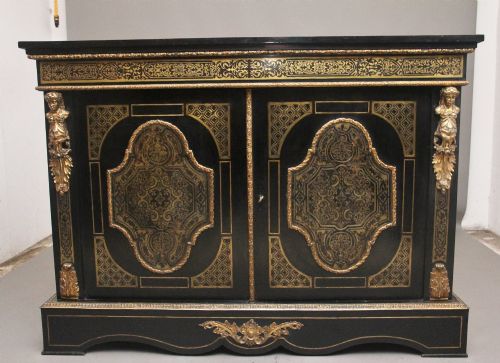
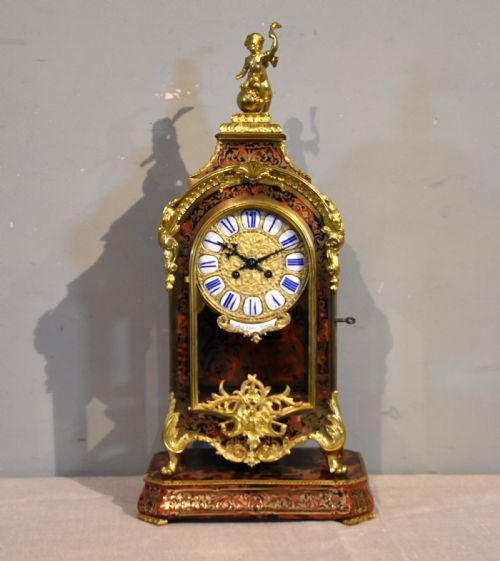
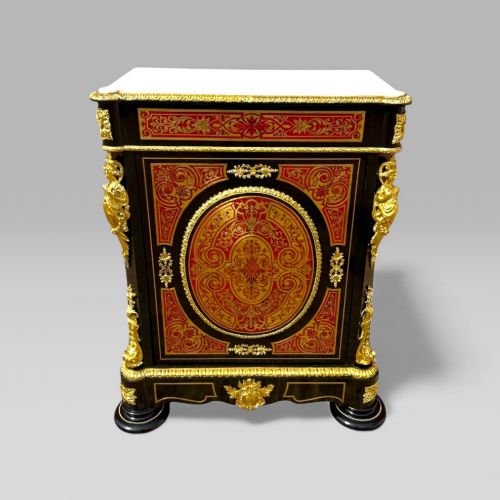
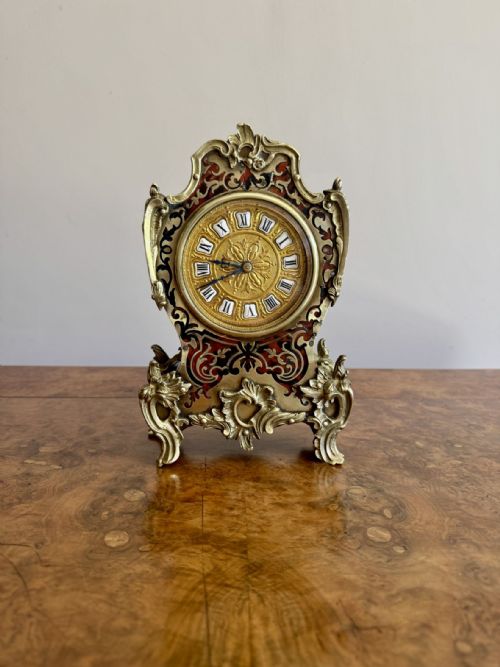
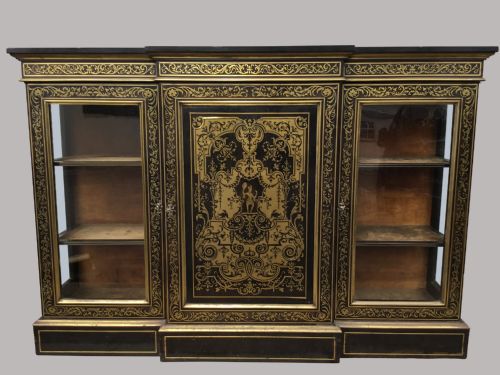
Antique boulle marquetry pieces encompass substantial furniture and smaller decorative objects shaped by nineteenth-century French taste. Centre tables, mantel clocks, pier cabinets and writing boxes dominate the items encountered here.
The aesthetic draws heavily on Napoleon III and Louis XV revival styles, often pairing ebonised or rosewood carcases with elaborate metallic ornamentation. These works originated primarily in French workshops and nineteenth-century English interpretations.
How They Were Made
Craftsmen cut intricate patterns from thin sheets of brass and tortoiseshell, frequently using counter-changed techniques known as premiere partie and contre-partie. These delicate veneers were then applied to ebonised wood or rosewood foundations.
Gilded bronze or ormolu mounts punctuated corners and borders, while glass panels framed display cabinets and clocks housed precise eight-day movements.
The listings on this site feature nineteenth-century dates such as 1850, 1860, 1870, and 1880 alongside Victorian-era pieces.
What Varies in Quality
The precision of the brass and tortoiseshell cutting dictates the crispness of the ornamental motifs. Finer examples display seamless integration between the metal inlay and the surrounding organic shell without excessive filler.
Casting quality in the ormolu mounts separates standard production from superior cabinetwork, as do the depth of the timber carcase and the original integrity of the clock movements or interior fittings.
Henri Marc·Maison Millet·Edwards & Roberts·Samuel Marti·Asprey
The Antique Boulle Marquetry Glossary
- Boulle marquetry
- A decorative technique using cut brass and tortoiseshell inlaid into wood, named after André-Charles Boulle. It creates a contrasting metallic and organic surface pattern.
- Ormolu
- Gilded bronze used for mounts and decorative trims on furniture and clocks. The technique involves applying a mercury-gold amalgam to cast bronze.
- Ebonised wood
- Timber treated to resemble ebony, providing a dark contrast to bright brass inlay. This finish is typical of nineteenth-century French furniture.
- Pier cabinet
- A low cabinet designed to stand against a wall pier between windows. These often feature glass doors and elaborate ormolu mounts.
Antique Boulle Marquetry: Frequently Asked Questions
How do I clean antique boulle marquetry?
Dust surfaces gently with a soft, dry cloth to protect the delicate brass and tortoiseshell inlay. Avoid chemical polishes or excessive moisture, which can loosen the animal glues holding the veneer.
Apply specialised wax very sparingly only when the wood appears dry. Professional conservation is recommended if any pieces of metal or shell begin to lift.
Where should I place a boulle clock?
Keep mantel clocks away from direct sunlight and damp environments to protect the organic tortoiseshell veneer. A stable mantelpiece or wall bracket provides the necessary support for mechanical clock movements.
Ensure the surface is completely level so the pendulum swings evenly and keeps accurate time.
How do I identify a Napoleon III boulle piece?
Look for dense brass and tortoiseshell marquetry applied to ebonised carcases, accompanied by ornate ormolu mounts. This nineteenth-century revival style borrows heavily from earlier Louis XIV and Louis XV designs.
Cabinet work from this era often includes serpentine fronts, glazed display doors, and rich surface ornamentation.