


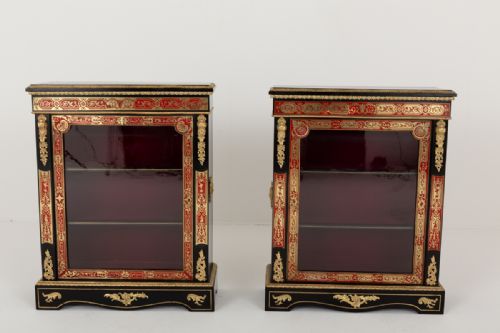


Glazed Boulle Cabinet
A glazed boulle cabinet brings together tortoiseshell, brass marquetry and ebonised wood to create a striking display piece for a formal interior.
Glazed Boulle Cabinet
When you search for a glazed boulle cabinet, you encounter nineteenth-century French and Victorian display furniture designed to showcase treasured possessions behind glass doors. The pieces seen here span the mid to late nineteenth century, including the eighteen-fifties, eighteen-sixties, eighteen-seventies and eighteen-eighties.
Forms on this page include pier cabinets, credenzas, side cabinets, display cabinets and bookcases. Many survive as pairs, offering symmetrical proportions for grand drawing rooms and reception spaces.
The dominant styles reflect Napoleon III and French Revival influences, capturing the ornate decorative tastes of the Victorian era. These cabinets function primarily as focal points in a room while protecting delicate objects from dust.
How they were made
Constructed from ebonised wood as a dark foundation, these cabinets feature intricate brass and tortoiseshell marquetry, known as boulle work. The contrasting metals and organic shell materials catch the ambient light from multiple angles.
Gilded ormolu mounts punctuate the corners, edges and feet, providing structural framing and sculptural relief. Glass panels insert into the doors to complete the display function while interior velvet linings cushion the shelving surfaces.
Every single piece manages to house your finest porcelain behind glass while quietly showing off tortoise shells to nosy guests.
What varies in quality
The refinement of the brass and tortoiseshell inlay dictates the visual sophistication of a glazed boulle cabinet. Finer examples display meticulous cutting where the intricate scrollwork fits together with minimal filler.
The weight and crispness of the cast ormolu mounts also separate standard productions from superior works. Heavier, more detailed bronze mounts with clear chasing demonstrate greater workshop investment.
The Glazed Boulle Cabinet Glossary
- Boulle
- A form of marquetry developed in France using brass and tortoiseshell inlaid into wood, named after cabinetmaker André-Charles Boulle.
- Ormolu
- Gilded bronze used for decorative mounts and furniture trim during the nineteenth century.
- Ebonised
- Wood treated with a dark finish to imitate expensive ebony.
- Pier cabinet
- A narrow cabinet designed to fit against the wall space between windows.
- Marquetry
- Decorative patterns formed by inserting pieces of contrasting material into a wood veneer.
Glazed Boulle Cabinet: Frequently Asked Questions
Where should I place a glazed boulle cabinet?
These cabinets suit drawing rooms, studies or hallways where their reflective brass and tortoiseshell surfaces can catch indirect light. They require stable environmental conditions away from direct sunlight and excessive heat.
Positioning them against a solid wall allows the ebonised wood and ormolu mounts to stand out clearly within the room.
How do I clean the glass and ormolu?
Dust the exterior gently with a dry, soft cloth to protect the delicate brass marquetry and tortoiseshell veneer from moisture damage. Avoid harsh chemical cleaners that might strip the gilded ormolu mounts.
Use a mild, approved glass cleaner applied to a cloth rather than sprayed directly onto the door panels to protect the surrounding wood.
Can I store heavy books inside?
Most pier cabinets and display pieces feature lightweight internal shelving intended for porcelain, glassware and decorative objects. Placing heavy volumes inside risks bowing the internal wooden boards.
Bookcases specifically designed for storage handle heavier paper loads, but standard display cabinets are better suited for lighter curiosities.
How do I identify a Napoleon III cabinet?
Napoleon III pieces often combine ebonised wood with profuse brass boulle marquetry and elaborate ormolu mounts. The styling draws heavily on earlier French royal aesthetics revived during the nineteenth century.
Look for serpentine fronts, glazed side panels and characteristic tortoiseshell ground work associated with this imperial period.
Why do some cabinets come as pairs?
Grand nineteenth-century reception rooms frequently utilised symmetrical furniture layouts flanking fireplaces or large windows. Workshops produced matching pier cabinets or credenzas to satisfy this demand for balanced interior design.
Surviving pairs share identical proportions, wood tones and marquetry patterns created alongside one another in the workshop.