




Brass and Tortoiseshell Cabinet
A brass and tortoiseshell cabinet brings rich nineteenth-century French and Spanish warmth into a room through elaborate marquetry.
Brass and Tortoiseshell Cabinet
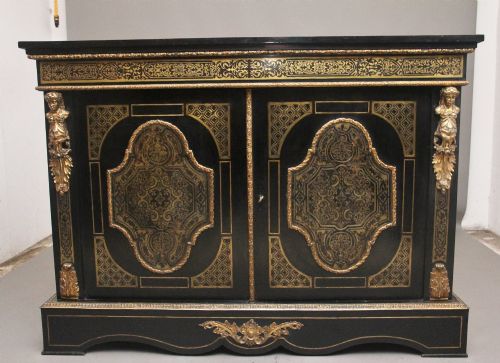
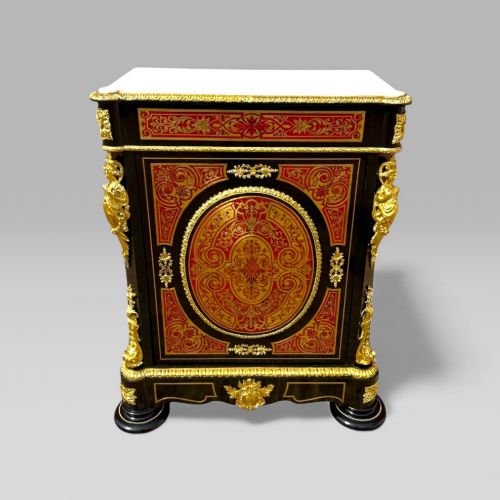
When you search for a brass and tortoiseshell cabinet, you encounter nineteenth-century European case furniture dominated by French Napoleon III, Victorian Boulle Revival, and Louis XVI styles. These pieces range from compact pier cabinets and side cabinets to grand credenzas, bibliotheques, and writing desks like the bonheur du jour.
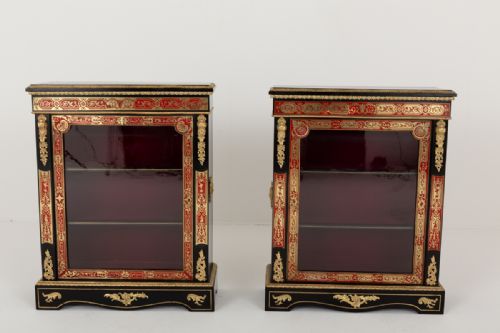
The version you are most likely to meet on this page is the ebonised wood pier cabinet or credenza decorated with tortoiseshell and brass inlay. Originating largely from French workshops of the eighteen-fifties, sixties, and seventies, these forms often feature serpentine fronts and glass doors for display.
The lineage stretches back to earlier seventeenth-century Antwerp cabinet work and Spanish Baroque examples on stands, though nineteenth-century revivals command the majority of the current selection. Buyers choose them to anchor a formal reception room or library with strong contrasting metallic and amber tones.
Materials and Construction
Artisans constructed these cabinets using a dense timber core, predominantly ebonised wood or rosewood, which provided a dark, light-absorbing background for the metal and shell. Upon this framework, they applied elaborate marquetry using thin sheets of tortoiseshell and brass cut in opposing pairs.
The technique, known as boulle work, involved sandwiching sheets of brass and tortoiseshell together, cutting intricate scrollwork patterns with a fine saw, and separating the positive and negative pieces to create contrasting panels. Ormolu mounts and gilt bronze details were then cast and chased to protect the vulnerable edges and corners of the cabinet.
Interiors frequently incorporated velvet linings, glass shelving, and marble tops on the upper surface to complete the piece. Cabinet makers employed precision joinery to accommodate the seasonal movement of wood beneath the delicate veneer.
Listings demonstrate that ebonised wood serves as the primary ground timber for nineteenth-century brass and tortoiseshell cabinets.
Assessing Quality and Execution
Quality in a brass and tortoiseshell cabinet rests upon the crispness of the brass cutting and the tightness of the marquetry fit. Superior pieces display flowing, uninterrupted scrollwork where the metal and shell meet without perceptible gaps or excessive filler.
The weight and chasing of the ormolu mounts further distinguish the tier of craftsmanship. Finer cabinets feature deeply sculpted, fire-gilded bronze mounts that integrate harmoniously with the cabinet contours, rather than thin, unrefined brass stampings.
The selection of the tortoiseshell itself, showing rich amber warmth and deep mottling beneath the polished surface, indicates a higher grade of material. Structural integrity of the ebonised carcase and the original matching of the tortoiseshell panels complete the assessment.
The Brass and Tortoiseshell Cabinet Glossary
- Boulle work
- A method of marquetry combining brass and tortoiseshell, named after André-Charles Boulle, the master cabinetmaker to Louis XIV. This technique creates contrasting patterns of metallic gold against dark amber and black.
- Pier cabinet
- A low or tall display cabinet designed specifically to fit the narrow wall space between windows. These are frequently glazed and mounted with ormolu.
- Credenza
- A sideboard or low storage cabinet, often featuring central glass doors flanked by curved side compartments. In nineteenth-century revivals, these served both decorative and display functions.
- Bonheur du jour
- A light lady's writing desk featuring a small cabinet, drawers, or pigeonholes mounted upon the upper surface. These combine a practical writing surface with intricate surface decoration.
- Ormolu
- Gilt bronze mounts applied to furniture edges, feet, and friezes. The term derives from the French for milled gold.
Brass and Tortoiseshell Cabinet: Frequently Asked Questions
Where should I place a brass and tortoiseshell cabinet?
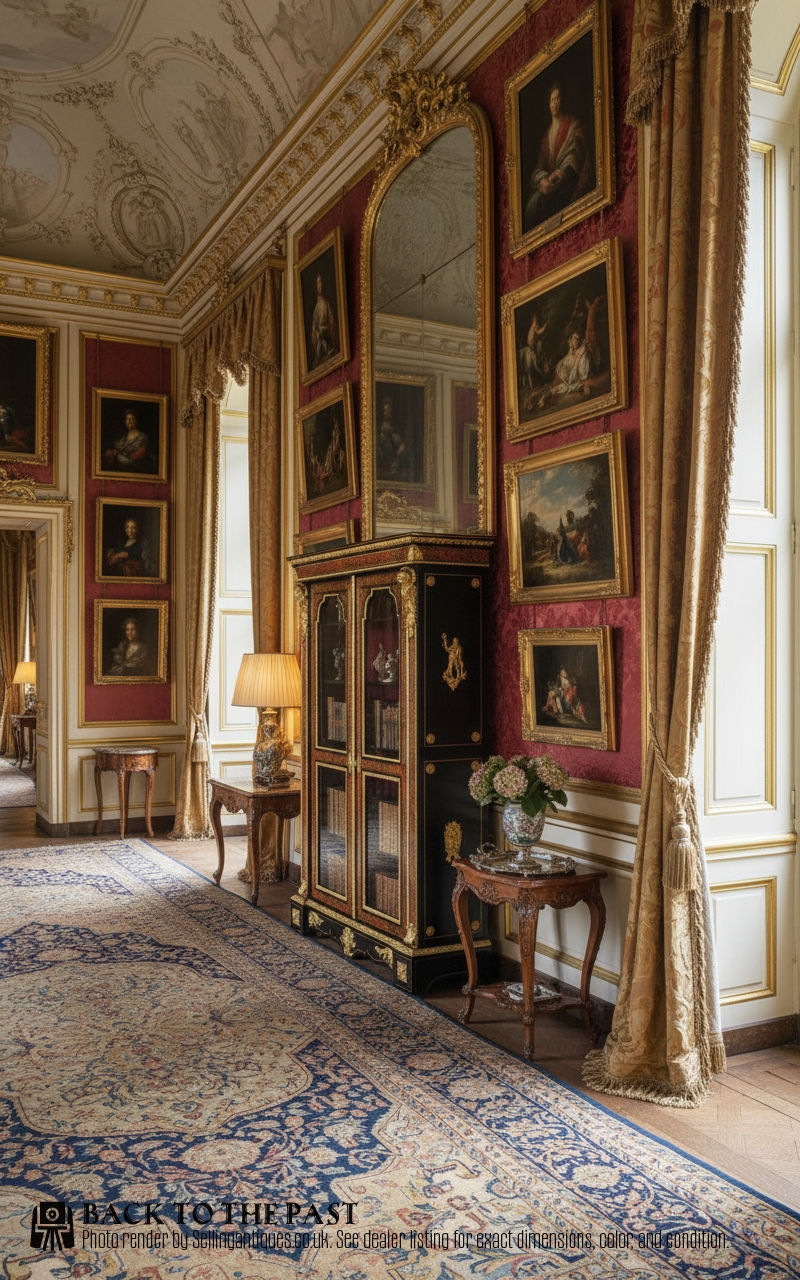
These cabinets suit reception rooms, drawing rooms, or studies where indirect lighting can catch the polished brass and amber shell without exposing the surfaces to direct, harsh sunlight. Placing them against a neutral wall allows the dark ebonised wood and metallic inlay to stand out properly.
Because many examples feature glass doors or open shelving, they work effectively to display small collections of ceramics or glass while adding period character to the interior scheme.
How do I care for tortoiseshell and brass?
Maintain the surfaces by dusting gently with a soft, dry cloth and avoiding any modern chemical polishes or abrasive cleaners. Tortoiseshell is sensitive to sudden changes in humidity and temperature, so keep the cabinet away from direct heat sources.
Occasional application of microcrystalline wax by an experienced conservator can help protect the wood and metal without harming the delicate shell inlay.
What is the difference between Napoleon III and Victorian Boulle?
Napoleon III Boulle refers to pieces made in France during the Second Empire, which closely followed original seventeenth-century Parisian models with high precision and rich ormolu casting. Victorian Boulle encompasses British interpretations of the same style, which often adopted slightly heavier proportions and local cabinetmaking conventions.
Both styles utilise ebonised wood and tortoiseshell, but French Napoleon III items generally display lighter, more fluid bronze mounts and finer marquetry execution.
How do I identify a nineteenth-century revival piece?
Nineteenth-century revival pieces exhibit construction methods, secondary timbers, and screw types consistent with Victorian or Second Empire workshops rather than the seventeenth century. Look for machine-cut elements combined with hand-chasing on the bronze mounts, alongside timber shrinkage patterns typical of nineteenth-century seasoning.
The presence of ebonised fruitwood and standardised lock mechanisms also points toward the nineteenth-century Boulle Revival period.