


Ebonised Brass Cupboard
An ebonised brass cupboard brings dark timber and bright metalwork together, offering a striking display piece for the home.
Ebonised Brass Cupboard
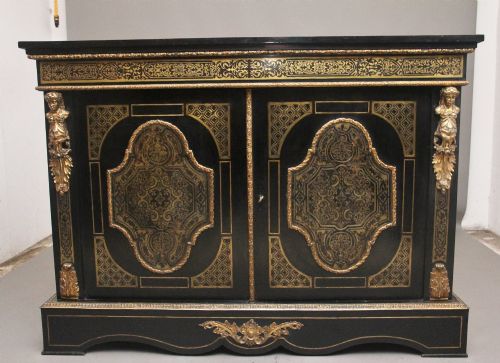
An ebonised brass cupboard combines dark stained woodwork with gleaming metal mounts, creating a strong visual contrast that defined several distinct nineteenth-century styles. The selection here leans heavily towards Victorian and French Napoleon III pier cabinets, side cabinets, and display pieces featuring intricate brass detailing.
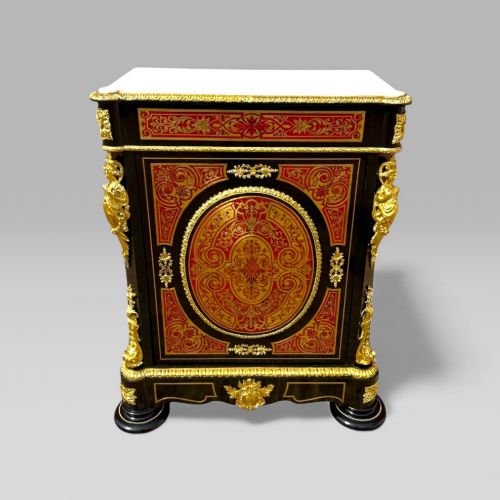
Makers utilised dark finishes to imitate expensive ebony, pairing the deep surfaces with gilt bronze, ormolu, and tortoiseshell inlay. Buyers will encounter various forms ranging from music cabinets and table cabinets to large display furniture topped with marble.
Originating largely from the nineteenth century, these cabinets reflect the period's taste for revivalism and elaborate surface decoration. Pieces often incorporate glass panels and ceramic plaques alongside traditional timber structures.
How they were made
Craftsmen built these cabinets using timber finished with an ebonised coating to achieve a uniform, deep black surface. Artisans then applied brass mounts, gilt-metal framing, and tortoiseshell inlay to punctuate the dark wood with reflective detail.
Advanced workshops employed marquetry and boulle techniques, setting brass and tortoiseshell into the timber base before adding cast ormolu details. Marble tops and glass doors completed the construction, adding weight and refined texture to the finished furniture.
Listings span from the 18th Century to the 1930s, uniting French Napoleon III, Victorian, and Aesthetic Movement designs.
What varies in quality
The precision of the brass inlay and the crispness of the cast ormolu mounts distinguish finer examples from standard production pieces. Superior cabinets display meticulous hand-chiselling on the metal elements and seamless integration of tortoiseshell panels within the ebonised timber.
Construction depth also dictates standing, with better items featuring substantial marble tops, intact Sevres porcelain plaques, and robust internal shelving. The quality of the ebonised finish itself matters, alongside the preservation of delicate Boullework across the doors and sides.
Henry Ogden and Son
The Ebonised Brass Cupboard Glossary
- Ebonised
- Timber treated to resemble expensive ebony through staining or painting. This finish became widespread during the Victorian and Napoleon III periods for dramatic contrast.
- Boulle
- An elaborate form of marquetry using brass and tortoiseshell inlaid in opposing positive and negative patterns. It is named after the master cabinetmaker André-Charles Boulle.
- Ormolu
- Gilded bronze used for decorative mounts and feet on furniture. The technique involves applying a gold amalgam to cast bronze before heating.
- Pier Cabinet
- A narrow display or storage cabinet designed specifically to fit the wall space between windows. These pieces frequently feature glass doors and rich brass mounts.
Ebonised Brass Cupboard: Frequently Asked Questions
What is an ebonised brass cupboard?
An ebonised brass cupboard is a piece of furniture made from dark-finished timber and decorated with brass mounts, inlay, or gilt-metal detailing. These cabinets often feature glass doors or display surfaces designed to showcase collections.
Originating mostly in the nineteenth century, they draw upon French Napoleon III and Victorian design traditions, incorporating materials like tortoiseshell and marble.
How do I identify a Napoleon III cabinet?
Napoleon III cabinets typically display rich boulle marquetry, combining tortoiseshell and brass inlay against a black ebonised background. They frequently feature elaborate ormolu mounts and curved serpentine fronts.
These pieces emerged during the French Second Empire, reflecting an opulent revival of earlier royal styles with an emphasis on surface ornamentation.
Where should I place a pier cabinet?
A pier cabinet fits well in narrow wall spaces, hallways, or living rooms where floor space is limited. Their shallow depth allows them to sit flush against walls without dominating the room.
Many incorporate glass panels or velvet-lined interiors, making them suitable for displaying small ceramics, glassware, or books.
How do I care for ebonised wood?
Care for ebonised wood by dusting gently with a soft, dry cloth and avoiding direct sunlight or excessive moisture. Harsh chemical cleaners can damage the dark finish and underlying polish.
Protect the brass mounts and ormolu details from humidity to prevent tarnishing, applying wax polish sparingly only when the timber appears dry.