



Black Glass Vase
A black glass vase brings striking contrast to a room, ranging from sleek Art Deco geometry to rich Victorian enamelling.
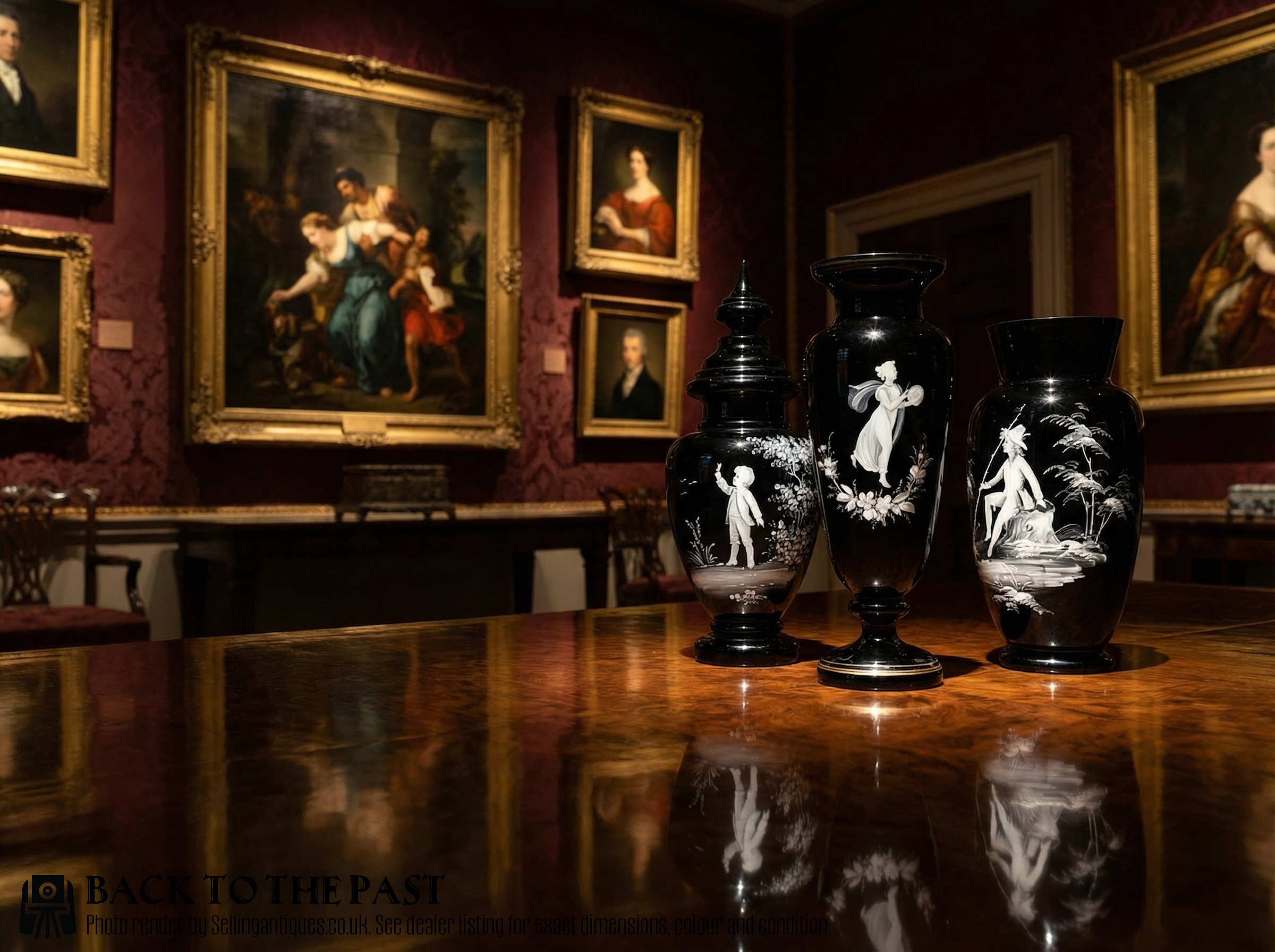
Black Glass Vase
A black glass vase serves as a dramatic decorative vessel, with examples appearing across various periods including the nineteenth century and the nineteen-thirties. Buyers searching for a black glass vase encounter diverse forms ranging from tall geometric shapes to square vessels and table centrepieces.
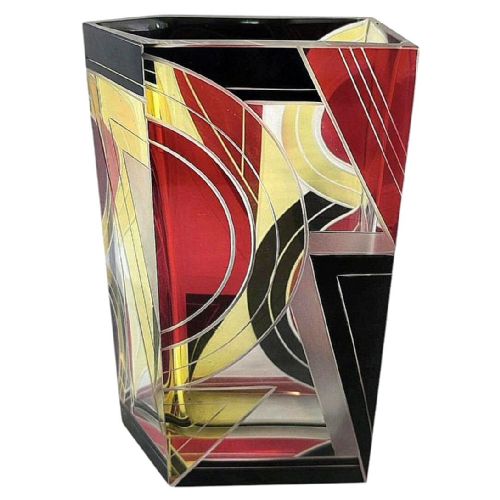
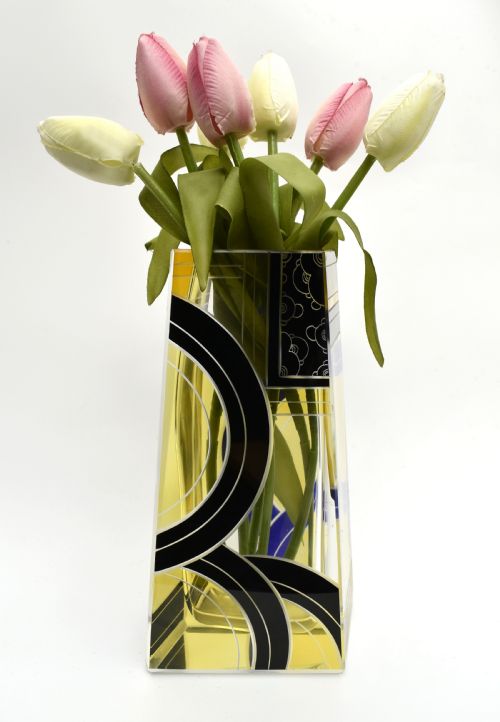
The selection on this page leans heavily towards the Art Deco era, featuring Czech designs alongside nineteenth-century Victorian and earlier pieces. These items include both simple opaque glass forms and elaborate vessels adorned with enamel and etching.
Assessing quality and execution
Quality rests upon the precision of the glassforming and the execution of the surface decoration. Crisp geometric etching and neatly applied enamel separate finer works from simpler production pieces.
The reputation of the designer or maker, alongside the complexity of the glass body such as deeply etched surfaces, elevates the standing of an individual piece.
Listings span from the seventeenth century through to the Art Deco period of nineteen-thirty, utilising blown glass, enamel, and carved wood.
Jean Luce·Karl Palda·Paul Heller·Booms glass·Loetz·Harrach·Galle·Baccarat·Mary Gregory
The Black Glass Vase Glossary
- Hyalite glass
- An opaque black or coloured glass developed in the nineteenth century, often associated with Bohemian manufacture. It mimics the appearance of polished stone.
- Epergne
- A large table centrepiece featuring multiple branches or receptacles for holding fruit, flowers, or sweetmeats. Nineteenth-century examples often combine carved wood stands with glass bowls.
- Enamel decoration
- A fused glassy substance applied to the surface of the glass for colour and pattern. It is fired to achieve a permanent bond with the vessel.
- Cameo glass
- A technique involving multiple layers of glass fused together, where top layers are carved away to reveal a contrasting background. This method creates high relief imagery.
Black Glass Vase: Frequently Asked Questions
How do I clean a vintage glass vase safely?
Wash the vessel gently by hand using lukewarm water and mild washing-up liquid. Avoid abrasive sponges that might scratch delicate enamel or etched surfaces.
Dry the piece thoroughly with a lint-free cloth. Take extra care with painted or enamelled areas to preserve the historic finish.
How do I distinguish Art Deco pieces from Victorian ones?
Art Deco examples typically display sharp geometric lines, stylised motifs, and streamlined silhouettes characteristic of the nineteen-thirties. Czech manufacturers frequently produced these clean, modernist shapes.
Victorian pieces tend to feature heavier proportions, hand-painted floral details, or elaborate enamelling. Their overall aesthetic reflects the ornate tastes of the nineteenth century.
What is Hyalite glass?
Hyalite is an opaque glass type, often found in deep black, developed in nineteenth-century Bohemia. It was designed to resemble polished jet or obsidian stone.
Makers utilised this dense material for vases and table wares, frequently enhancing the dark surface with gilt or enamel decoration.