


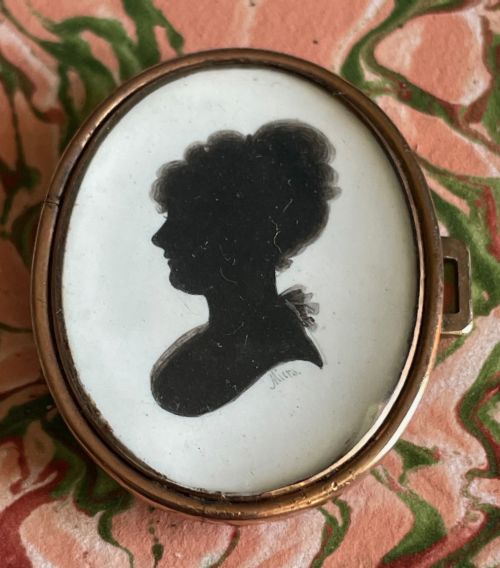

Black Framed Miniature
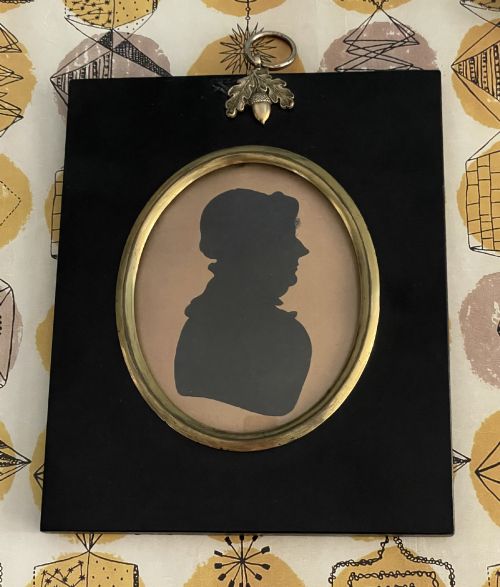
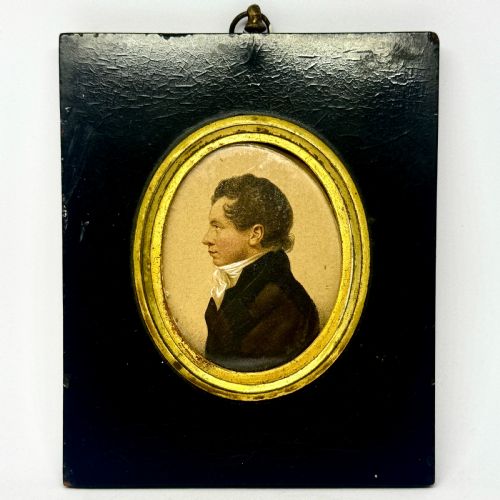
A black framed miniature packs intense portraiture into a tiny compass, offering a direct glance from the eighteenth or nineteenth century.
Black Framed Miniature
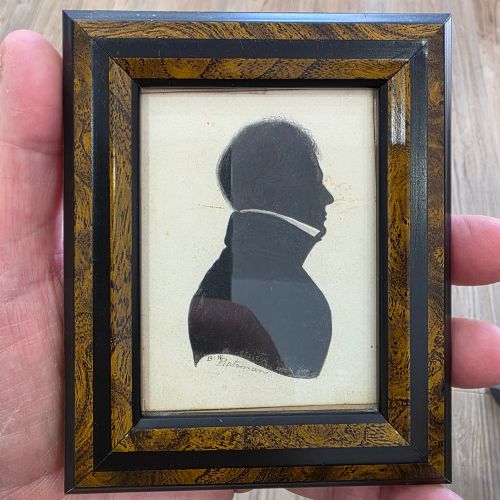
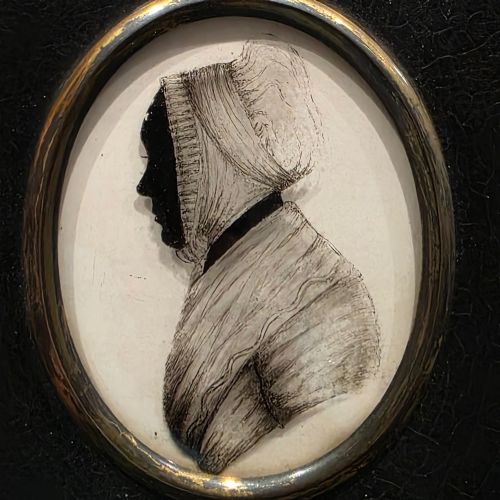
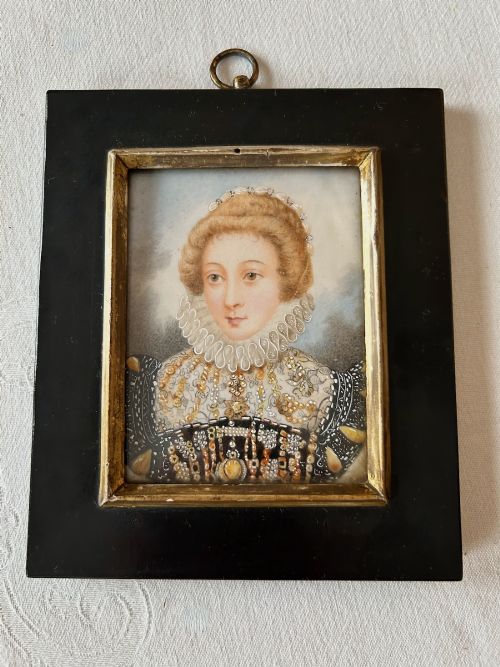
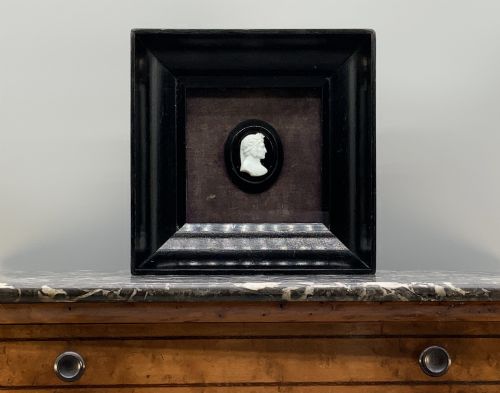
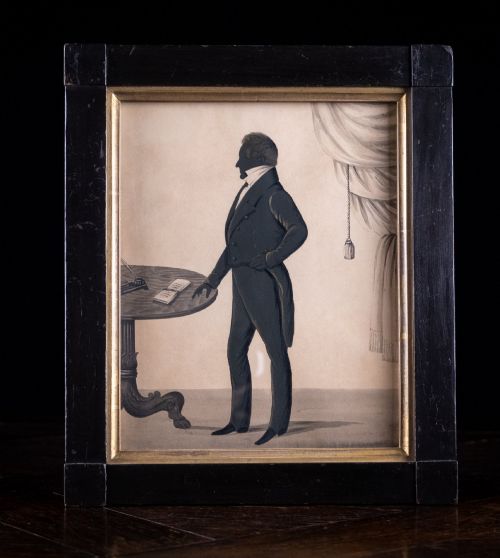
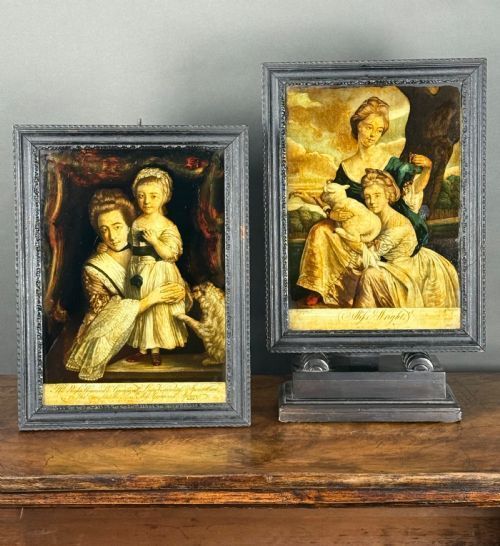
A black framed miniature brings together small-scale portraiture and dark enclosing borders, spanning the Georgian, Regency, and Victorian periods. You will regularly encounter silhouettes cut from paper, painted on glass, or pressed in plaster, alongside delicate watercolours and plumbago drawings.
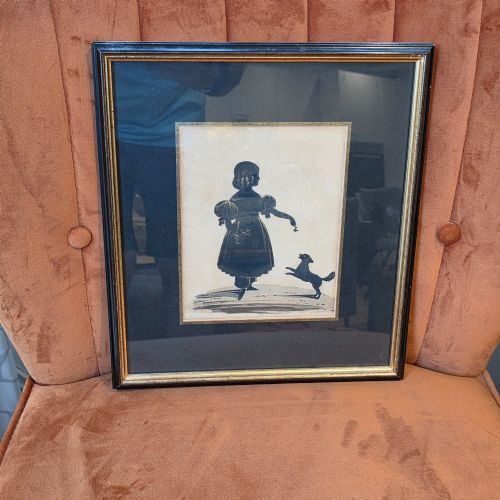
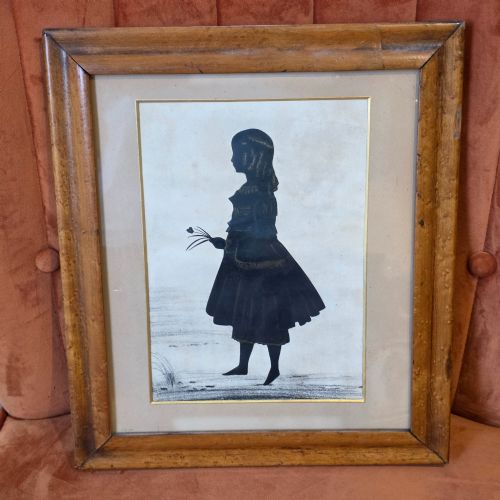
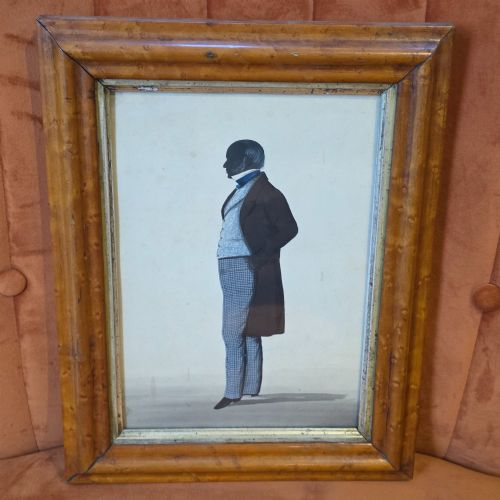
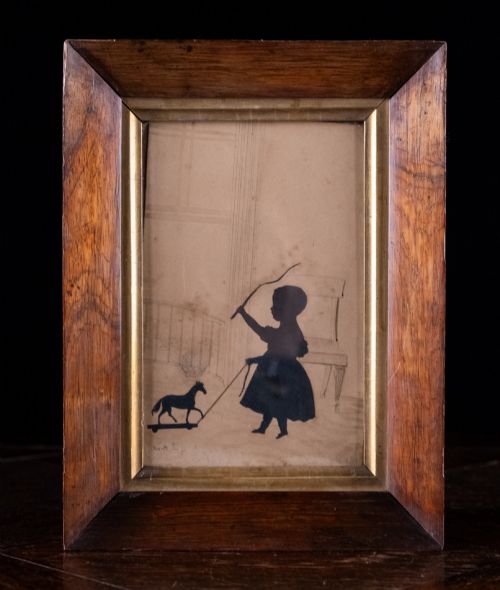
These pieces take the form of wall art, portrait miniatures, and silhouette portraits housed in tight ebonised wood or dark frames. The selection includes works from British and American schools, depicting individuals ranging from named sitters to charming studies of children and animals.
The prevailing style relies on the stark contrast of dark profiles against pale backgrounds, often touched with gold leaf to highlight costume details. These intimate objects were designed to be hung closely in small groups or kept near desks and boudoirs.
How They Were Made
Silhouettes were hand-cut with scissors or painted directly onto convex glass or plaster grounds. Frames were often turned from timber and finished with deep black ebonising to throw the pale portrait forward.
Dogs and children frequently shared the sitter's chair, immortalised in cut paper alongside their owners.
What Varies in Quality
The standard of a black framed miniature rests on the precision of the cutting or the sureness of the brushwork in the facial profile. Skilled hands capture likeness and character with minimal strokes, while simpler versions lack nuance in costume and expression.
The preservation of the original glass, backing paper, and period frame elevates a piece. Faded pigments or later replacement frames alter the integrity of the object compared to untouched examples from the eighteenth and nineteenth centuries.
William James Hubard·Henri Fradelle·George Atkinson·Henry Bone ARA·James Gillespie·Augustin Edouart·John Miers·Frederick Buck·John Taylor·Thomas London·J. Deacon·James Ferguson·Archibald Skirving
The Black Framed Miniature Glossary
- Ebonised Wood
- Timber treated to resemble dark ebony, commonly used for the narrow frames surrounding silhouettes and miniature portraits.
- Plumbago
- A drawing executed in graphite, taking its name from the Latin word for lead, widely used for fine Georgian portraiture.
- Reverse Glass Painting
- An artwork applied to the rear side of a glass panel so the image is viewed through the transparent front.
- Silhouette
- A profile portrait filled in with a solid dark colour, typically black, contrasted against a lighter background.
- Miniature Portrait
- A small-scale painting executed with intense fine detail on ivory, vellum, card, or paper.
Black Framed Miniature: Frequently Asked Questions
How do I hang them?
These small pieces look best grouped closely together on a wall rather than spaced widely apart. Their dark borders help anchor a cluster of mixed portrait types.
Keep them away from direct sunlight to protect fragile watercolours and paper silhouettes from fading.
Were they worn as jewellery?
Some smaller examples were made to be worn or carried as personal mementoes. Artists mounted them into specialised cases or settings.
Most surviving pieces, however, were framed for hanging in private rooms.
How are silhouettes dated?
Clothing styles, hairstyles, and framing techniques provide the clearest clues to the period. Gentlemen's tailcoats and ladies' bonnets shift noticeably between the Georgian and Victorian eras.
Signature styles of known cutters also help narrow down the decade.
What is plumbago?
Plumbago is an early form of graphite drawing used for highly detailed monochromatic portraits. Artists achieved remarkable facial depth using only fine grey lines.
These works frequently date from the eighteenth century and appear in tight frames.