
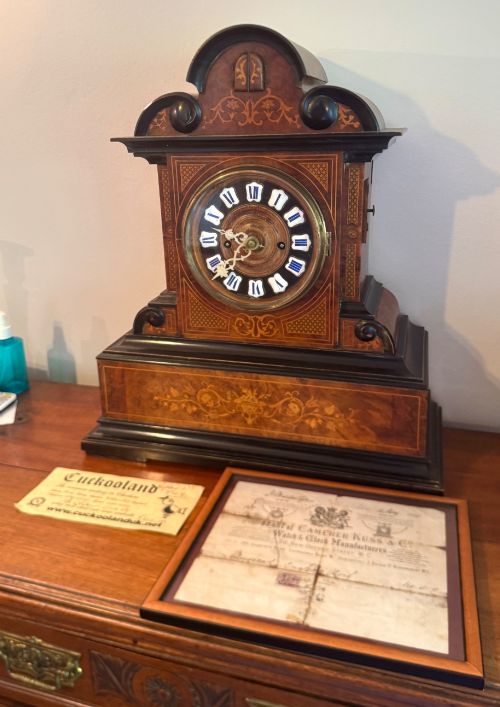
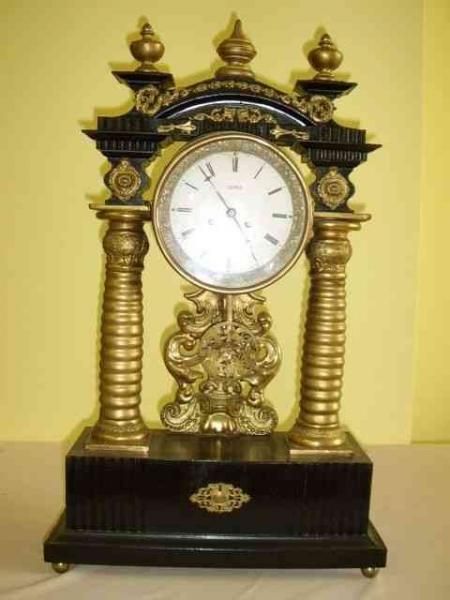
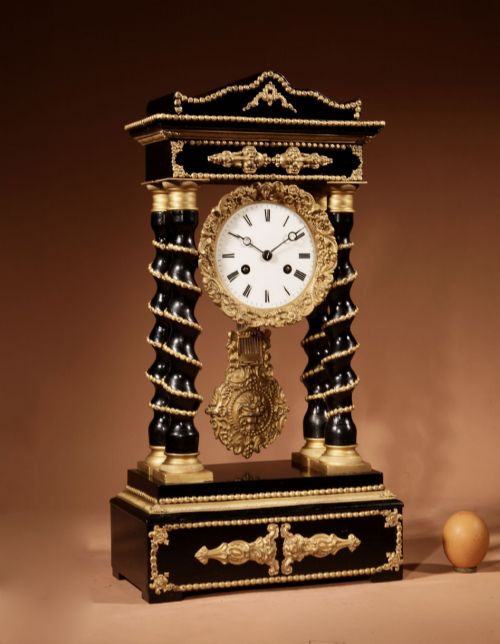


Black Ebonised Mantel Clock
A black ebonised mantel clock delivers architectural presence and mechanical precision, anchoring a room with dark wood and bright metal.
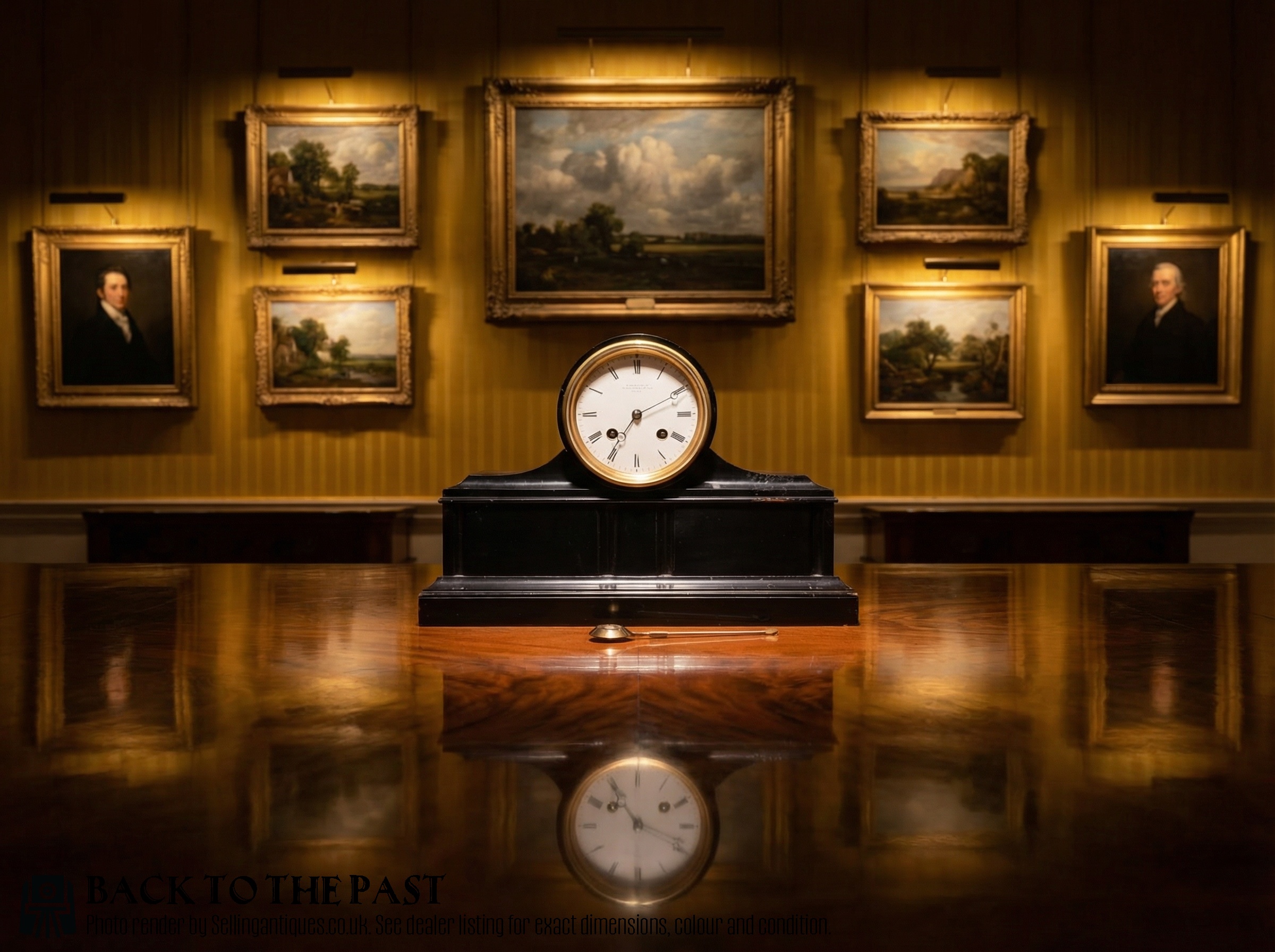
Black Ebonised Mantel Clock
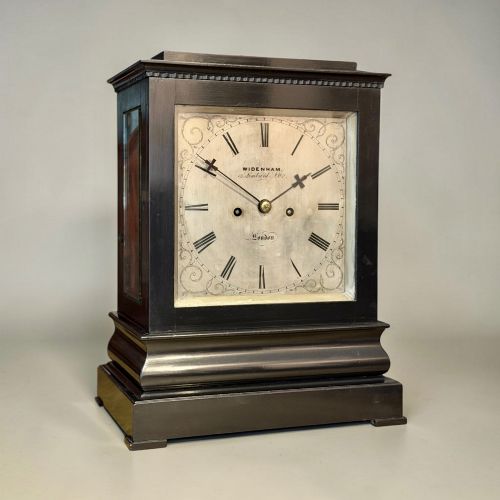
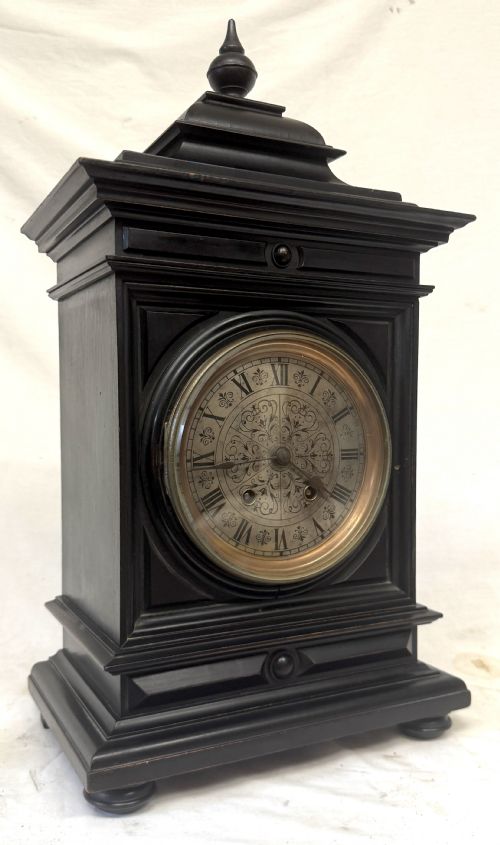
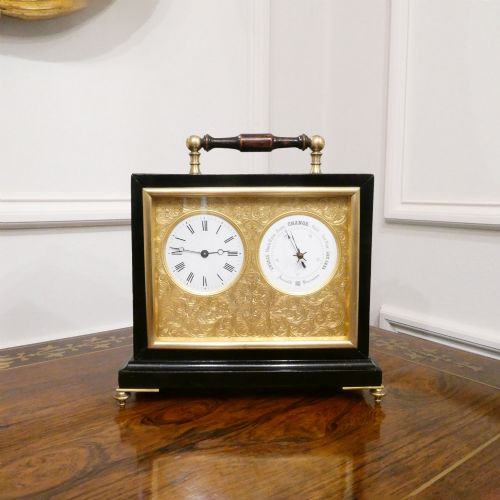
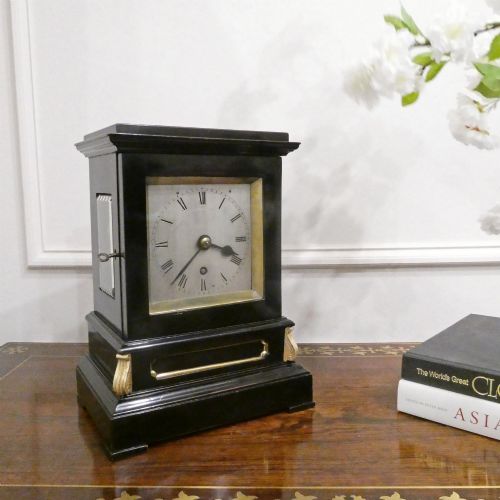
A black ebonised mantel clock sits upon shelves and tables, taking the form of library timepieces, musical bracket clocks, and architectural portico designs. These objects combine dark wood cases with contrasting dials of silvered metal or white enamel.
The versions met most frequently on this page date from the Victorian and 18th Century periods, spanning table clocks with fusee movements and smaller bracket pieces. Makers housed these mechanisms in bell-top cases or glazed wooden frames.
Selecting a black ebonised mantel clock involves looking at the balance between the dense wooden case and metal mounts of brass or ormolu. Domestic spaces receive a strong focal point through these traditional timekeepers.
Materials and construction
Cases utilise ebonised wood or ebony, often built to house brass movements driven by single, double, or triple fusee chains. Skilled makers applied dark finishes to timber to imitate costly ebony, pairing the dark surfaces with gilded bronze or ormolu mounts.
Dials feature silvered metal or white enamel, protected behind curved glass and brass bezels. Many incorporate intricate marquetry or brass inlay, while larger examples stand beneath glass display domes.
Listings feature ebonised wood alongside brass, ormolu, and glass domes across Victorian, Regency, and 18th Century periods.
Distinctions in quality
Quality rests upon the crispness of the ebonised finish and the finesse of the metal mounts, where hand-chased ormolu and fire-gilding separate standard pieces from exceptional ones. The proportion between the wooden case and the brass dial determines visual harmony.
Internal movements reveal craftsmanship through the complexity of the gear train, whether striking bells, chiming melodies, or operating on a verge escapement. Engraved backplates signed by notable makers indicate higher workshop standards.
Widenham of London·Lenzkirch·Henry Jones·Des Granges·Phillips Brothers·Thomas A Paris·Richard Rooker·Payne and Co·Grimaldi and Johnson·Andrew Marchant·Berguer·William Withers·John Leroux·John Fletcher·Barraud and Lunds·John Taylor·William Smith·Isaac Hurley·Joseph Lum
The Black Ebonised Mantel Clock Glossary
- Fusee
- A conical pulley used on the mainspring to equalise the torque as the spring unwinds. This mechanism helps the clock maintain consistent timekeeping right up to the end of its run.
- Ebonised
- Wood treated with stain or paint to imitate ebony. This dark finish provided a uniform surface popular for formal table and bracket clocks.
- Ormolu
- Finely ground high-carat gold applied to a bronze base using mercury amalgamation. It adds bright golden highlights to dark wooden clock cases.
- Verge escapement
- An early type of escapement mechanism controlling the release of power in the gear train. It works with a balance spring or pendulum to regulate time.
- Bracket clock
- A portable clock designed to sit on a bracket or table. These pieces often feature swinging handles and glazed side panels.
Black Ebonised Mantel Clock: Frequently Asked Questions
What is a fusee movement?
A fusee movement uses a conical drum to regulate the pull of the mainspring. This keeps the driving force steady as the spring winds down.
Such mechanisms indicate careful English clockmaking and help ensure accurate timekeeping across days or weeks.
How do I care for my clock?
Place the clock on a stable, level surface away from direct sunlight and damp air. Keep the case clean with a soft, dry cloth without chemical polishes.
Mechanical movements require professional servicing every few years to keep the pivots and gear trains running smoothly.
What makes portico clocks different?
Portico clocks feature architectural frames supported by columns, often styled after classical buildings. They frequently display the pendulum swinging openly within the central opening.
These pieces lean towards French design aesthetics and offer a distinct silhouette compared to standard box or bracket clocks.