

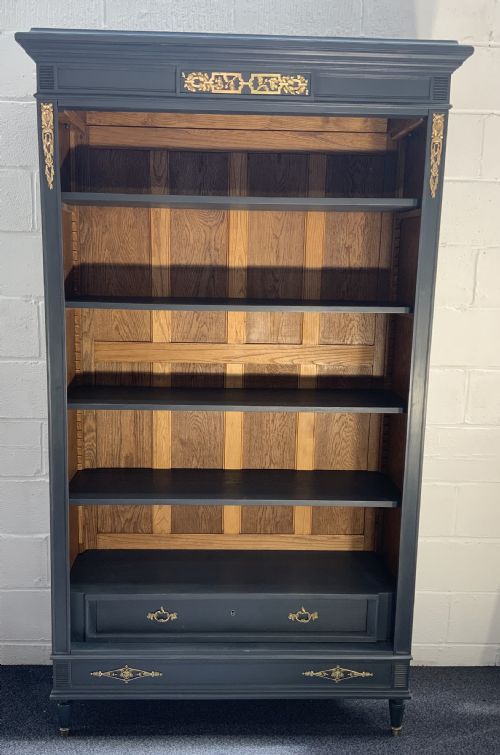


Black Display Cabinet
A black display cabinet brings dark architectural presence and sharp contrast to a room, framing collections with disciplined authority.
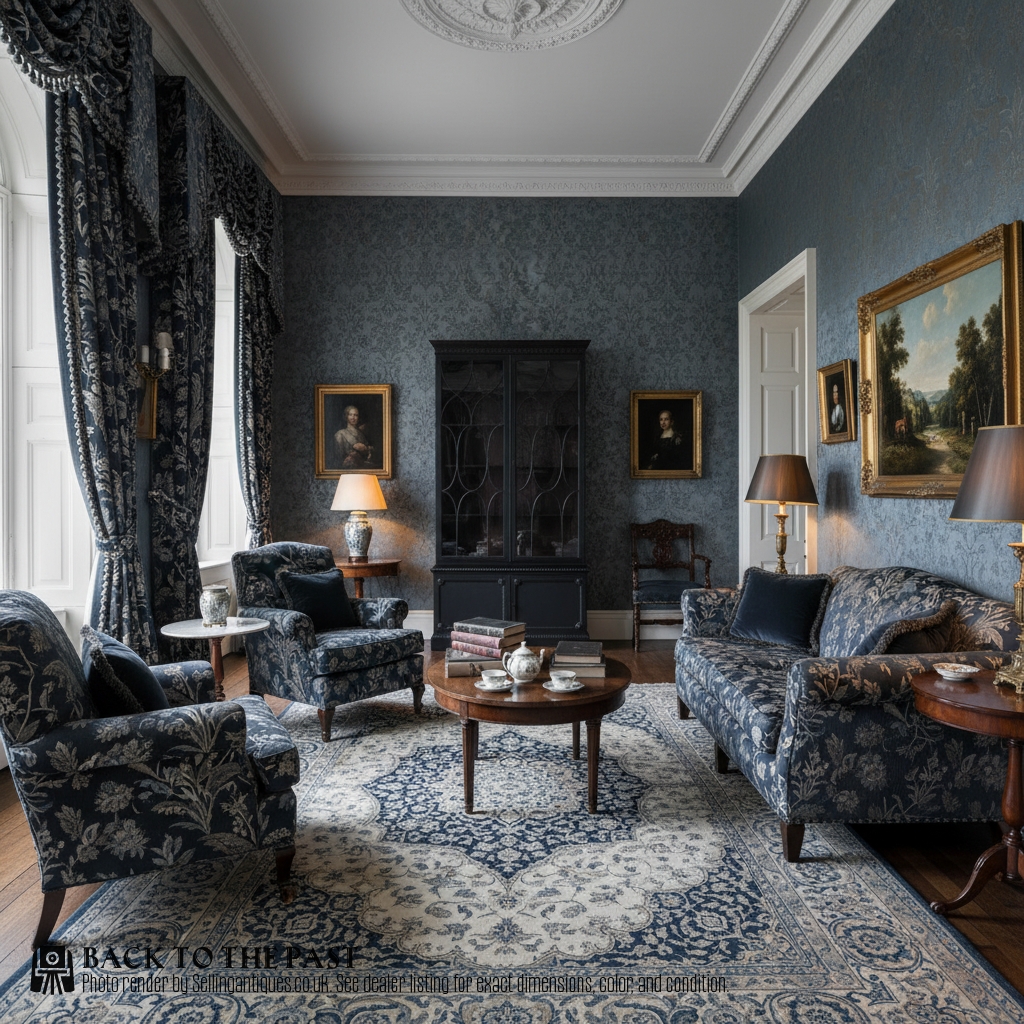
What a black display cabinet is
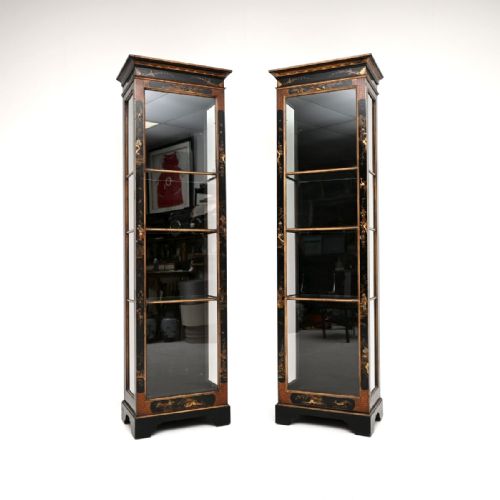
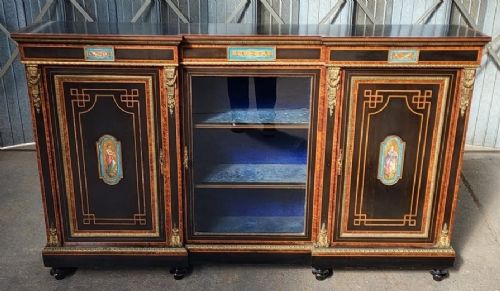
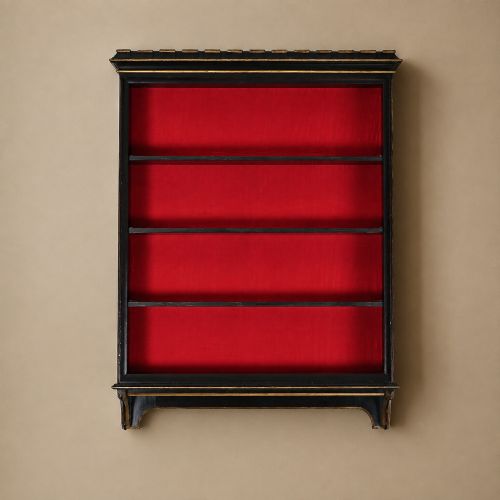
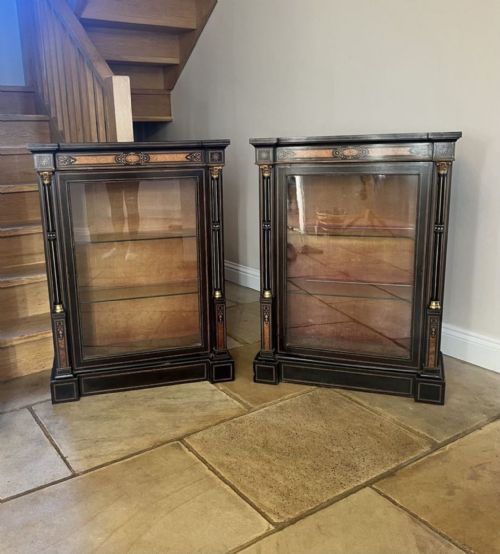
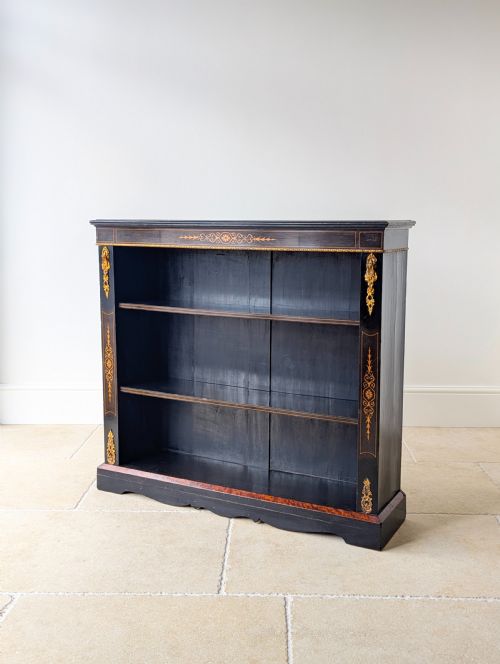
A black display cabinet is a fitted piece of furniture designed to showcase ceramics, books or curiosities behind protective glazing. These cabinets range from tall tower forms to low pier cabinets and enclosed bookcases, serving as focal points in domestic interiors.
The versions most commonly met span the Victorian, Edwardian and Art Deco eras, finished in ebonised wood, painted surfaces or black lacquer. They arrive from both intimate country house settings and commercial shop interiors, reflecting varied scales of ambition.
How they were made
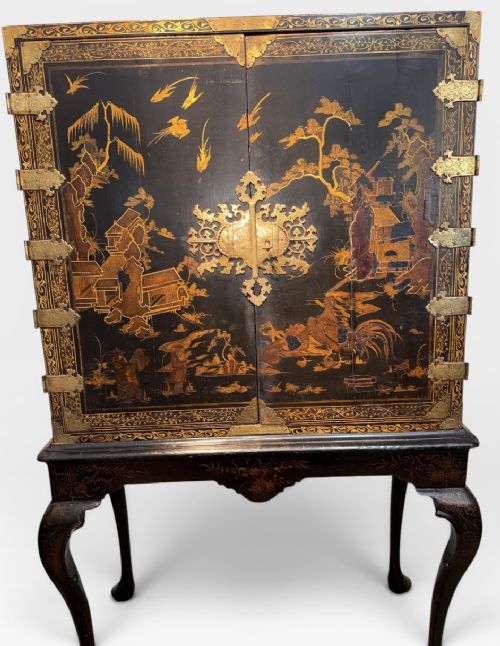
Makers utilised solid timbers treated with ebonising, black paint or black lacquer to achieve a dense, light-absorbing finish. These dark grounds were frequently enriched with contrasting brass mounts, gilt details, or inlaid decoration.
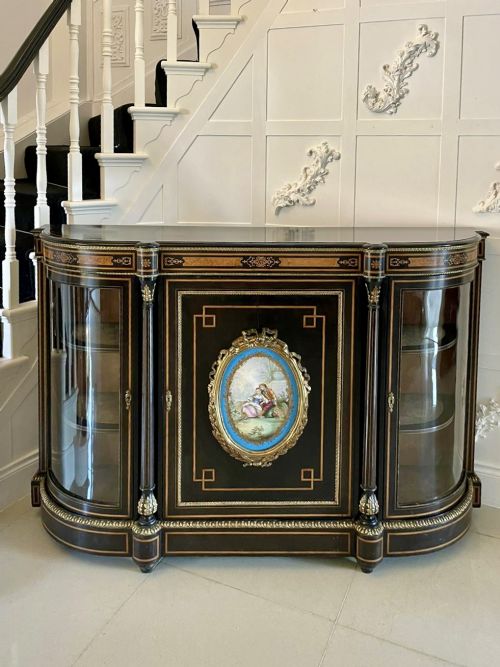
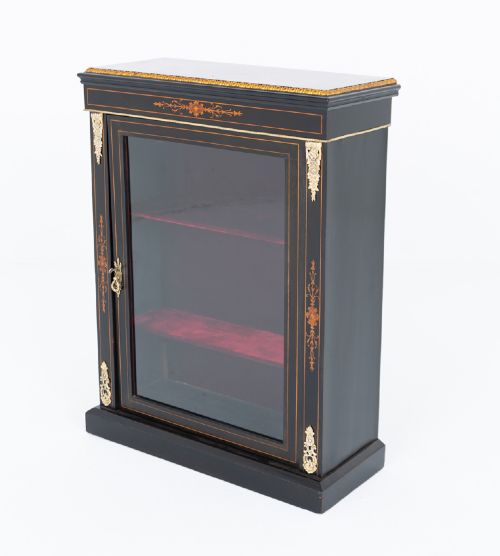
Glazing forms the primary visual barrier, held within timber door frames alongside fabric-lined interiors and porcelain elements. Metalwork such as ormolu mounts and brass fittings provide structural articulation and ornamental weight.
Retail Price Guide 2026
Typical UK retail prices for black display cabinet, calculated from the Sellingantiques database of over a million retail prices indexed since 2003. This retail price guide relies exclusively on Sellingantiques data; no external sources or auction records are used, so the figures do not describe the wider market.
Even the strictest Victorian shopkeeper liked a bit of flash, mounting heavy brass on pitch-black timber to make the porcelain gleam.
What varies in quality
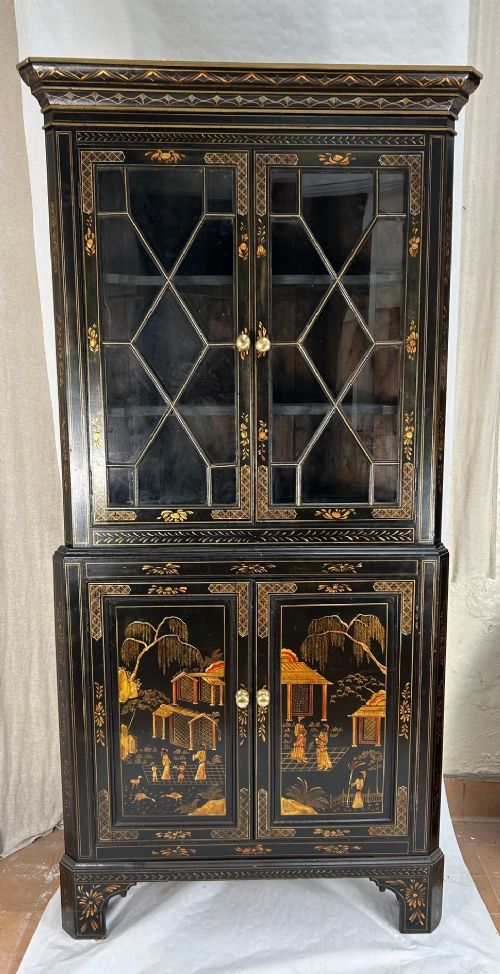
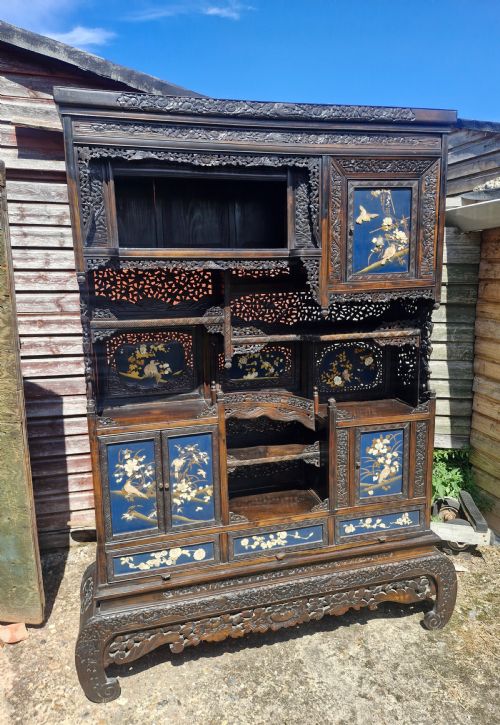
The upper tier of these pieces reveals itself through the crispness of applied brass mounts and the depth of the ebonised or lacquered finish. Finer examples integrate hand-painted Chinoiserie motifs or intricate inlay with balanced proportions that command the eye.
Simpler interpretations rely on plain painted pine or basic ebonised framing without auxiliary ornamentation. The distinction lies in the architectural integrity of the glazing bars and the deliberate harmony between the dark exterior and the interior lining.
The Black Display Cabinet Glossary
- Ebonised wood
- Timber treated with stain or polish to resemble costly ebony. This technique was widely favored in the nineteenth century for achieving a sleek, dark surface.
- Ormolu
- Gilt bronze mounts applied to furniture for decorative accent. The golden tone provides sharp visual contrast against a black ground.
- Pier cabinet
- A narrow cabinet built to fit the wall space between windows. These pieces make efficient use of vertical architecture in period rooms.
- Chinoiserie
- European artistic style reflecting Chinese motifs and landscapes. This decoration appears frequently on black lacquer surfaces from the Edwardian period.
Frequently Asked Questions
How do I style a black display cabinet?
Position the piece against a lighter wall to let the dark silhouette stand out clearly. Limit the interior contents to a cohesive colour palette so the contents do not compete with the heavy frame.
Ensure the room receives adequate natural light to offset the light-absorbing qualities of the black finish. Pair the cabinet with neutral textiles and simple seating to maintain balance.
Were these cabinets used in shops?
Several examples originate from commercial environments rather than domestic drawing rooms. Shop display cabinets were built to withstand heavy daily use while presenting merchandise securely.
These commercial pieces often feature robust glazing and straightforward timber construction. They bring a distinct industrial character to domestic settings.
How do I care for ebonised surfaces?
Dust the timber regularly with a soft, dry cloth to prevent particulate buildup on the dark finish. Avoid chemical polishes that can leave a greasy residue on ebonised wood or painted timber.
Keep the cabinet away from direct sunlight and radiators to protect the lacquer and prevent the wood from shifting. Handle brass mounts gently during routine maintenance.
How do I date a black display cabinet?
Examine the construction methods, door framing, and hardware to determine the period of origin. Victorian examples often feature heavy ebonising and classical brass mounts, while Edwardian pieces lean toward lacquer and Chinoiserie.
Art Deco versions from the 1920s display geometric tower forms and streamlined glazing bars. Comparing these structural details against known period styles confirms the approximate date.