


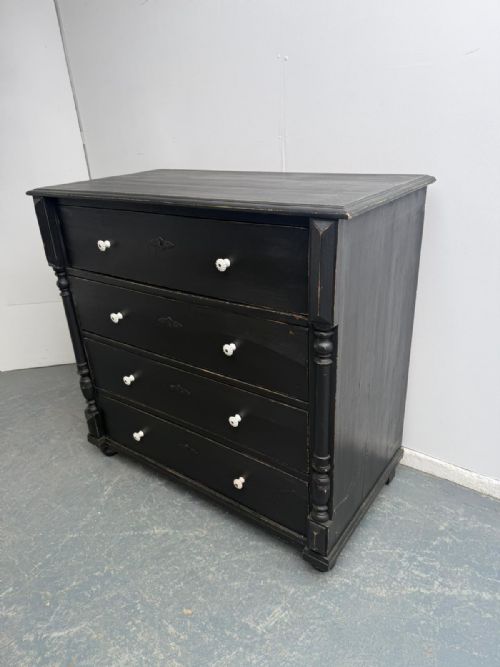


Black Commode Drawers
Black commode drawers bring dark presence to a room, uniting storage with grand continental or provincial forms.
Black Commode Drawers
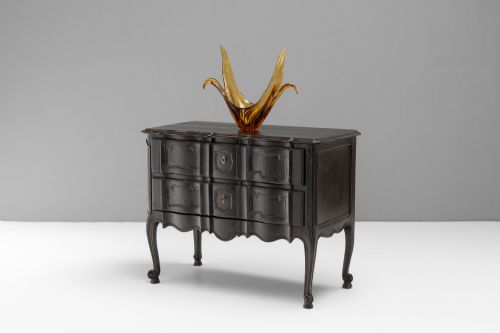
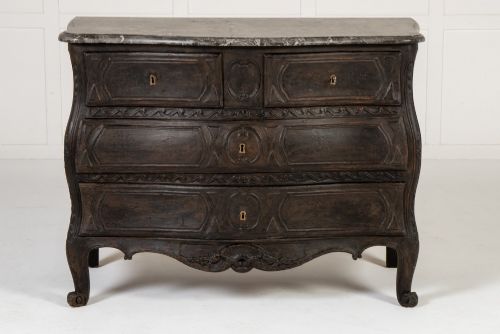
Black commode drawers encompass substantial storage chests and commodes originating across the eighteenth, nineteenth, and early twentieth centuries. These pieces span continental ateliers and regional British or European workshops, taking the form of bombe profiles, serpentine fronts, and straight drawer configurations.
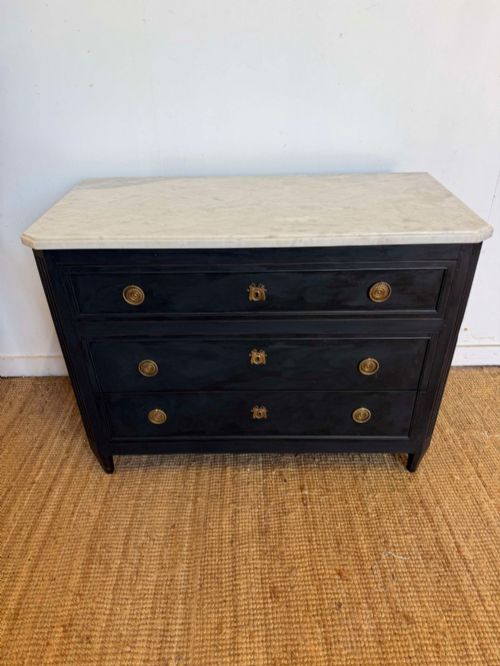
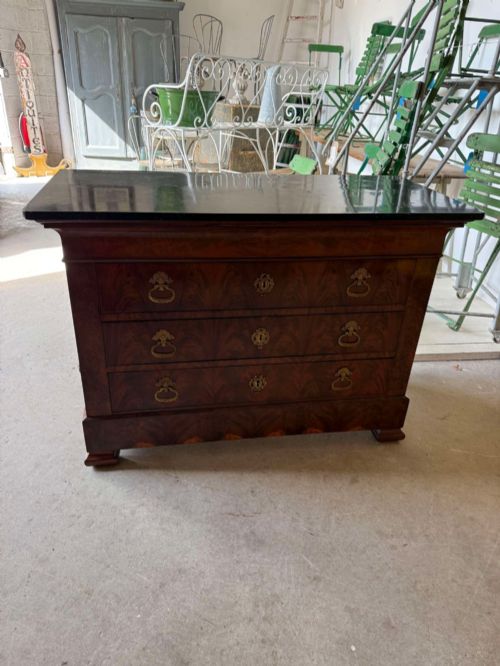
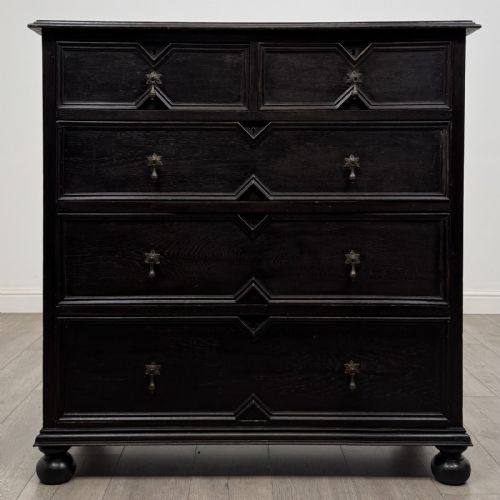
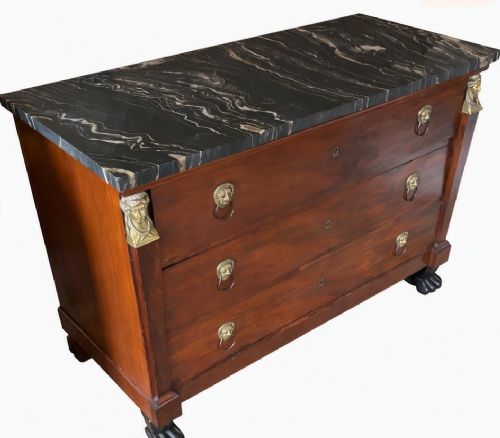
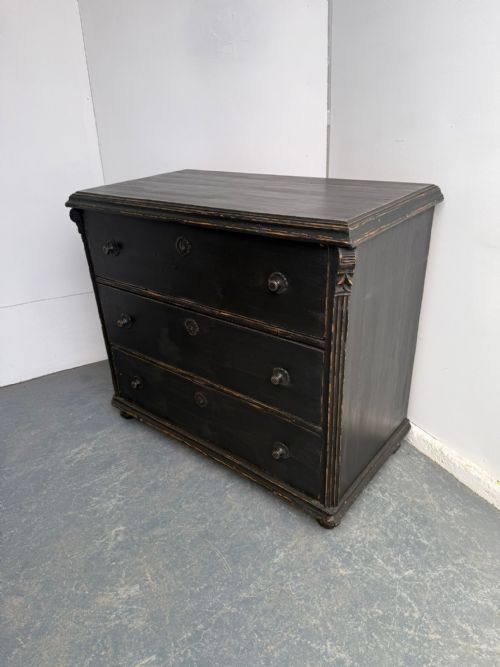
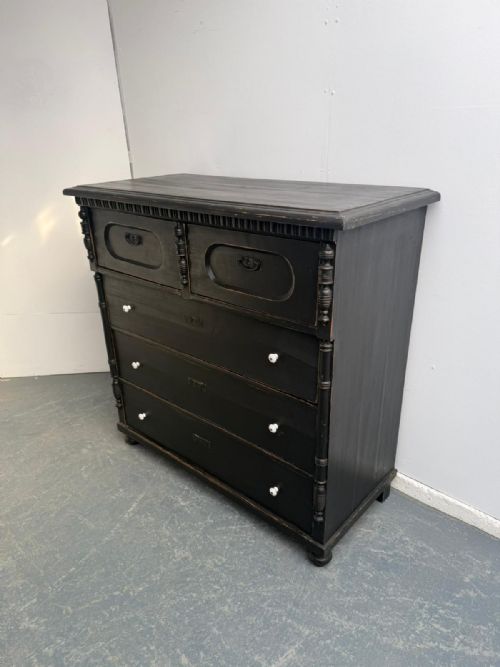
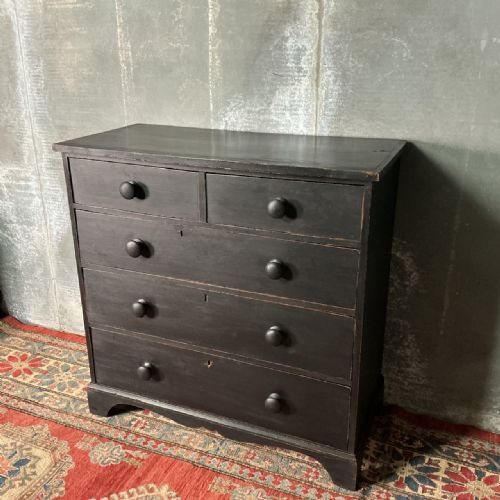
Buyers encountering this selection meet French provincial and Empire models alongside Hungarian pine chests and Jacobean revival oak pieces. The inventory includes grand marble-topped examples alongside smaller country pine and miniature display items.
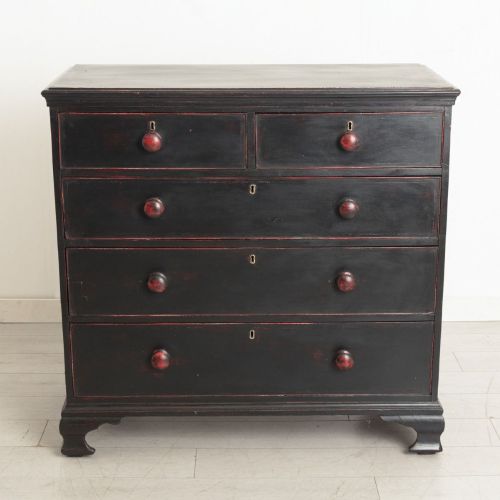
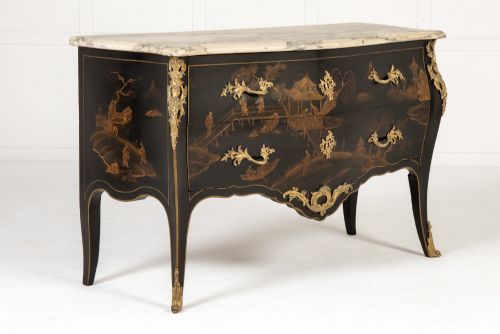
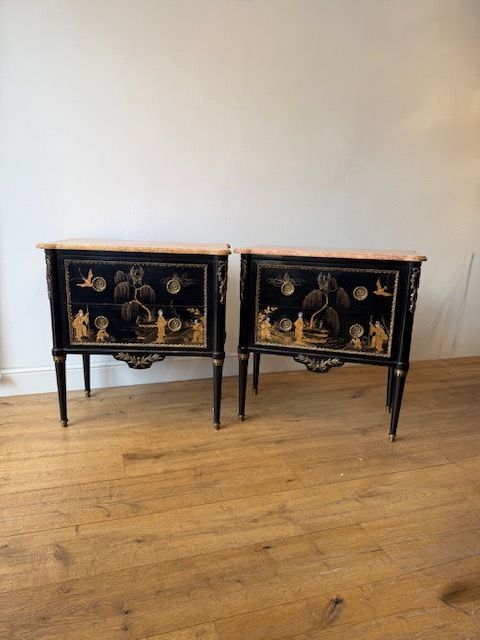
The aesthetic bridges dark ebonised finishes, modern painted surfaces, and intricate Japanned lacquerwork. Pieces range from monumental proportions down to compact three and four drawer arrangements.
Materials and construction
Construction relies upon solid timber foundations including oak, mahogany, and pine, shaped into carcases and fitted with multiple drawers. Surfaces receive layers of dark paint, ebonising, or lacquer, frequently paired with contrasting white or coloured marble tops.
Metal hardware such as brass handles and mounts accent the dark timber and painted surfaces. Carved details define styles ranging from French rococo curves to structured Jacobean revival lines.
Black Commode Drawers Retail Price Guide 2026
Typical asking prices for black commode drawers among the pieces listed under this phrase on Sellingantiques today, from the lower quarter to the upper quarter. They describe what is for sale here now, not the wider market.
Listings feature pine, oak, mahogany, and metal materials across eighteenth, nineteenth, and twentieth-century periods.
Assessing the pieces
Quality rests in the integrity of the timber carcase and the execution of the surface finish, whether original ebonising, period paint, or applied lacquer. Superior examples maintain crisp carving along serpentine or bombe contours and secure fitted marble slabs without displacement.
Hardware integrity and internal drawer construction distinguish finer workshop production from simpler provincial utilitarian pieces. The harmony between decorative elements, such as brass mounts and the dark exterior finish, dictates the standing of each chest.
The Black Commode Drawers Glossary
- Bombe
- A swelling, convex commode profile associated with eighteenth-century continental cabinetmaking. This curved shape requires advanced timber-bending techniques.
- Ebonised
- Wood treated with stain or paint to imitate expensive ebony. The process creates a dense black surface finish popular in nineteenth-century revival furniture.
- Serpentine
- A front contour characterised by a concave centre flanked by convex curves. This undulating line appears on refined provincial and court furniture.
- Japanned
- European imitation of East Asian lacquerwork using layered varnish and decorative motifs. Artisans applied this technique to emulate imported oriental screens and cabinets.
- Commode
- A low chest of drawers used for storage. The term encompasses both French decorative pieces and broader European drawer furniture.
Black Commode Drawers: Frequently Asked Questions
Where should I place a black commode in my home?
These chests suit living rooms, hallways, or bedrooms where dark finishes provide strong visual anchors against lighter walls.
Their substantial storage capacity makes them practical surfaces for lamps, mirrors, or decorative objects.
How do I clean marble-topped commodes?
Wipe marble surfaces using a soft cloth dampened with warm water and mild soap.
Avoid acidic cleaners that etch the stone finish and dry the surface thoroughly after cleaning.
What is the difference between an ebonised finish and black paint?
Ebonising stains or treats timber to darken the natural grain while retaining wood texture beneath the black tone.
Painted finishes coat the underlying wood completely, hiding the grain beneath a uniform layer of pigment.
How do I care for antique lacquered furniture?
Dust lacquered surfaces gently with a soft, dry microfibre cloth to prevent scratching the delicate finish.
Keep pieces away from direct sunlight and excessive humidity to protect the integrity of the lacquer.