


Vintage Marble Topped Dresser
A vintage marble topped dresser brings solid stone surfaces and ample storage together, anchoring a bedroom or hallway with functional weight.
Vintage Marble Topped Dresser
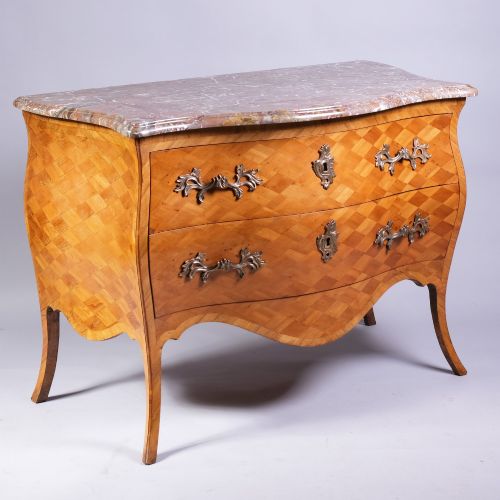
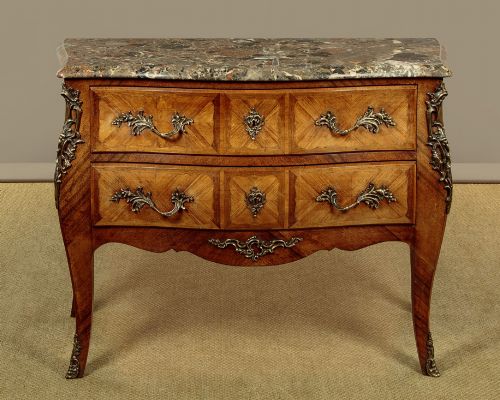
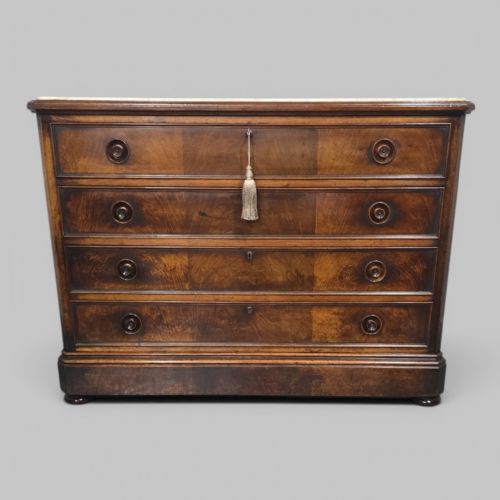
A vintage marble topped dresser encompasses a range of robust storage forms, primarily appearing here as commodes, chests of drawers, and sideboards. These pieces originate predominantly from French provincial and period workshops spanning the eighteenth, nineteenth, and early twentieth centuries.
The inventory leans heavily towards Continental examples, particularly French designs adhering to Louis XV, Louis XVI, Louis Philippe, and Empire styles. Alongside these formal commodes, buyers encounter oak washstands, mahogany chests, and occasional English painted dresser bases fitted with stone tops.
How they were made
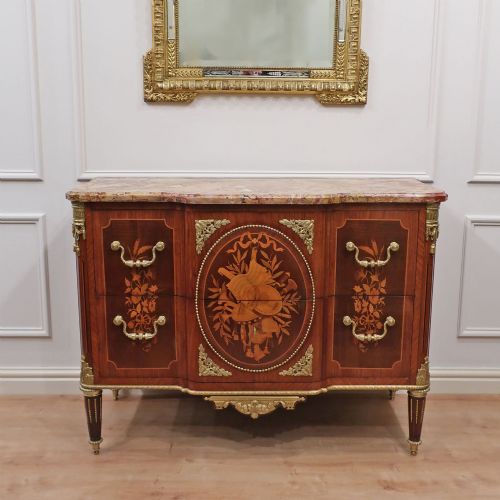
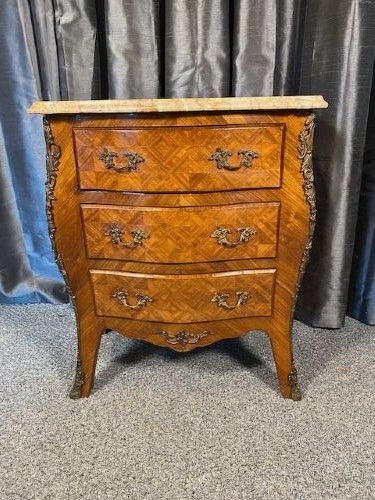
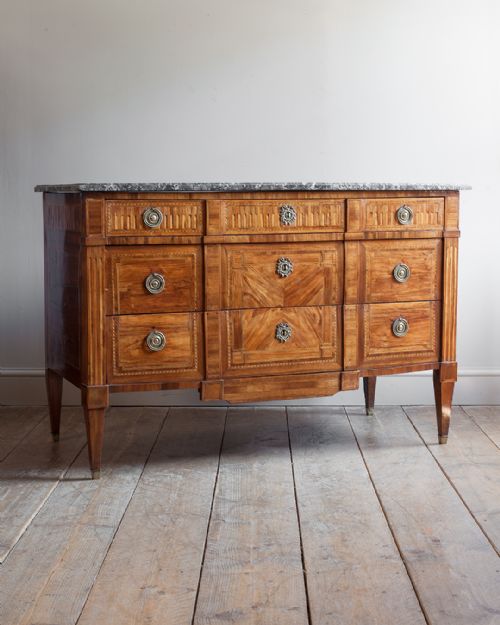
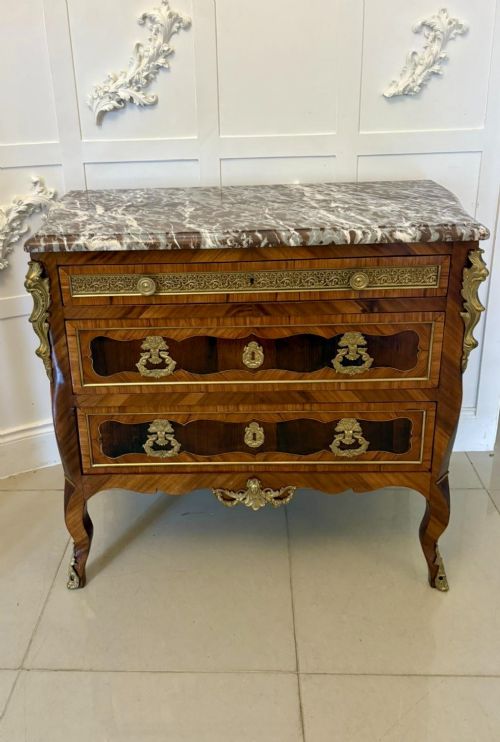
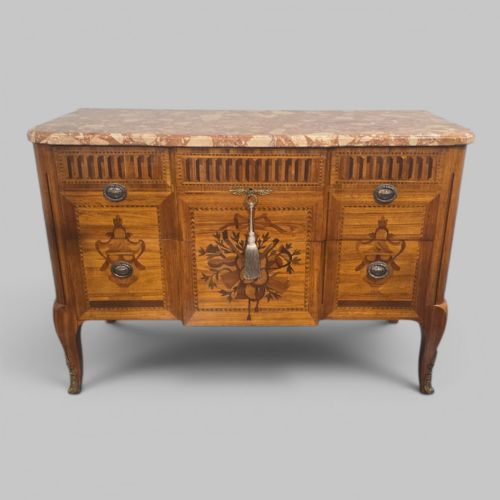
Cabinetmakers constructed these carcases using dense timbers such as mahogany, walnut, oak, kingwood, rosewood, and satinwood, often applying intricate marquetry, brass inlay, or ormolu mounts. The upper surfaces feature heavy slabs of polished marble, sometimes cut with serpentine or bombe contours to match the wooden framework below.
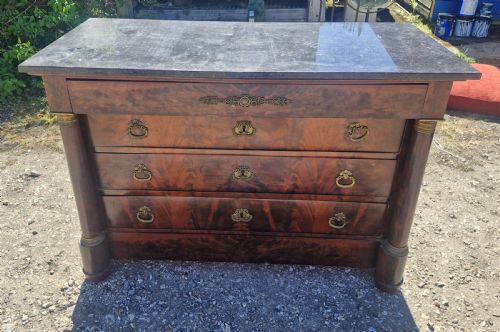
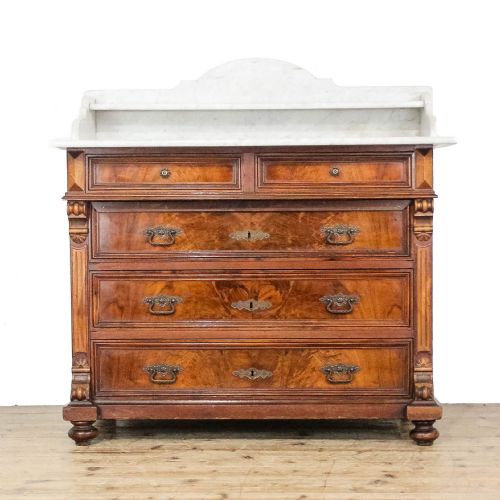
Joinery techniques rely on traditional frame and panel construction, dovetailed drawer boxes, and hand-carved decorative elements suited to transitional and revival aesthetics. Timber selection balances structural integrity with striking grain patterns, particularly in flame mahogany and burr walnut editions.
Listings feature woods like kingwood, rosewood, satinwood, and mahogany alongside heavy marble slabs dating from the eighteenth century onward.
What varies in quality
The calibre of a piece rests heavily on the harmony between the marble slab and the wooden carcase, particularly where stone is shaped to follow complex serpentine or bombastic curves. Superior examples display seamless integration of ormolu mounts, precise brass stringing, and tightly fitted marquetry panels.
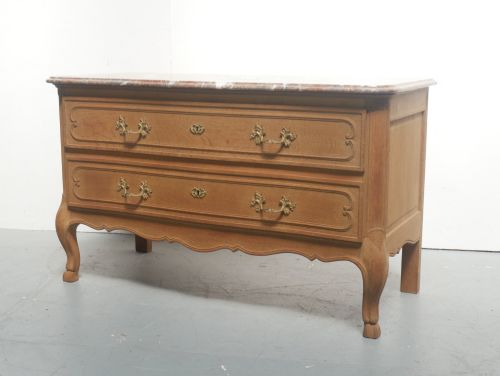
Material selection dictates the upper tier of the range, where exotic veneers like kingwood, palisander, and burr walnut are utilised alongside substantial, finely figured marble tops. Lesser examples substitute simpler regional timbers like bleached oak or cherrywood, with straightforward rectilinear proportions.
The Vintage Marble Topped Dresser Glossary
- Commode
- A low chest of drawers or cabinet, typically French in origin, designed with multiple storage tiers beneath a stone top.
- Bombe
- A swelling, outward-curving furniture shape that bulges on the front and sides, characteristic of rococo revival designs.
- Ormolu
- Gilded bronze mounts and decorative trimmings applied to the corners, feet, and drawer fronts of high-status furniture.
- Marquetry
- The art of applying decorative pieces of veneer to a structure to form intricate geometrical patterns or pictorial designs.
- Serpentine
- A furniture front or marble edge shaped with a central concave curve flanked by two convex curves.
Vintage Marble Topped Dresser: Frequently Asked Questions
How do I clean a marble top?
Use warm water and a soft cloth, avoiding acidic cleaners that etch the polished stone surface over time.
Dry the marble thoroughly after wiping to maintain its natural sheen and prevent water rings.
Are these pieces heavy?
Yes, the combination of dense hardwood carcases and thick stone slabs makes these items exceptionally heavy and solid.
Enlist help when moving them, and lift the marble separately if the design allows to reduce weight during transit.
Where should I place a commode?
These units suit bedrooms, hallways, or living spaces where surface display and concealed drawer storage are equally useful.
Ensure the floor is level so the heavy marble top distributes weight evenly across the wooden frame.
What is Louis Philippe style?
A restrained mid-nineteenth-century French aesthetic focusing on clean lines, minimal carving, and warm timber grains.
It prioritises domestic comfort and practical utility over the elaborate ornamentation found in earlier revival periods.