



French Neoclassical Commode
A french neoclassical commode is a storage piece defined by classical symmetry and clean lines, offering deep drawers beneath a fitted stone slab.

French Neoclassical Commode
When you search for a french neoclassical commode, you encounter a storage piece built primarily as a chest of drawers or side cabinet. These items emerge across several centuries, appearing in eighteenth century formats as well as nineteenth century revivals and early twentieth century interpretations.
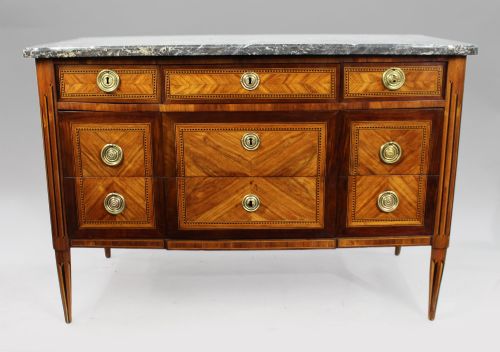
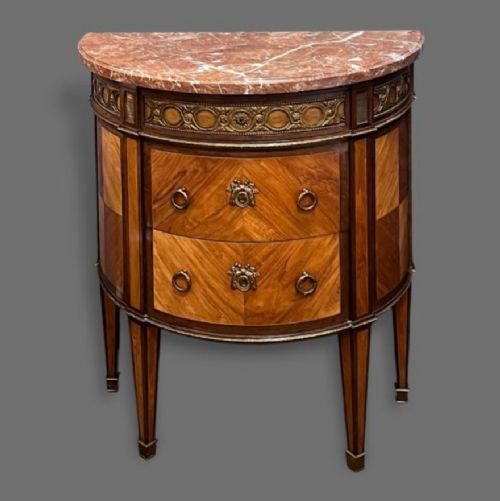
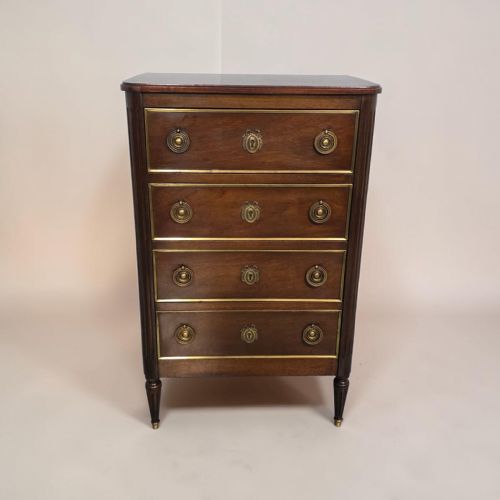
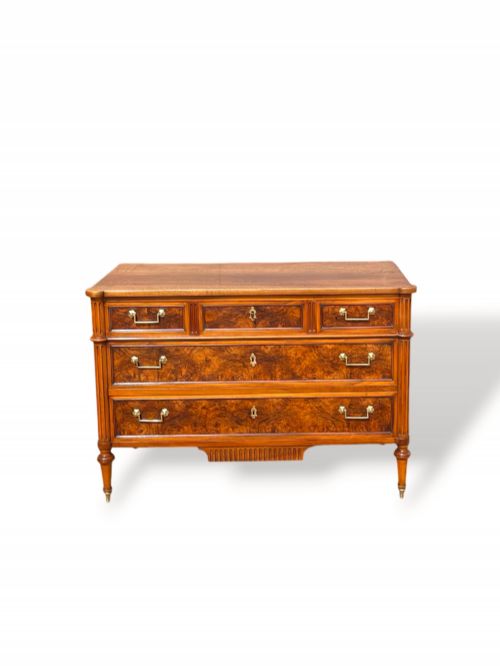
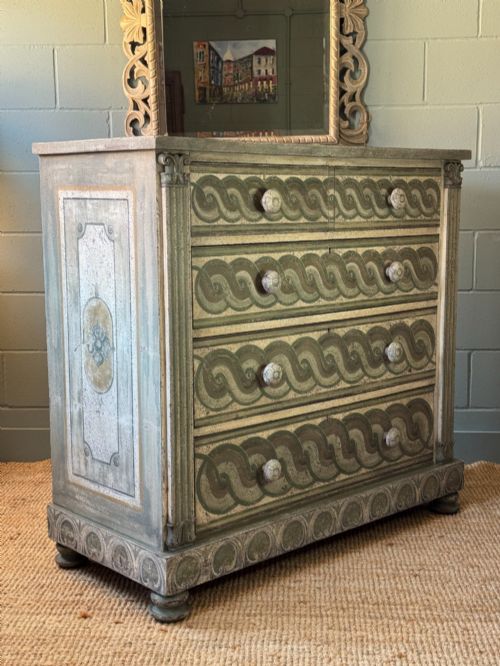
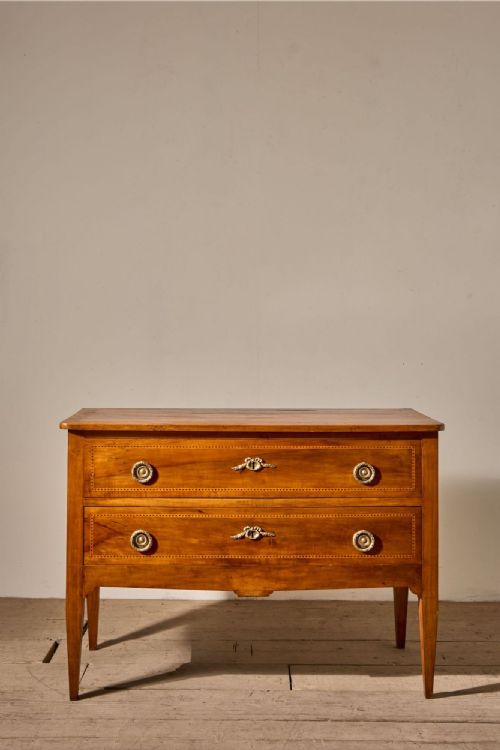
The most frequent version on this page pairs a rectangular or demi-lune wooden carcase with a fitted marble top. Makers construct these using walnut, mahogany, satinwood, cherrywood, and oak, often applying parquetry, marquetry, or painted finishes to the exterior surfaces.
Regional variations include pieces attributed to French provincial makers alongside grander models executed in the Louis XVI, French Empire, and French Transitional styles. Certain examples incorporate secretaire drawers or cabinet doors alongside standard drawer configurations.
Materials and construction
Cabinetmakers build the structural carcase from hardwoods such as mahogany, walnut, and oak, then apply decorativeveneers like satinwood and harewood in geometric parquetry patterns. Surface decoration frequently includes hand-painted motifs or elaborate inlaid wood arrangements.
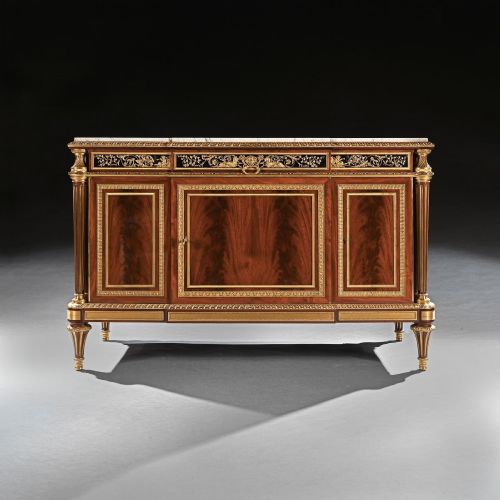
The heavy marble top sits loose or fixed directly onto the wooden upper frame, providing a durable and cool horizontal surface. Artisans mount cast ormolu and brass handles, escutcheons, and corner mounts to the timber body to accentuate the classical architectural lines.
French Neoclassical Commode Retail Price Guide 2026
Typical asking prices for french neoclassical commode among the pieces listed under this phrase on Sellingantiques today, from the lower quarter to the upper quarter. They describe what is for sale here now, not the wider market.
Several chests feature secret writing compartments designed to hide private correspondence from prying eyes.
Distinctions in execution
Quality separates through the crispness of the bronze or ormolu mounts and the precision of the underlying parquetry inlay. Pieces associated with named makers or specific master models demonstrate superior hand-chiselling on metal hardware and tighter tolerances in drawer construction.
The selection of timber grain and the integrity of the marble slab dictate the overall visual weight of the item. Simple painted pine or oak versions contrast with highly figured mahogany and satinwood pieces that employ complex geometric wood veneers.
Henry Dasson·Weisweiler·Mon Krieger·Kaufman·Edmond Poteau·Riesener
The French Neoclassical Commode Glossary
- Ormolu
- Gilded bronze mounts applied to furniture for decoration. This technique uses a mercury amalgam to bond gold to a bronze base, producing a bright metallic finish.
- Parquetry
- Geometric wood inlay forming patterns such as cubes or chequers. Artisans cut thin veneers of contrasting timbers and fit them closely together on the carcase.
- Demi-lune
- A half-moon shape with a flat back and a curved front. Chests built in this profile fit flush against a wall while projecting outward into the room.
- Secretaire
- A cabinet or chest containing a drop-down writing flap concealing small drawers and pigeonholes. This hybrid form combines storage with a functional writing surface.
French Neoclassical Commode: Frequently Asked Questions
What is a french neoclassical commode?
A french neoclassical commode is a formal chest of drawers or cabinet featuring classical proportions, straight or slightly curved legs, and decorative mounts.
These pieces typically feature a marble slab top and decorative wood veneers arranged in geometric parquetry or marquetry patterns.
How do I clean the marble top?
Clean the stone surface using warm water and a soft cloth, avoiding acidic substances that etch polished marble.
Dry the slab thoroughly after washing to prevent water spotting on the mineral surface.
Where were these pieces used?
These items functioned primarily as reception room or bedroom storage within domestic interiors.
The flat stone top provided a stable surface for displaying decorative objects, clocks, or lighting.
How do I distinguish eighteenth century from nineteenth century pieces?
Eighteenth century examples display period construction methods, native timber wear, and hand-cut joinery specific to their era.
Nineteenth century revival pieces often utilise machine-sawn secondary timbers and cast hardware characteristic of later manufacturing techniques.