



Black Ceramic Urn
A black ceramic urn brings deep tone and sculptural weight to a room, drawing the eye instantly.

Black Ceramic Urn
A black ceramic urn is a vessel of striking presence, taking forms such as floor vases, jardinieres, and table lamps across this selection. These pieces span periods from the Victorian era and the late nineteenth century through to Art Nouveau, Art Deco, and mid-century modern designs.
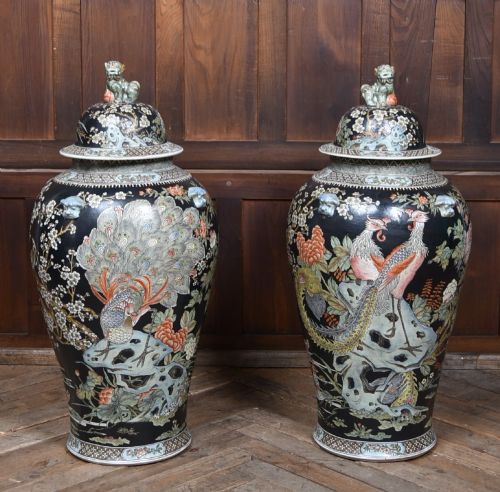
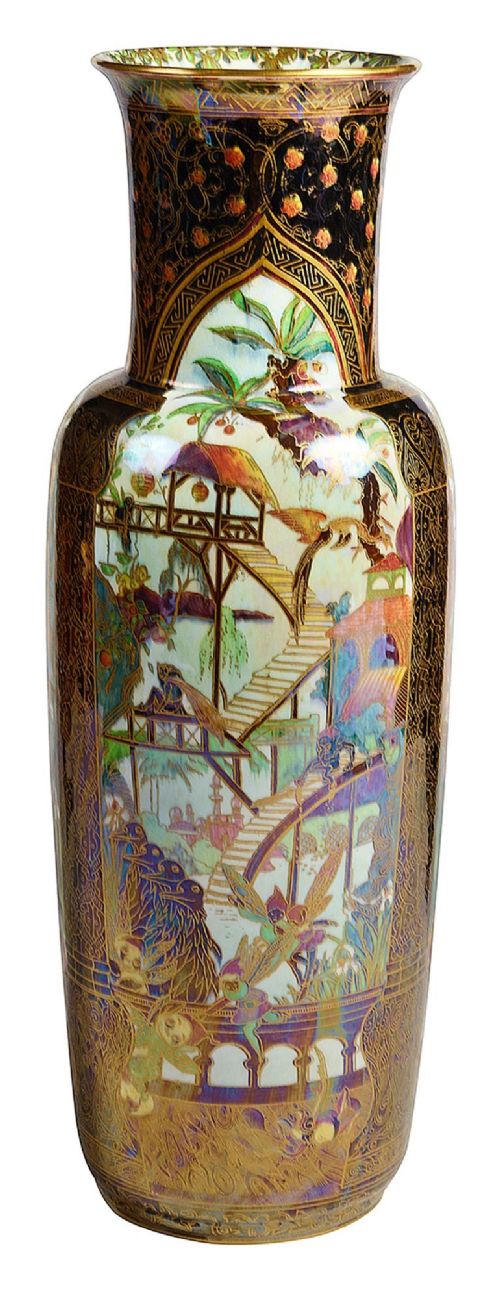
The objects here originate from diverse traditions, including French porcelain, Japanese Satsuma and porcelain with lacquer over black paint, Chinese palace jars and famille noire styles, and European art pottery by makers such as Bernhard Bloch, Mougin, and Gallilleo Chini.
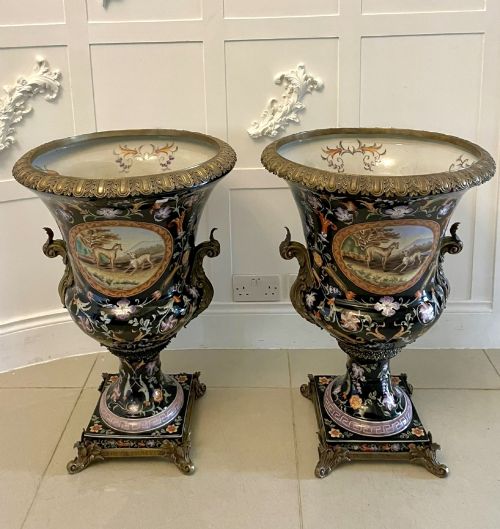
Buyers will find pairs of mounted jardiniere urns, large flared vases, and bulbous vessels featuring hand-painted details, drip glazes, and geometric inset panels. Each piece utilises its dark ground to emphasise form, surface texture, and contrasting metallic or polychrome decoration.
Distinctions in quality
Quality in these vessels rests on the crispness of the ceramic form, the depth and stability of the dark glaze or lacquer, and the precision of the hand-painted or gilt details. Superior examples display confident brushwork and harmonious integration of mounts or inset panels.
The distinction between standard production and exceptional work lies in the refinement of the surface finish and the artistic ambition of the design, whether in a delicate floral motif or a bold geometric inlay.
Black Ceramic Urn Retail Price Guide 2026
Typical asking prices for black ceramic urn among the pieces listed under this phrase on Sellingantiques today, from the lower quarter to the upper quarter. They describe what is for sale here now, not the wider market.
Several Japanese vessels feature lacquer applied directly over black paint, depicting koi swimming across the ceramic curve.
Daisy Makeig Jones·Gallilleo Chini·Rozenburg·Bernhard Bloch·Mougin
The Black Ceramic Urn Glossary
- Jardiniere
- A decorative ceramic pot or urn designed to hold plants or flowers. They often appear in matched pairs with brass mounts.
- Famille Noire
- A Chinese ceramic style defined by a glossy black enamel ground, frequently contrasted with vibrant green and polychrome enamels.
- Satsuma ware
- A type of Japanese earthenware featuring a crackle-glaze ivory body heavily decorated with rich gilt and polychrome enamels.
- Drip glaze
- A pottery technique where multiple fluid glazes are allowed to run down the sides of the vessel during firing, creating organic patterns.
Black Ceramic Urn: Frequently Asked Questions
How were black ceramic urns used historically?
These vessels served primarily as decorative focal points within nineteenth and early twentieth-century interiors, displayed on pedestals, mantelpieces, or tables. Some functioned as jardinieres for large plants, while others stood alone as sculptural floor jars or were later converted into table lamps.
Their substantial presence made them ideal for grand reception rooms and formal parlours, where dark glazes and gilt accents caught the ambient light of the period.
Where should I place an urn in my home?
A large urn or floor vase works effectively in an empty corner, beside a fireplace, or anchoring an entryway where its silhouette can be appreciated from a distance. Smaller vessels and table lamps suit side tables, consoles, and mantelpieces.
Because the dark surfaces absorb light, positioning them near a light source or against a lighter wall will help define their form and highlight any metallic or hand-painted details.
How do I distinguish Victorian from Art Nouveau pieces?
Victorian pieces in this selection often lean towards formal symmetry, rich gilding, and traditional motifs such as Satsuma figures or ornate brass mounts. They carry a sense of nineteenth-century academic structure and historicism.
Art Nouveau examples, by contrast, favour asymmetrical flow, organic motifs inspired by nature, and experimental drip glazes or flowing lines that reject rigid historic revivalism in favour of modern movement.