

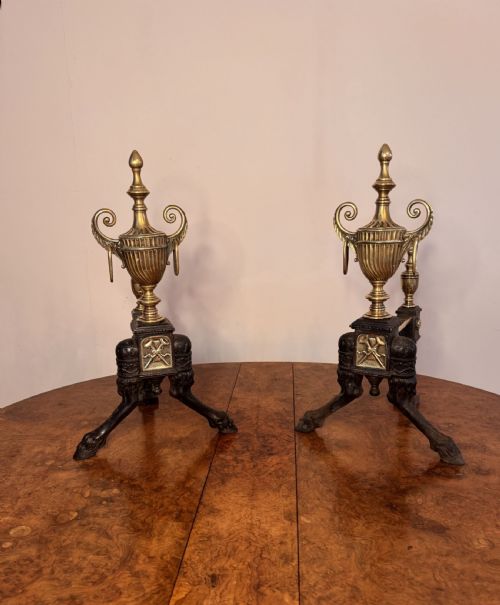
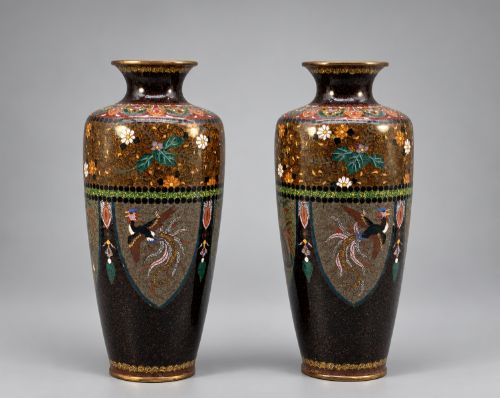
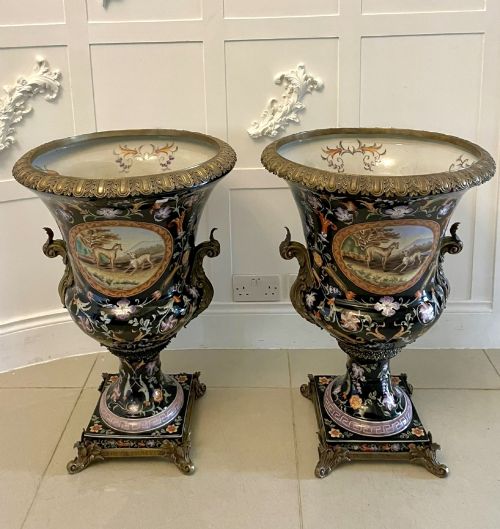
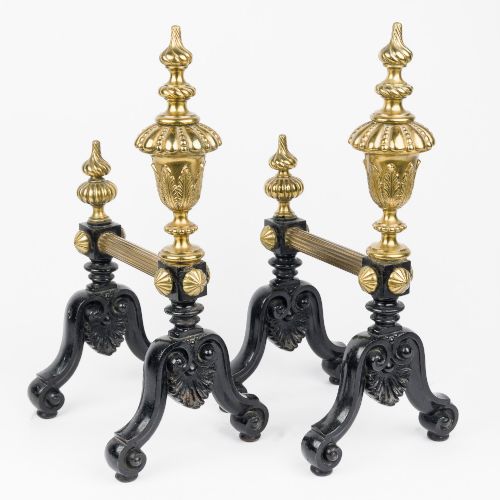




Black Urn Pair
A black urn pair brings neoclassical gravity and symmetry to a room, offering matched focal points cast in bronze, marble, porcelain or iron.

Black Urn Pair
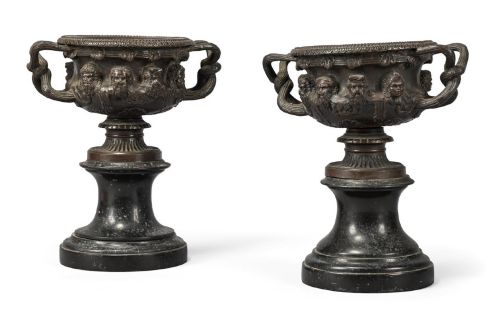
A black urn pair consists of symmetrical decorative vessels designed to balance a mantelpiece, console or side table. The pieces appearing in this category span the nineteenth and early twentieth centuries, drawing heavily on classical antiquity and the Grand Tour tradition.
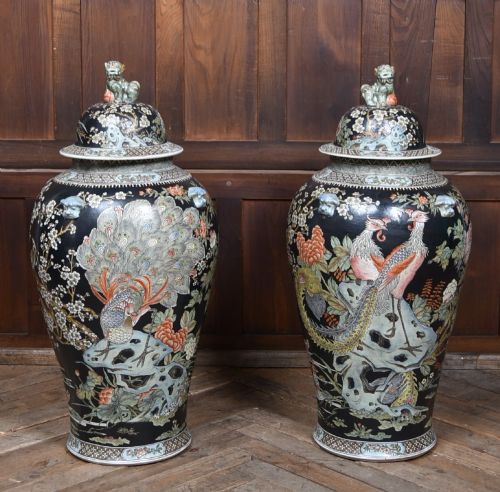
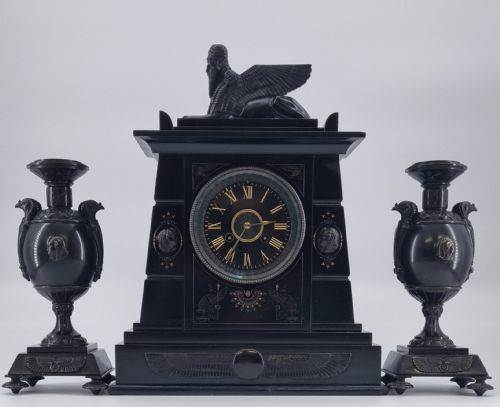
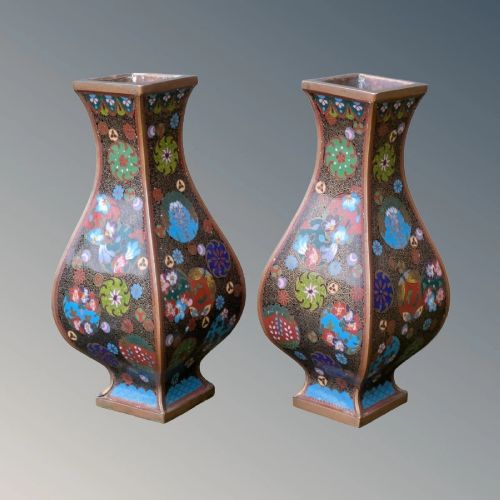
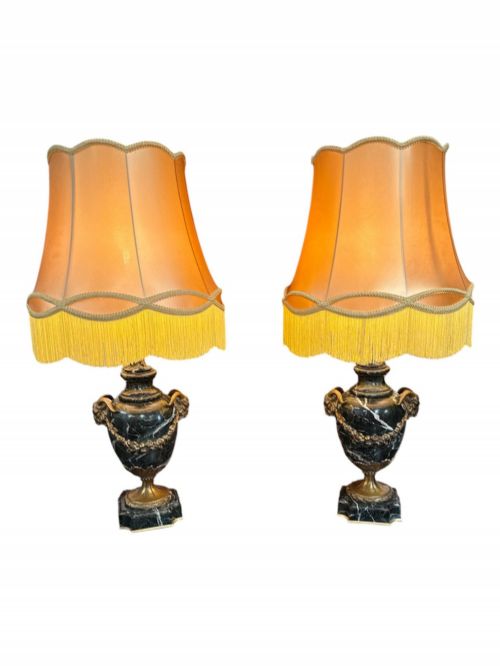
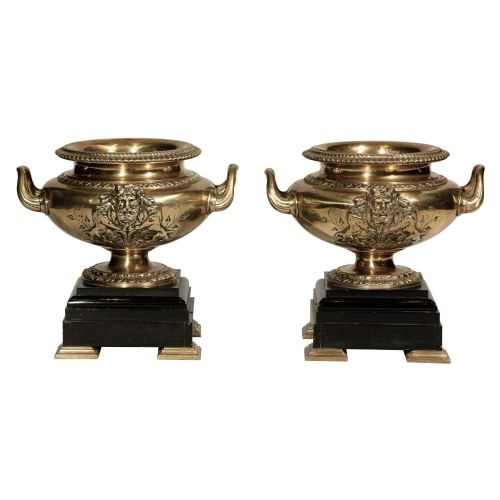
Most examples favour dark stone, enamelled metal or patinated bronze, often mounted with contrasting gilt bronze or brass. Forms range from classical campana shapes and classical tazze to lidded mantle garnitures and converted table lamps.
Materials and construction methods
Maker workshops utilised natural stones such as marble, slate and alabaster, turning them on lathes before applying hand-carved details or polished finishes. Metal versions combine cast iron, bronze or brass components, sometimes enhanced with enamel or black lacquer.
Gilt bronze mounts, ormolu accents and gold leaf details were frequently pinned or screwed onto the dark stone or metal bodies. Porcelain and ceramic variants relied on hand-painted glazes fired in kilns before receiving similar metal fittings.
Black Urn Pair Retail Price Guide 2026
Typical asking prices for black urn pair among the pieces listed under this phrase on Sellingantiques today, from the lower quarter to the upper quarter. They describe what is for sale here now, not the wider market.
Some nineteenth-century makers concealed clocks inside decorative garnitures, turning timekeeping into a hidden art.
Assessing craftsmanship and finish
Quality rests heavily on the crispness of the casting in metal examples and the depth of polish across stone surfaces. Finer pieces display tightly fitted mounts, cleanly chased bronze details and substantial weight.
Lesser items show softer relief work in cast elements, simple painted finishes rather than deep enamelling, or loose joints where the base meets the main vessel body.
Jennens and Bettridge·Bernhard Bloch
The Black Urn Pair Glossary
- Campana urn
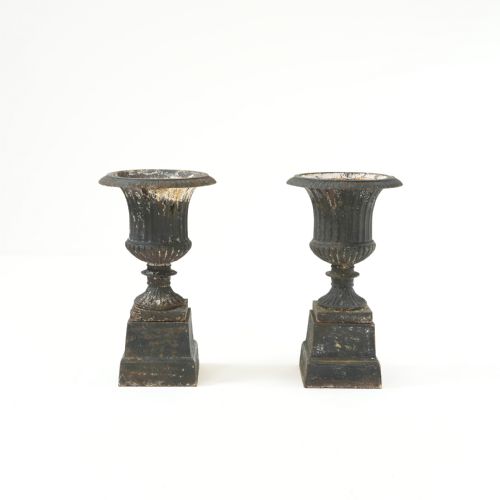
- A bell-shaped vessel with a flared rim and footed base, modelled after ancient Roman garden containers. These forms provide the silhouette for many decorative mantel pieces.
- Grand Tour
- The cultural journey undertaken by wealthy young Europeans in the eighteenth and nineteenth centuries, inspiring souvenir purchases of classical antiquities. Miniature bronzes and stone vessels were popular items brought home.
- Ormolu
- Finely ground high-carat gold applied to a bronze base using a mercury amalgamation technique, later replaced by electroplating. This finish adds bright metallic contrast to dark urn bodies.
- Garniture
- A set of three or more matching decorative objects, typically a central clock flanked by matching urns or candlesticks. They were designed specifically for display on a mantelpiece.
- Tazza
- A shallow saucer-like dish mounted on a stem and foot, often carved from marble or stone. They mimic classical drinking vessels adapted for display.
Black Urn Pair: Frequently Asked Questions
Where should I place a black urn pair?
These pieces work best in symmetrical arrangements, such as flanking a fireplace mantel, anchoring the ends of a sideboard or resting on matching pedestals.
Because they provide strong vertical lines and dark tones, they anchor lighter walls and balance larger furniture items effectively.
How do I care for antique marble and bronze urns?
Dust surfaces regularly with a soft, dry cloth to prevent grit accumulation in carved recesses. Avoid using chemical cleaners or abrasive polishes, which can strip historic patinas from the metal or etch stone surfaces.
If the metal mounts require cleaning, consult a specialist conservator rather than applying commercial liquids directly.
Are these urns waterproof?
Most antique decorative urns were created purely for ornamental display rather than holding water and fresh flowers. Using them as vases risks damaging internal linings, historic lacquers or porous stone bases.
If you wish to display botanicals, insert a separate glass or plastic vessel inside rather than filling the urn directly.
How can I tell nineteenth-century pieces from later reproductions?
Examine the construction methods, screw types and wear patterns on the underside and interior of the base. Nineteenth-century examples typically feature hand-cut threads, heavy patinated bronze components and natural material variations.
Twentieth-century revivals often display uniform machine casting and modern adhesives without the accumulated handling wear of earlier pieces.