




Black Bronzed Clock
A black bronzed clock brings together dark patinated metal and bright mounts to anchor a room with steady, ticking weight.
Black Bronzed Clock
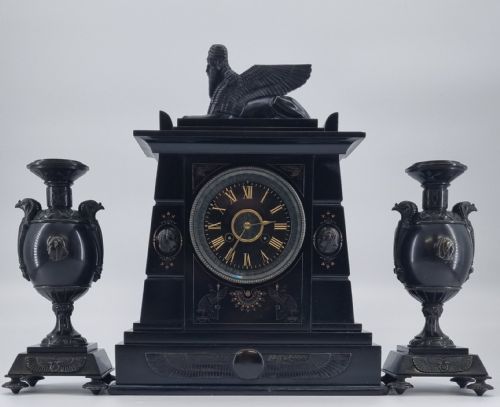
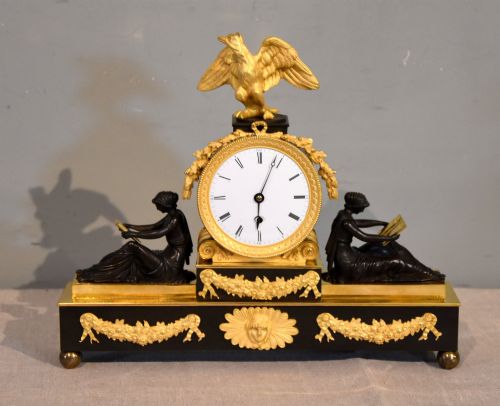
A black bronzed clock combines dark patinated bronze or slate surfaces with contrasting metal mounts, forming substantial timepieces designed for mantelpieces, desks and brackets. These objects range from English Regency fusee timepieces to elaborate French Empire and Victorian garniture sets complete with side pieces.
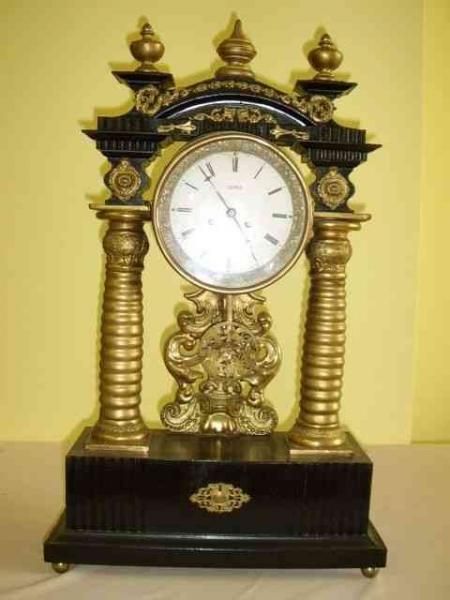
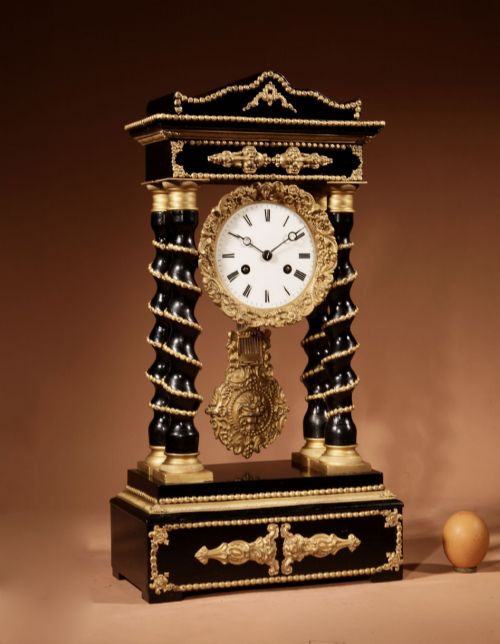
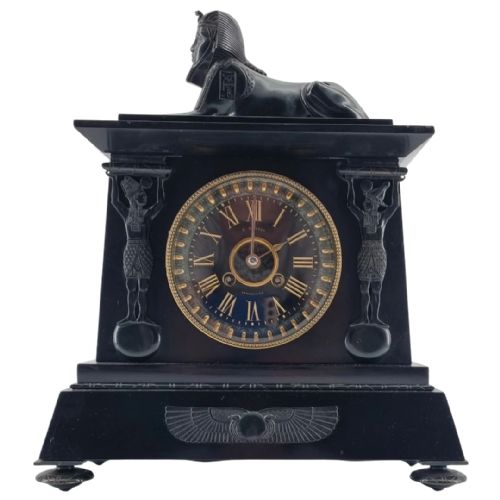
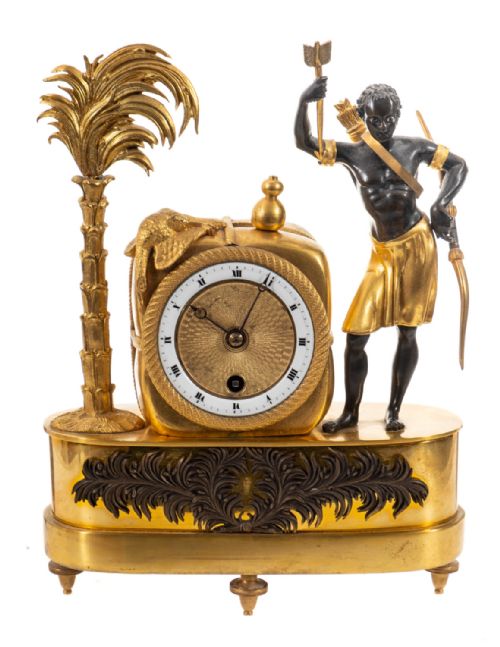
The versions most common on this page date from the nineteenth century, spanning Regency, Victorian and Napoleon III periods. Makers utilised marble, ebonised wood and enamel dials alongside patinated bronze to create architectural portico designs, figural subjects and Egyptian revival models.
How they were made
Craftsmen cast bronze and brass components, applying dark patination to the metal bodies while reserving bright finishes for ormolu mounts and gilded details. Marble and slate provided heavy, polished foundations for the clock bodies, paired with white enamel dials and delicate glass bezels.
Clockmakers fitted mechanical movements, including eight-day and fusee mechanisms, into carved and cast housings. Artisans combined ebonised wood with cast bronze figures, animals and architectural columns to construct portico, bracket and mantel formats.
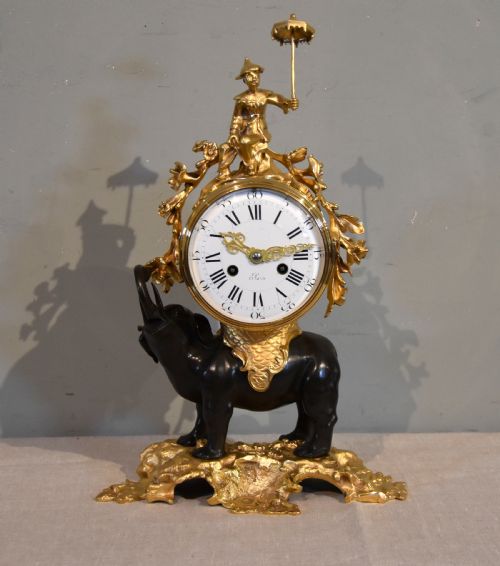
Elephants, goats, and palm trees inhabit the dial sides of these nineteenth century mantel pieces.
What varies in quality
Quality rests in the crispness of the bronze casting and the depth of the dark patination against the gilded highlights. Superior examples display refined chasing on figural elements, crisp enamel dials and well-balanced proportions across the entire garniture set.
The merit of a piece also depends on the integration of the movement within the case and the architectural harmony of the marble or slate structure. Finer specimens exhibit signed movements by established makers and retain their original matching components.
Baetens London·Philippes Paris·D. Munsey of Cambridge·Payne and Co London·Pons de Paul·Achille Brocot·Barraud and Lund London·Henri Dasson
The Black Bronzed Clock Glossary
- Garniture
- A set consisting of a central clock and matching side ornaments such as urns or candelabra. These sets create a balanced display on a mantelpiece.
- Fusee
- A conical pulley used in mechanical clocks to maintain equal force as the mainspring unwinds. This mechanism improves timekeeping accuracy.
- Ormolu
- Gilded bronze produced by applying a mercury and gold amalgam to the metal base. The technique creates a rich, lasting surface lustre.
- Patinated bronze
- Metal treated with chemical solutions to produce a controlled dark surface colour. This finish contrasts sharply with polished or gilded mounts.
Black Bronzed Clock: Frequently Asked Questions
What is a black bronzed clock?
A black bronzed clock is a mantel or bracket timepiece featuring dark patinated metal surfaces, often combined with marble, slate, or gilded mounts.
These pieces draw on Regency, Victorian, and French Empire styles, frequently incorporating figural or architectural elements.
How do you wind an antique clock?
Antique clocks require a specific winding key inserted into the dial holes to tension the mainspring.
Care must be taken not to overwind the movement, and many collectors consult professional horologists for setup guidance.
What is a clock garniture set?
A clock garniture set includes a central timepiece accompanied by matching decorative side objects like urns or figures.
These matching groups were designed to create a symmetrical display across a fireplace mantel.
How do I identify a nineteenth century clock?
Nineteenth century clocks show distinct period characteristics in their brass movements, dial lettering, and architectural or revival styling.
Maker signatures on the movement backplates or dials often help confirm the exact production era.