




Empire Period Timepiece
An empire period timepiece is a heavy, sculptural desk or mantel clock driven by precise mechanics, built to anchor a formal nineteenth-century interior.
Empire Period Timepiece
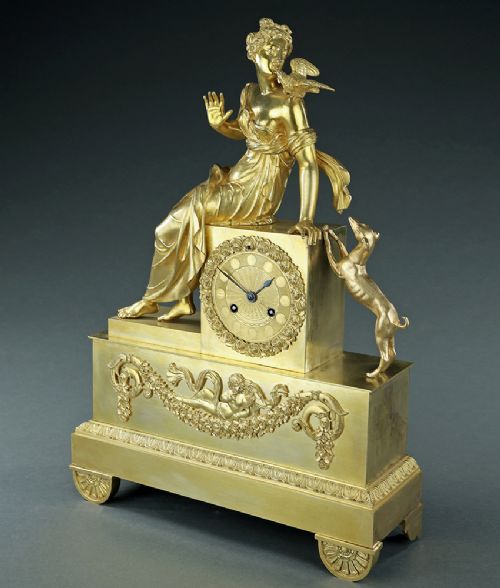
When you search for an empire period timepiece, you encounter heavy architectural and figural mantel clocks originating from France and Regency Britain during the early nineteenth century. These objects combine timekeeping mechanics with classical sculpture, mythological subjects and allegorical narratives.
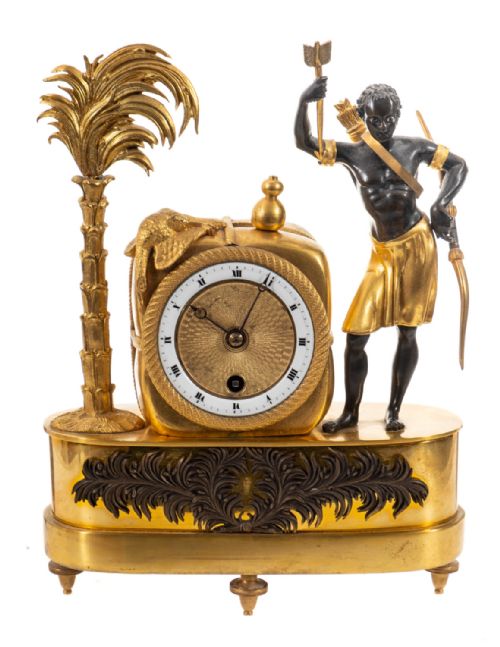
The versions most common on this page are French and Regency mantel clocks from the nineteenth century, including portico designs, lion forms and figural compositions in gilt and patinated bronze. Such pieces sit solidly on marble or metal bases, often driven by fusee movements or silk suspension mechanisms.
Beyond standard mantel clocks, the selections include carriage clocks and specialised night timepieces, demonstrating diverse variations in scale and domestic function. These items span the Directoire, Empire, Restauration and Turkish taste styles, reflecting shifting European aesthetics across the decades.
How they were made
Casework relies heavily on cast ormolu and gilt bronze combined with patinated bronze, creating a striking contrast between bright metallic surfaces and dark metal figures. Craftsmen also incorporated white marble, brass, enamel dials and protective glass panels into the structural housings.
Movements utilise mechanical innovations such as chain fusee systems and silk suspensions to regulate timekeeping with precision. The decorative elements involve detailed metal casting and chasing, anchoring allegorical figures and botanical motifs like palm trees and goats to the clock bodies.
Materials appearing across the inventory include gilt bronze, ormolu, patinated bronze, white marble, brass, glass and enamel.
What varies in quality
The fineness of the chasing on the bronze and ormolu figures separates standard production from superior examples, where facial expressions, drapery folds and surface textures remain sharp and deeply defined. The integration of the movement with the case design also dictates overall merit.
A documented maker or a notable pedigree elevates a timepiece above unsigned workshop output, reflecting the status of the original commission. Additionally, the complexity of the movement, such as an eight-day bell striking mechanism or fusee setup, marks higher manufacturing standards.
Ravrio·Pons De Paul·Baltazart·FB Adams London
The Empire Period Timepiece Glossary
- Ormolu
- Gilded bronze produced by applying a mercury and gold amalgam to a base metal and heating it to drive off the mercury. This technique creates a rich, durable golden finish characteristic of luxury nineteenth-century metalwork.
- Fusee
- A conical pulley used with a chain or cord to maintain even power delivery to the gear train as the mainspring unwinds. This mechanical device improves the timekeeping accuracy of the clock.
- Portico clock
- A mantel clock featuring a architectural frame supported by four columns, resembling a classical temple facade. These structures frequently house a swinging pendulum suspended centrally between the pillars.
- Silk suspension
- A method of hanging the pendulum from a small loop of woven silk thread inside the movement. This delicate mechanism was common in French clocks before giving way to steel spring suspensions.
- Patinated bronze
- Metal treated with chemical solutions to darken or colour the surface, creating contrast against bright ormolu mountings. It allows sculptors to render clothing, hair and natural elements with realistic tones.
Empire Period Timepiece: Frequently Asked Questions
How do I wind an empire period timepiece?
Winding requires inserting the appropriate key into the dial winding holes and turning gently until resistance increases. Care must be taken not to overwind the mainspring.
For fusee movements, ensure the chain is properly seated on the cone pulley before adjusting the hands. Consulting a professional horologist is advisable for initial setup.
Where should I place a heavy bronze clock?
These dense metal clocks require sturdy, level surfaces such as heavy mantelpieces, solid wood sideboards or dedicated consoles. The weight demands stable support to prevent accidental tipping.
Keep the clock away from direct sunlight, draughts and moisture to protect the delicate ormolu gilding and enamel dials from environmental degradation.
How do I tell an empire clock from a Regency one?
French empire clocks lean towards classical Roman iconography, mythological figures and architectural portico structures reflecting Napoleonic tastes. They often feature bright ormolu contrasted with dark patinated bronze.
Regency timepieces produced in Britain share similar classical influences but frequently incorporate local design quirks, specific fusee movements, and maker signatures from London workshops.
Why does my clock run fast or slow?
Changes in temperature, humidity and table leveling can alter the swing of the pendulum and affect timekeeping accuracy. The internal mechanical components also expand and contract seasonally.
Adjustment is typically achieved by moving the pendulum bob up or down using the regulating nut. Major discrepancies require professional servicing rather than DIY adjustment.