



Black Bronze Table Lamps
These black bronze table lamps bring period weight and rich metalwork to a room, offering genuine architectural presence.
Black Bronze Table Lamps
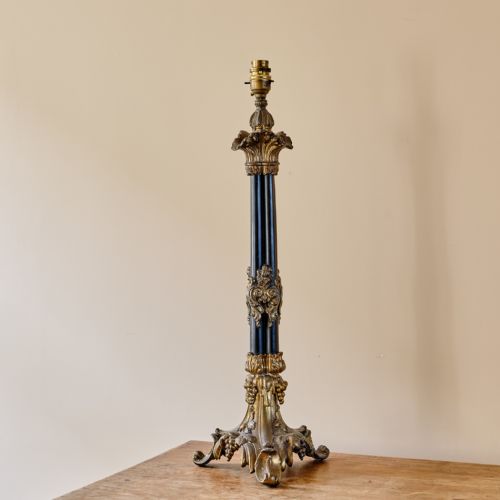
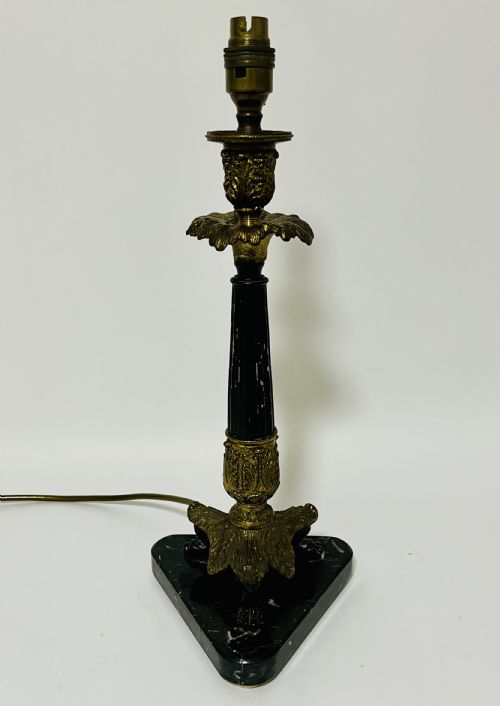
When buyers search for black bronze table lamps, they look for heavy metal lighting with deep patination, most often found in French nineteenth-century and early twentieth-century designs. The pieces on this page lean heavily towards classical proportions, column forms, and figural bases.
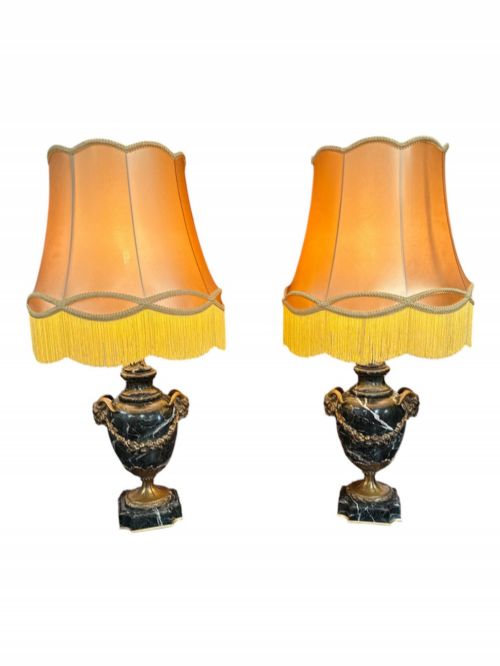
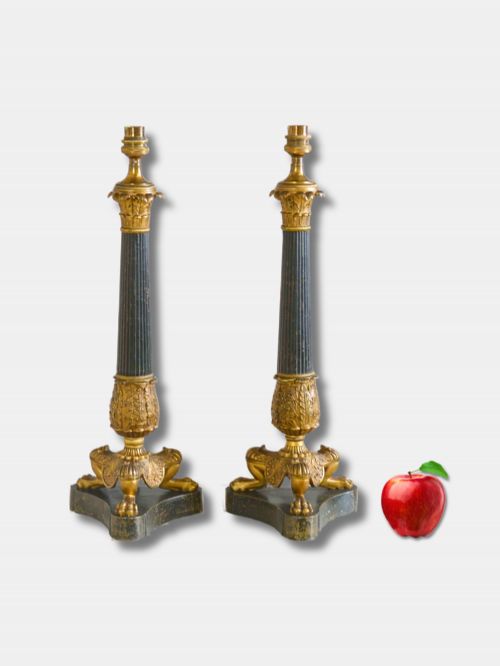
You will encounter pairs of urn lamps, column lamps with lions paw feet, and individual pieces featuring classical or figural motifs. The selection draws on French Empire, Neoclassical, and Art Deco styles, often paired with contrasting materials like marble and ormolu.
Many of these lighting pieces originate from the nineteenth century, alongside Edwardian examples and later Art Deco creations. They function as striking focal points on side tables and desks, combining utilitarian lighting with decorative metalwork.
Materials and construction
The construction of these lamps relies on cast metals, primarily bronze, spelter, and brass, combined with substantial bases of marble. Artisans utilised mercury gilding, ormolu accents, and lacquered finishes to create contrast against the dark bronze bodies.
Many examples incorporate architectural elements such as columns, urns, and stepped bases, assembled from multiple cast components. Fabric elements and glass components appear alongside the metal structures to complete the lighting assemblies.
An accordion-playing Pierrot night light in spelter ensures your hallway stays guarded by a musical melancholic.
Distinctions in quality
Quality in these metal lamps rests on the crispness of the casting and the depth of the original patination on the bronze. Finer examples display sharp detailing in foliage, figural work, and paw feet, whereas simpler pieces show softer edges and more uniform surfaces.
The choice of secondary materials marks the upper tier of the range, particularly heavy marbles and genuine fire-gilded ormolu mounts rather than plain gilt metal. Superior weight, stable construction, and integrated branching all separate standard lighting bases from exceptional decorative objects.
The Black Bronze Table Lamps Glossary
- Ormolu
- Gilt bronze produced by applying a finely ground high-carat gold-mercury amalgam to a bronze object before firing. This technique creates a durable, luminous golden surface that contrasts sharply with dark bronze.
- Spelter
- An alloy of zinc and lead used as a less expensive alternative to bronze for figural and decorative castings. It takes patination well but is softer and lighter than genuine bronze.
- French Empire
- A neoclassical design style spanning the late eighteenth and early nineteenth centuries, characterised by military motifs, classical columns, and heavy gilt mounts. It draws heavily on ancient Roman and Greek aesthetics.
- Neoclassical
- A style rooted in the art and architecture of classical antiquity, focusing on symmetry, proportion, and restrained ornamentation. It frequently employs columns, urns, and architectural friezes.
Black Bronze Table Lamps: Frequently Asked Questions
Are these lamps wired for modern use?
Most antique lamps have been adapted for contemporary electrical standards at various points in their long history. Buyers should inspect the specific wiring of each piece upon arrival.
Rewiring is straightforward for a qualified electrician if the existing cord or fitting does not meet current safety requirements.
How do I clean bronze and marble bases?
Dust bronze surfaces gently with a soft, dry cloth to protect the patination and any remaining gilt highlights. Avoid abrasive cleaners or chemical polishes that can strip the finish.
Marble bases respond well to a slightly damp cloth followed by immediate drying, keeping moisture away from metal mounts.
What is the difference between bronze and spelter?
Bronze is a heavy, durable copper alloy that accepts fine chisel work and holds a deep, stable patina over centuries. Spelter is a softer, lighter zinc alloy commonly used for decorative figures and less expensive lamp bases.
Checking the weight and examining the underside often reveals which metal was poured into the mould.
How do I identify French Empire style?
French Empire pieces typically feature strict symmetry, architectural column forms, and classical motifs such as laurel wreaths and lions paw feet. The aesthetic reflects a grand imperial ambition inspired by ancient Rome.
Gilt bronze mounts usually contrast strongly against dark patinated bronze or black marble bodies.