


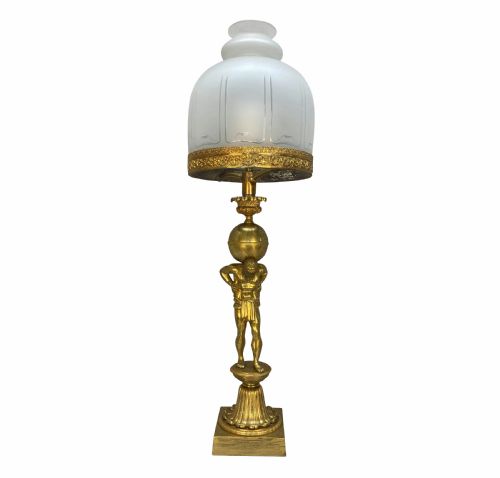
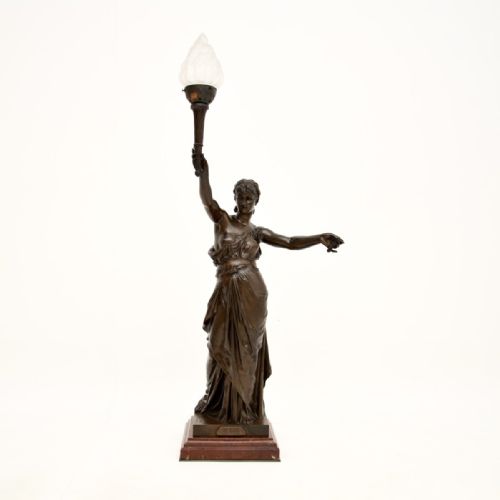


Classical Statue Lamp
These classical statue lamp pieces bring sculptural dignity and rich illumination into a room, making them sought-after by collectors of period decorative arts.
Classical Statue Lamp
A classical statue lamp combines sculptural human figures with lighting elements, drawing heavily on ancient Greek and Roman motifs. These objects emerge in forms such as table lamps, floor lamps, torcheres, and statues adapted for illumination.
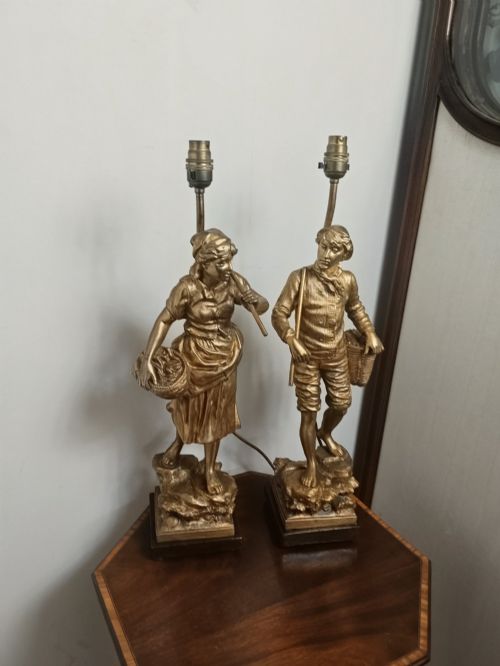
The pieces on this page span several centuries and design movements, notably the Regency era, Victorian period, and early twentieth century. French nineteenth-century and Neoclassical Revival styles dominate the selection, bringing mythological and allegorical figures into domestic spaces.
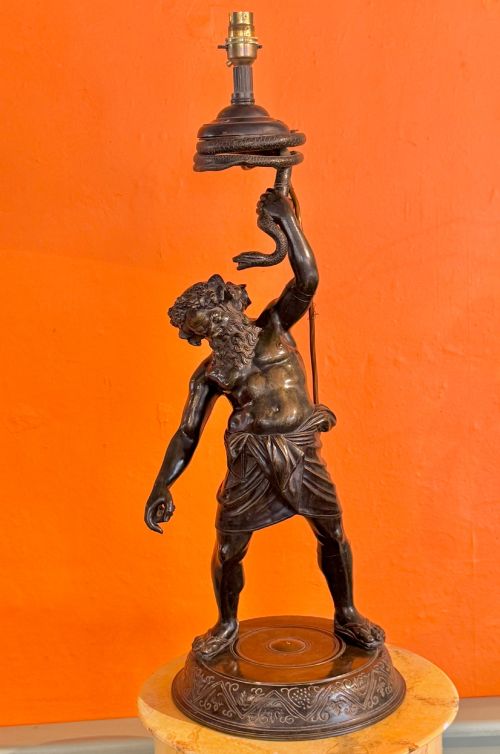
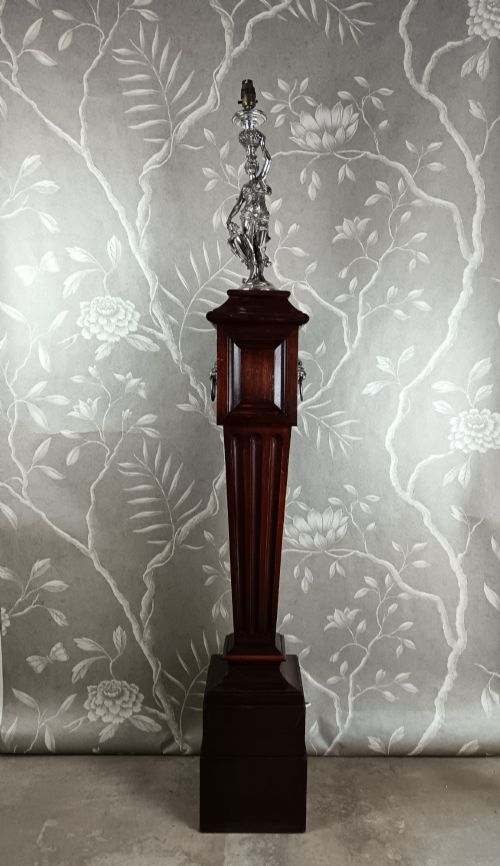
Makers and sculptors often rendered historical figures, muses, and allegories in substantial dimensions. Buyers encounter everything from modest bronze table lamps to towering seven-foot torcheres.
How they were made
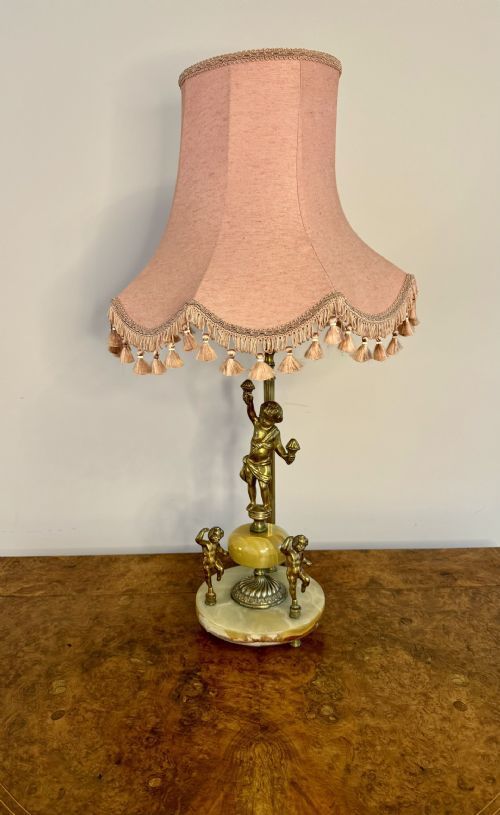
Foundry workers utilised traditional casting methods to create bronze, gilt bronze, ormolu, and spelter figures, often mounting them securely onto heavy marble or onyx plinths. Artisans finished these metals with patination, cold painting, or gilding to enhance the anatomical detail and drapery of the statues.
Lighting components were integrated into the sculptural compositions, combining metalwork with glass, frosted glass, and fabric shades. Plaster, alabaster, copper, and oak also appear as primary materials across different pieces and periods.
Materials in this collection include bronze, marble, glass, brass, fabric, frosted glass, gilt bronze, and plaster.
What varies in quality
The fineness of the chasing and the crispness of the cast separate superior figures from standard production pieces. Master sculptors and prominent foundries achieved a depth of expression and fluidity in drapery that lesser workshops simply missed.
The choice and integrity of the base materials dictate the overall weight and presence of the object. Solid marbles, heavy patinated bronzes, and crisp ormolu mounts indicate a higher tier of manufacture than lighter spelter or composite alternatives.
G. Amodio Naples·WMF·Humphrey Hopper·Emile Picault·Jean-Jules Cambos·H. Moreau·Coutan·Henri Honore Ple
The Classical Statue Lamp Glossary
- Torchere
- A tall stand or ornamental floor lamp designed to hold a light source. These pieces often take the form of a classical figure holding a light.
- Ormolu
- Finely ground high-carat gold applied to a bronze object using a mercury-gilding technique. This finish yields a brilliant, lasting metallic lustre.
- Spelter
- An alloy of zinc and lead often used as a cheaper substitute for bronze. Sculptures in this material frequently received a bronze-like coating.
- Caryatid
- A sculptured female figure serving as an architectural support or standing decorative element. They frequently appear in classical furniture and lighting designs.
- Patination
- The surface alteration of metal resulting from age, chemical treatment, or handling. A rich patina adds visual depth to bronze and copper figures.
Classical Statue Lamp: Frequently Asked Questions
What is a classical statue lamp?
A classical statue lamp is an antique lighting fixture that incorporates a sculptural human figure, deity, or mythological character into its design. These pieces blend utilitarian lighting with fine art casting.
They function as both desk or floor illumination and striking sculptural centerpieces within an interior.
How do I identify the period?
Dating relies on examining the casting techniques, signature styles, and material composition of the base and figure. Neoclassical and Regency pieces display restrained, classical proportions, whereas late nineteenth-century and Art Nouveau examples favor more exuberant detailing.
Maker signatures, foundry marks, and the type of plinth stone also provide clear chronological markers.
Where should I place a torchere lamp?
Torchere lamps work best in corners, grand hallways, or flanking large pieces of furniture where their height and vertical presence can be fully appreciated. Because many of these pieces are exceptionally tall, they require stable floor space away from heavy foot traffic.
Their upward illumination casts a soft, ambient glow across ceilings and upper walls.
Are bronze and spelter lamps different?
Bronze and spelter differ significantly in weight, durability, and intrinsic value. Bronze is a heavy, durable copper alloy that takes fine chisel work, while spelter is a softer, lighter zinc alloy.
Spelter figures were produced as affordable alternatives to bronze during the nineteenth and early twentieth centuries.