



Neoclassical Standing Lamp
A neoclassical standing lamp brings structural dignity and ancient architectural proportion into a room, combining vertical presence with classical detail.
Neoclassical Standing Lamp
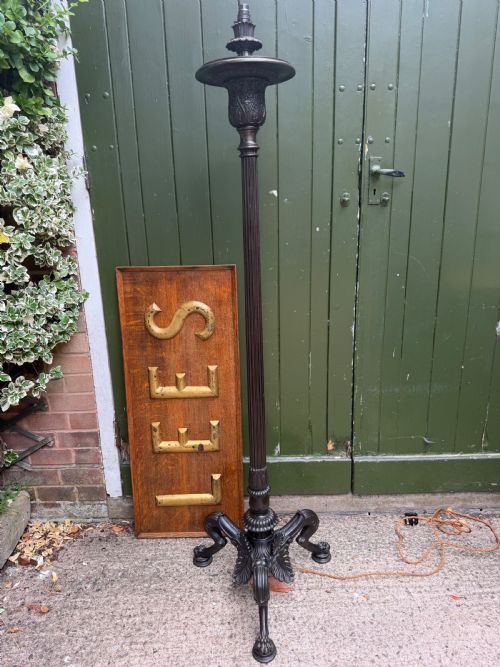
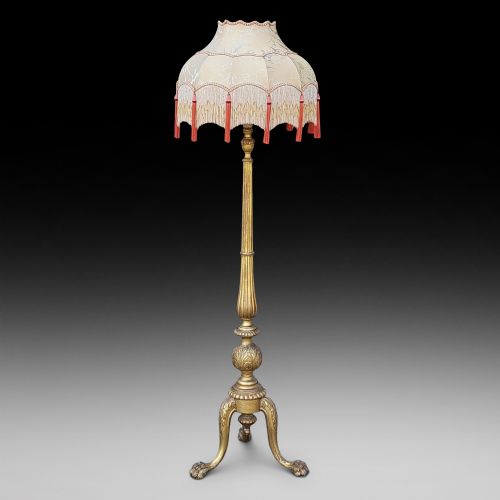
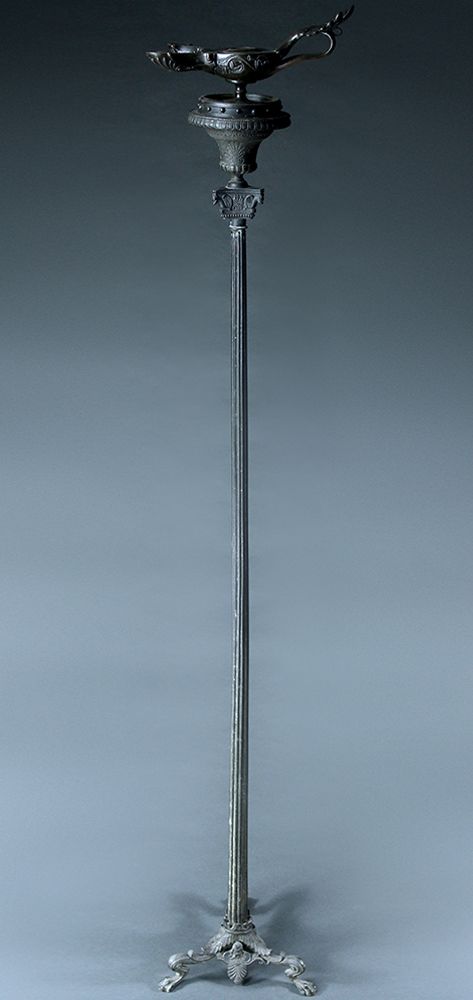
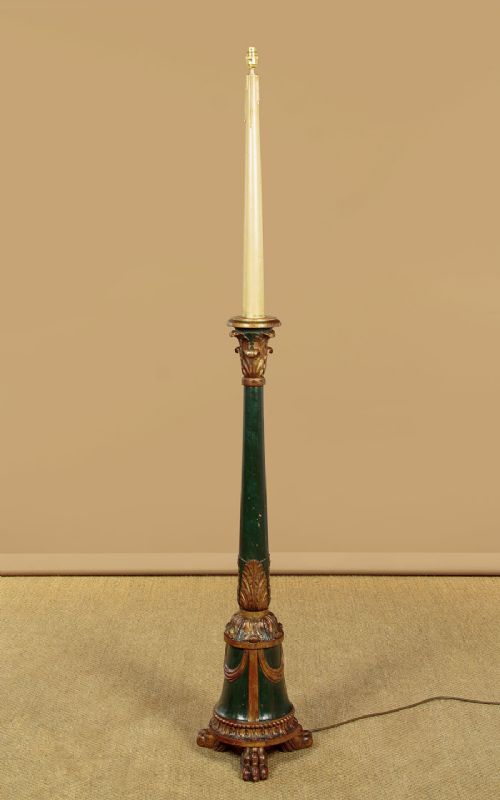
A neoclassical standing lamp takes the form of a tall floor-standing column, torchere, or standard lamp designed to illuminate a room from a raised height. These pieces draw upon the architectural vocabulary of ancient Greece and Rome, often translating stone motifs into domestic lighting.
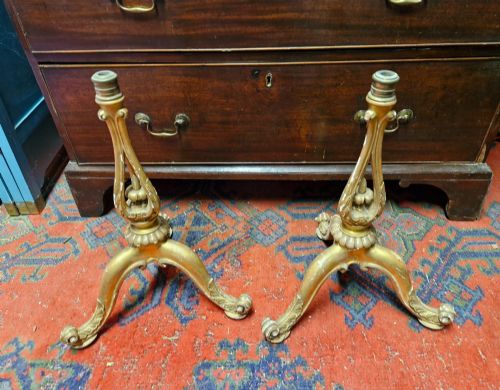
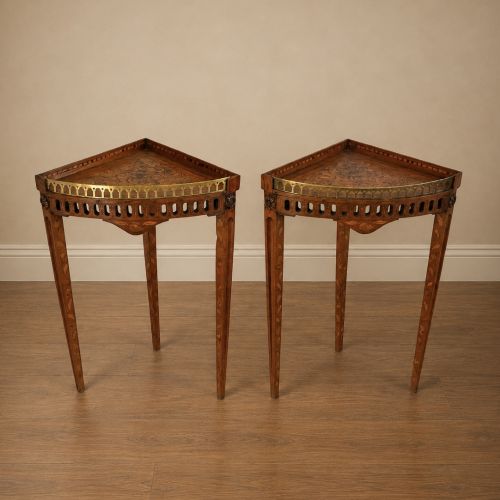
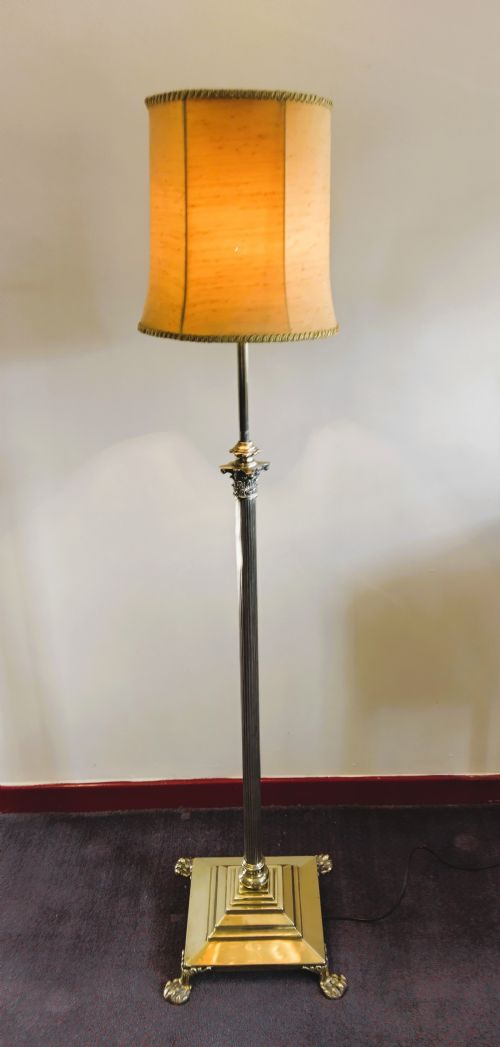
The versions most commonly met on this page span the nineteenth century through the early twentieth century, taking shape as fluted metal columns, gilded woodwork, or tripod bases. Alongside standard lamps, the selection includes related classical forms like torcheres and occasional tables that share the same design lineage.
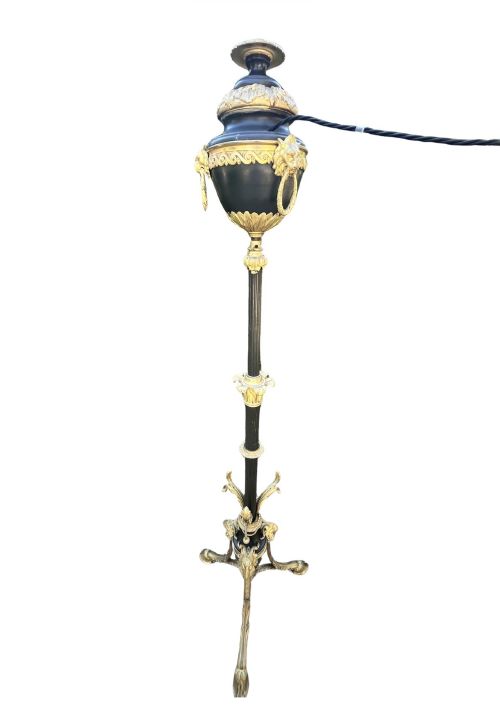
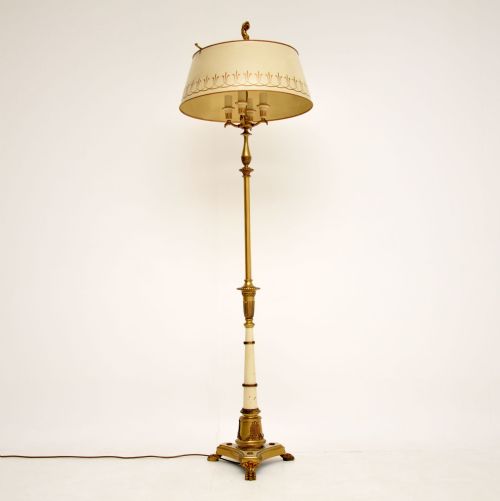
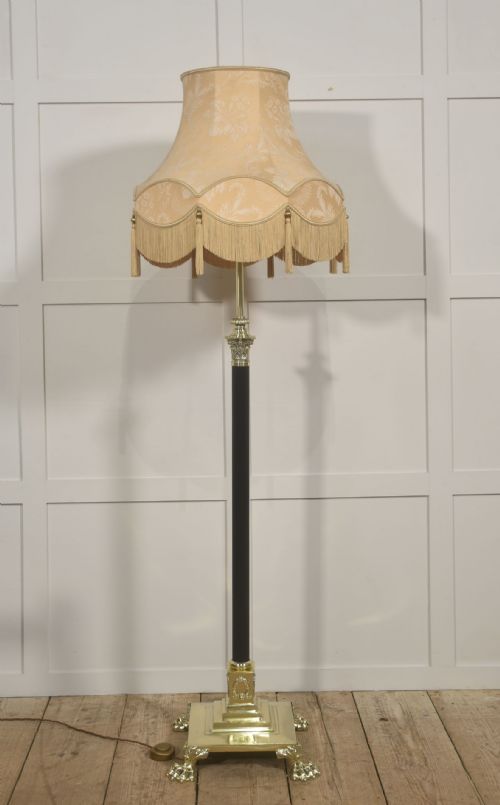
Originating across Britain, France, Sweden, and Italy, these lamps reflect regional interpretations of the neoclassical revival. French and Swedish examples lean toward parcel gilt finishes and alabaster details, while British pieces frequently employ heavy brass and cast bronze.
Materials and Construction
Makers utilised cast brass, bronze, and giltwood as primary structural materials, shaping metal into adjustable stems and carving wood into fluted columns and tripod supports. Marble frequently appears as a dense base or tabletop material, grounding the vertical composition with mineral weight.
Surface decoration relies on applied gilding, patination, and hand-painted finishes to accentuate classical ornament such as rams heads, acanthus leaves, and fluting. Wiring and electrical components were added or adapted later to standard lamps originally constructed for gas or candle use.
Several brass standards proudly retain cast rams heads, watching over the room with stoic archaeological charm.
Standards of Execution
The distinction between ordinary and superior pieces rests upon the crispness of the cast or carved ornament. Finer standards display deeply undercut acanthus leaves, sharp fluting on columns, and solid bronze or heavy brass rather than thin plated metal.
Engineering and adjustment mechanisms also separate tiers of quality, with better examples featuring well-machined sliding stems and secure heavy bases that prevent tipping. The integration of secondary materials, such as genuine marble slabs and intact gilt surfaces, elevates the piece.
Humphrey Hopper·Hinks·Coutan
The Neoclassical Standing Lamp Glossary
- Standard lamp
- A tall floor lamp designed to stand independently and illuminate a room from above. This term is frequently used interchangeably with floor lamp in British listings.
- Torchere
- A tall ornamental stand originally intended to carry a torch or candle, later adapted for electricity. They often feature slender columns and tripod bases.
- Giltwood
- Wood that has been coated with a thin layer of gold leaf or gilt paint. It is characteristic of decorative standard lamps from the nineteenth and twentieth centuries.
- Neoclassical revival
- A stylistic movement drawing inspiration from the classical art and architecture of ancient Greece and Rome. This aesthetic prioritises symmetry, straight lines, and classical motifs.
Neoclassical Standing Lamp: Frequently Asked Questions
How do I wire an antique floor lamp?
Most antique standards require modern rewiring to meet current safety standards while preserving the original exterior column.
A professional electrician can thread modern flex through the internal channel without altering the historical brass or bronze exterior.
Are these lamps height adjustable?
Many metal standard lamps from the period feature telescopic stems that allow the overall height to be adjusted by loosening a key or collar.
Wooden and giltwood versions typically feature fixed heights determined by their carved columnar construction.
What shades suit a classical standard lamp?
Traditional fabric or silk shades in neutral tones complement the restrained vertical lines of brass and giltwood columns.
The proportions of the shade should balance the heavy cast base to maintain stability and visual harmony.