





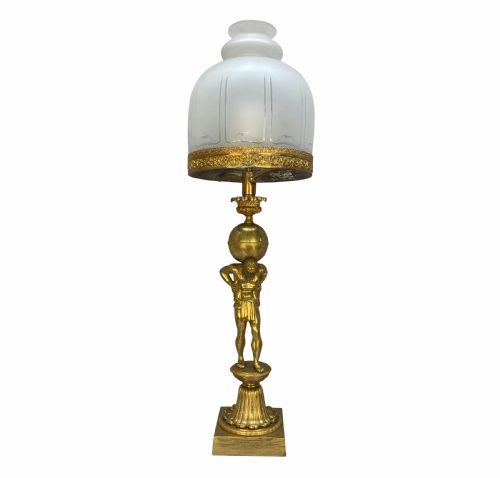


Neoclassical Figural Table Lamps
Neoclassical figural table lamps combine classical subject matter with functional lighting, bringing sculptural presence and historical form into an interior.
Neoclassical Figural Table Lamps
When you search for neoclassical figural table lamps, you find lighting formed from human figures, putti, or allegorical subjects rooted in classical antiquity. These items appear across the nineteenth century, the Regency era, and the early twentieth century, including revival pieces.
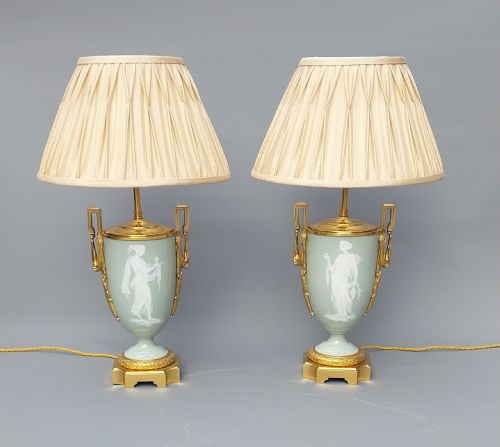
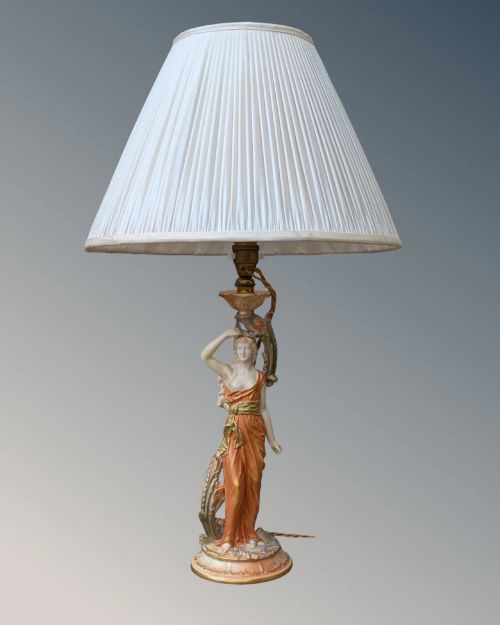
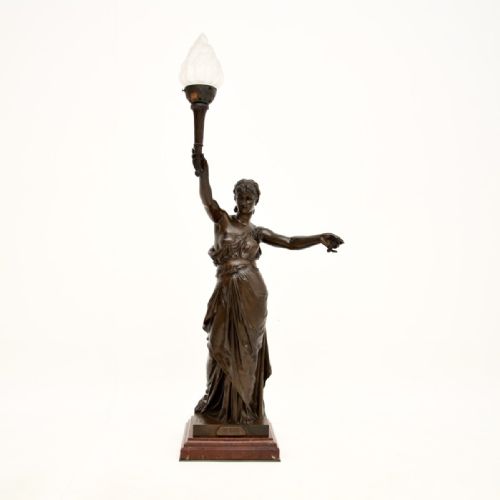
The most common examples on this page are French and English works cast in bronze, ormolu, and spelter, often mounted on marble or china bases. Figures like Atlas, Apollo Belvedere, and allegorical characters such as La Paix dominate the selection.
Many of these objects incorporate fabric shades or frosted glass elements to diffuse the light above the figurative base. They function as both structural lamps and standalone decorative sculptures.
How they were made
Maker workshops utilised bronze, gilt-bronze, brass, and spelter to cast the figural components with sharp anatomical detail and classical drapery. These metal castings were frequently combined with white marble plinths or porcelain and china bases to add weight and contrast.
Lighting elements, such as frosted glass or fabric shades, were added to complete the conversion from ornamental sculpture to functional table lamp. Gilt and ormolu finishes were applied to highlight the high-relief details of the figures and their pedestals.
Neoclassical Figural Table Lamps Retail Price Guide 2026
Typical asking prices for neoclassical figural table lamps among the pieces listed under this phrase on Sellingantiques today, from the lower quarter to the upper quarter. They describe what is for sale here now, not the wider market.
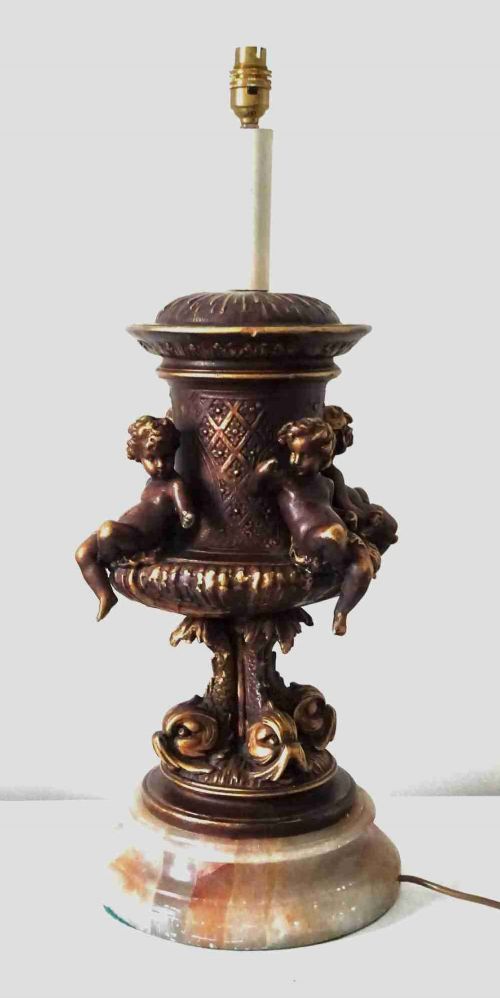
Several lamps rely on cherubs wrestling with dolphins to hold up the light.
What varies in quality
The sophistication of the metal casting and the crispness of the chasing separate finer examples from simpler production. Heavier materials like bronze and marble indicate a more substantial construction than lighter spelter alternatives.
The integration of the figural sculpture with the lighting mechanism reveals the maker's intent, whether the piece began as a dedicated lamp or was later adapted from a decorative figure.
Jean-Jules Cambos·Royal Worcester·Baccarat
The Neoclassical Figural Table Lamps Glossary
- Ormolu
- Gilded bronze, where a finely ground gold-mercury amalgam is applied to a bronze base and heated to drive off the mercury. This technique creates a rich, durable golden surface seen on many French pieces.
- Spelter
- A zinc-based alloy used as a less expensive substitute for bronze in nineteenth and twentieth-century metalwork. It takes patination well but is softer and lighter than genuine bronze.
- Plinth
- A heavy rectangular or square base supporting a statue, column, or lamp figure. In these pieces, marble is frequently used for this foundational element.
- Regency
- An English design period spanning the early nineteenth century, known for its strong classical influences derived from Greek and Roman antiquity. Pieces from this era often feature heavy gilt-bronze mounts.
- Putto
- A chubby male infant depicted in classical art, often winged and resembling a cherub. They appear frequently supporting torches or dolphins in figural bases.
Neoclassical Figural Table Lamps: Frequently Asked Questions
What periods do these lamps come from?
The pieces span the nineteenth century, the Regency era, and the early twentieth century up to around nineteen-twenty. Revival styles also appear from the later Victorian period.
Most items reflect French and English manufacturing traditions of those decades.
What materials are used in the bases?
Bases commonly combine bronze, gilt-bronze, brass, or spelter with marble plinths or china and porcelain supports. These mixed materials provide structural stability and visual contrast.
Frosted glass and fabric are typically reserved for the upper shade components.
How do I identify a figural subject?
Subjects are drawn from classical mythology and allegory, depicting figures such as Atlas, Apollo, cherubs, and personifications like La Paix. Inscriptions or signatures sometimes appear on the metal plinths.
Attributes like dolphins, torches, and classical drapery help distinguish the specific figures.
Were these originally made as lamps?
Some pieces were cast specifically as lighting fixtures, while others began life as decorative bronze or porcelain figures and were later converted. The wiring and fittings often indicate the period of conversion.
Both purpose-built and adapted pieces form part of this category.
How do I care for bronze and marble?
Dust bronze gently with a soft, dry cloth and avoid harsh chemical cleaners that might strip the original patina. Marble requires mild soap and water to prevent staining, followed by thorough drying.
Keep electrical components checked by a professional.