


Red Marble Table Lamps
Red marble table lamps bring architectural weight and deep colour to a room, combining solid stone with metal mounts from the nineteenth century.
Red Marble Table Lamps
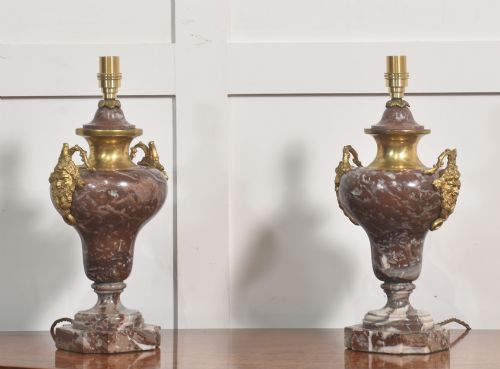
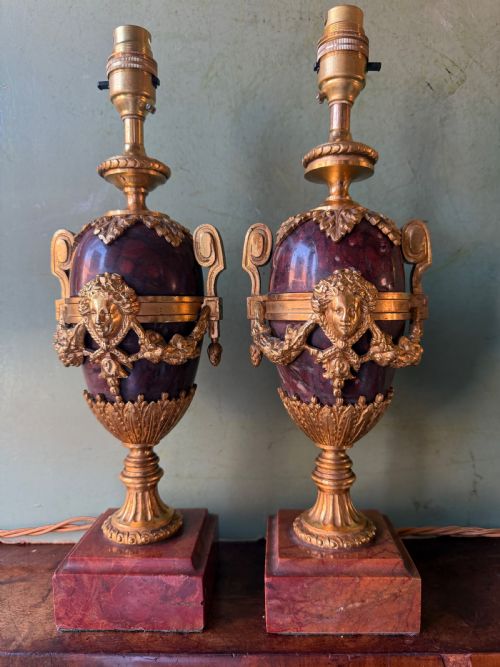
When you search for red marble table lamps, you find heavy, stone-bodied lighting pieces dating predominantly from the nineteenth century. These items frequently appear as matched pairs, incorporating turned or polished rouge marble columns and urns set upon decorative metal bases.
The dominant aesthetic draws heavily on French Neoclassical, Louis XVI, and Empire design traditions. Alongside dedicated lamps, related marble-topped occasional and side tables appear, reflecting the broader nineteenth-century taste for integrating polished stone into domestic interiors.
How they were made
Makers shaped solid rouge and two-tone polished marble into columns, vases, and urn bodies on lathes, achieving smooth, reflective cylindrical surfaces. These stone sections are combined with cast brass, gilt bronze, and ormolu mounts that secure the structure and provide decorative collars and bases.
Many of these pieces began life as oil lamps, candlesticks, or candelabra before later conversion to electricity. Skilled metalworkers chased and gilded the bronze and brass components by hand to complement the rich red hues of the stone.
Several heavy marble table lamps began their working lives holding candles before electricity even had a name.
What varies in quality
The distinction between standard domestic pieces and exhibition quality objects lies in the crispness of the bronze chasing and the selection of the marble. Finer examples display deeply articulated ormolu mounts with sharp leaf and bead detailing, alongside richly variegated rouge stone free of heavy veining faults.
Proportion and weight also dictate standing value, as heavier cast bases provide better stability for the dense stone columns. The integration between metal mounts and stone determines structural integrity, separating bespoke workshop pieces from mass-produced variants.
The Red Marble Table Lamps Glossary
- Rouge Marble
- A deep red, highly polished natural limestone often mottled with white and grey veins. It was widely utilised in French decorative arts for architectural and tabletop elements.
- Ormolu
- Finely ground high-carat gold mercury-gilded onto a bronze base. This technique creates a rich, warm metallic lustre characteristic of luxury nineteenth-century mounts.
- Neoclassical
- A revival style drawing inspiration from classical antiquity, featuring symmetrical forms, urn motifs, and restrained classical ornament. It dominated furniture and decorative lighting design through the nineteenth century.
- Empire Design
- A late eighteenth and nineteenth-century imperial style defined by heavy classical references, patinated bronze, and martial or classical motifs. Pieces in this style project solidity and formal grandeur.
Red Marble Table Lamps: Frequently Asked Questions
Are these lamps originally electric?
Most nineteenth-century examples were originally configured for candles or burning oil before receiving later electrical conversions.
Wiring standards differ across periods, so buyers often inspect internal cord paths and brass fittings to determine the extent of past alterations.
How do I identify French nineteenth-century lighting?
French pieces typically rely on heavy cast ormolu mounts, finely chased details, and deep rouge marble bodies designed in the Louis XVI or Empire styles.
National origins are often confirmed by the specific methods used to join the bronze components to the turned stone shafts.
How should I clean red marble?
Polished stone surfaces require gentle dusting with a dry, soft cloth to prevent abrasion. Water and chemical cleaners should be avoided to protect the exposed metal mounts and the historic polish of the stone.
What is the difference between ormolu and brass?
Ormolu consists of a mercury-gilded bronze base that yields a deep, warm golden finish over time. Brass is an alloy of copper and zinc that tends to show a brighter, yellower metallic tone unless patinated.