




French Classical Urn Lighting
French classical urn lighting brings substantial architectural presence into a room through monumental forms and rich metallic mounts.
French Classical Urn Lighting
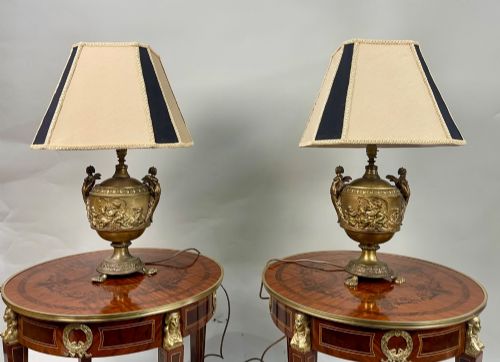
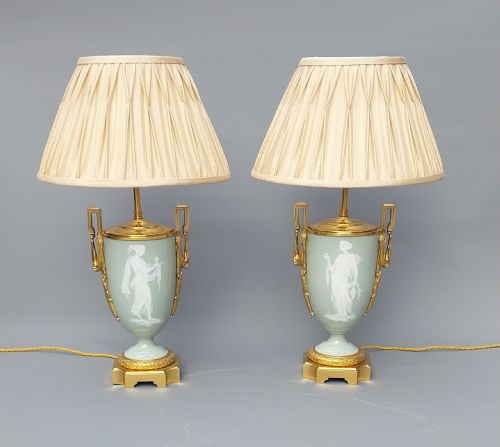
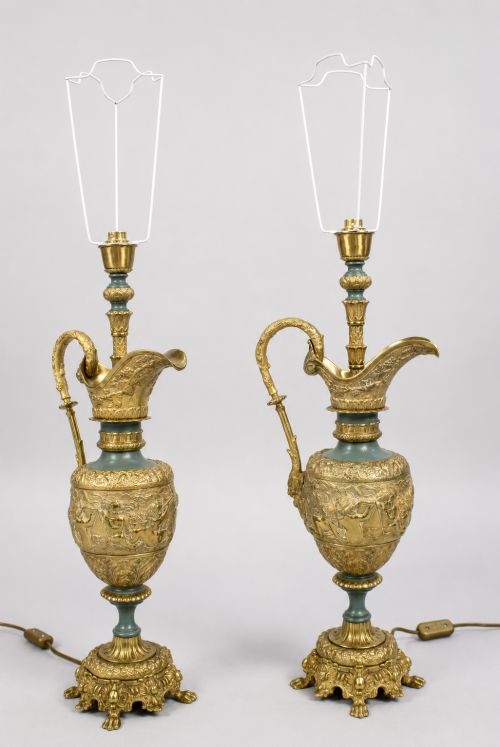
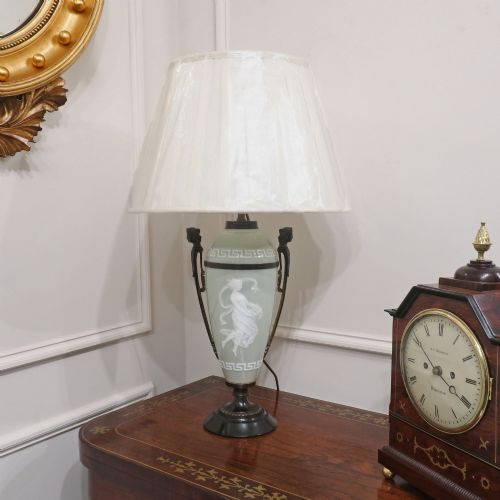
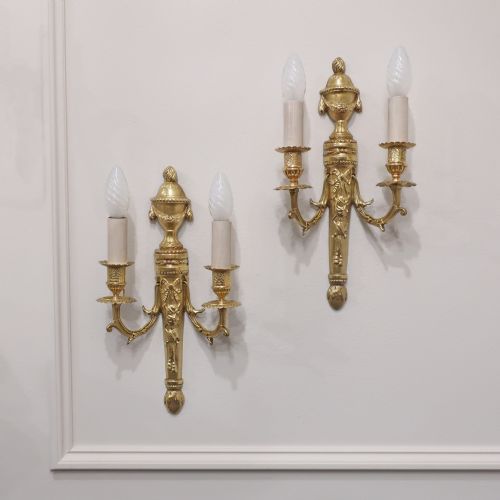
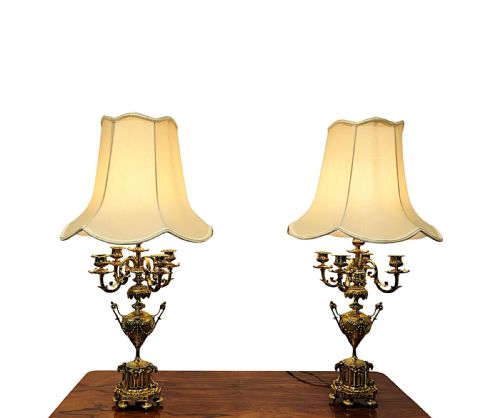
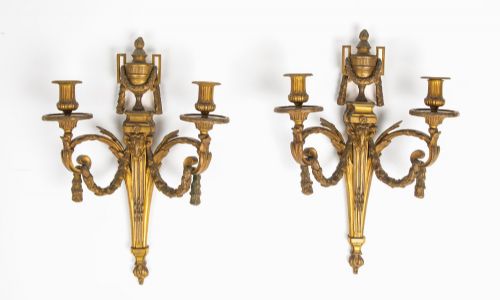
French classical urn lighting encompasses table lamps, wall lights, and converted candelabras that take their primary form from ancient vessels. These pieces draw heavily on Neoclassical, Louis XVI, and Empire design vocabularies, appearing frequently as pairs intended for balanced placement on sideboards or console tables. The forms rely on classical proportions, often incorporating twin handles, pedestal bases, and distinct body shapes derived from ancient Greek and Roman amphorae and cassolettes.
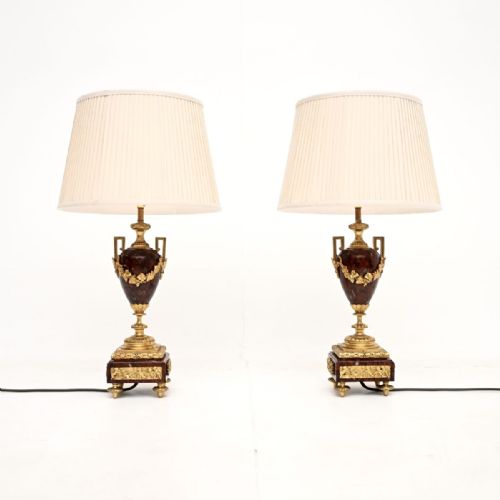
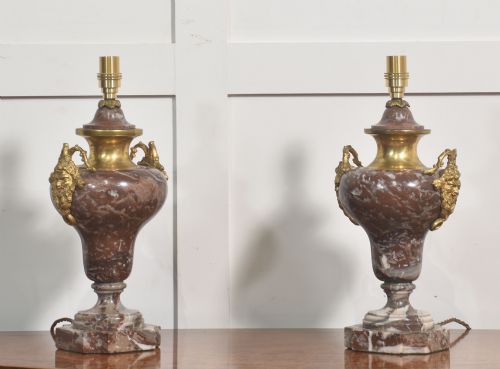
The objects listed within this grouping originate predominantly from the nineteenth and early twentieth centuries, spanning periods from the 1860s through to the 1930s. Makers frequently utilised rich stone bodies, such as rouge marble, white marble, and onyx, pairing them with cast metal mounts. Conversions from oil lamps or traditional candleholders into electrical fittings account for a substantial portion of these surviving examples.
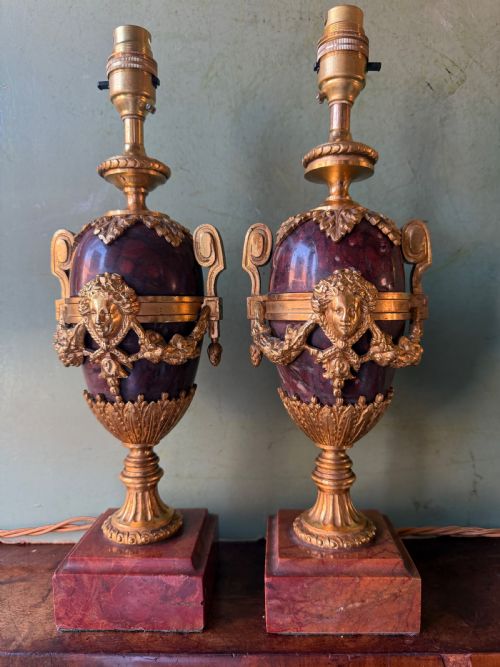
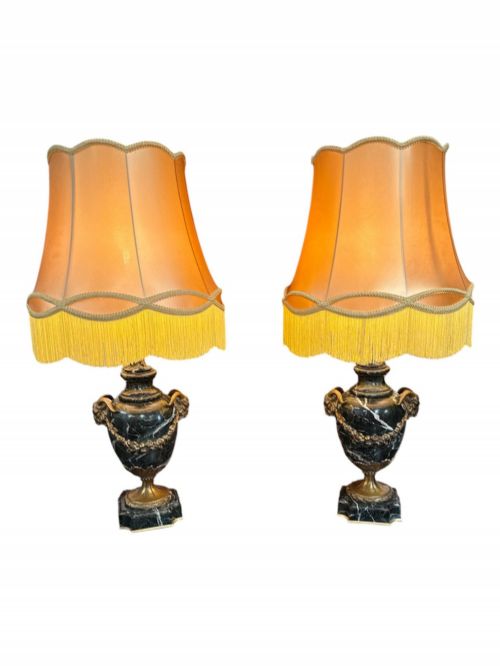
Buyers encounter a strong representation of Louis XVI Revival and French Chateau aesthetics among these listings. The visual weight comes from the combination of carved or cast stone urns with heavy metalwork, such as ram's head masks, leaf scroll handles, and acanthus collars. Fabric shades are commonly paired with these bases, though many pieces appear ready for shade selection according to interior requirements.
Materials and construction
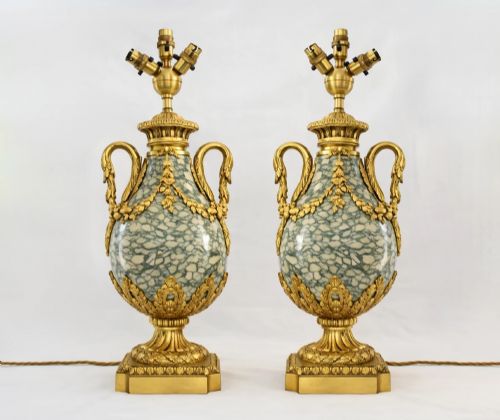
Makers constructed the bodies of these urns from natural stones including marble and onyx, alongside ceramic bodies featuring pate sur pate porcelain or blue glaze. Metal components, encompassing ormolu, gilt bronze, brass, and gilt metal, were cast separately and applied to the stone vessels. These metal mounts frequently include intricate chasing and gilding to accentuate the classical motifs.
The assembly relies on threaded metal rods running through the centre of the stone urns to secure the base, body, and collar together. Converted candelabras and cassolettes involve adapting original drip pans or candle nozzles to house electrical lamp holders. Plaster, spelter, and carved giltwood also appear as alternative structural materials across the span of manufacturing dates.
French Classical Urn Lighting Retail Price Guide 2026
Typical asking prices for french classical urn lighting among the pieces listed under this phrase on Sellingantiques today, from the lower quarter to the upper quarter. They describe what is for sale here now, not the wider market.
Listings for French classical urn lighting frequently combine nineteenth-century marble bodies with Louis XVI Revival ormolu mounts.
Assessing quality and execution
The crispness of the chasing on the gilt bronze and ormolu mounts determines much of the visual merit. Finer examples display sharp, deep definition in leaf scrolls, drapery, and animal masks, whereas lesser pieces show softer, shallower casting details resulting from worn production moulds.
The selection and turning of the stone body dictates the underlying solidity of the piece. High-grade items utilise dense, richly figured rouge or white marble without heavy internal fracturing, fitted with accurately proportioned brass or bronze bezels that sit flush against the stone.
Casier
The French Classical Urn Lighting Glossary
- Urn
- A rounded vessel on a stem or pedestal, traditionally used for storage or as a decorative garden ornament. In lighting, the urn shape forms the primary central body of the lamp.
- Ormolu
- Gilt bronze produced by applying a finely ground mercury and gold amalgam to cast bronze, then heating to drive off the mercury. This technique creates a rich, durable golden surface finish characteristic of fine French decorative arts.
- Cassolette
- A decorative vase or urn with a removable or reversible lid, often designed to function alternatively as a perfume burner or a candle holder. Many antique cassolettes are subsequently adapted to house electrical lamp components.
- Pate sur pate
- A ceramic technique where wet white porcelain slip is built up in successive layers on a contrasting coloured clay body to create a low relief cameo effect. Pieces utilising this method display delicate translucent detailing.
- Neoclassical
- A style spanning the eighteenth and nineteenth centuries that revives the classical forms, motifs, and proportions of ancient Greece and Rome. This aesthetic prioritises symmetry, restraint, and architectural order.
French Classical Urn Lighting: Frequently Asked Questions
How do I wire an antique urn lamp?
Wiring typically involves running modern three-core flex up through the central threaded rod of the urn to a brass lampholder. Because many pieces are heavy marble or bronze, retaining the original base stability during rewiring is essential.
Professional rewiring ensures that older metal bodies are properly earthed, keeping the antique structure safe for daily domestic use without altering the exterior appearance.
Are these lamps converted from oil burners?
Many examples began life as oil lamps, fluid lamps, or traditional candelabras before receiving modern electrical conversions later in their lifespan. These conversions often preserve the original burners or candle nozzles as part of the upper mount assembly.
Identifying a conversion involves looking for threaded wiring holes drilled through the original metal collar or font during the twentieth century.
How do I choose the right shade size?
The shade should generally match the widest diameter of the stone or bronze urn base to maintain visual balance. Tapered fabric shades work effectively with the classical vertical lines of column and urn forms.
Consider the height of the lamp body when selecting drop lengths so that the bulb cluster sits comfortably hidden within the lower third of the shade.
How do I clean marble and ormolu?
Marble surfaces respond best to gentle dusting with a dry microfiber cloth and occasional wiping with a damp cloth using mild soap. Avoid acidic cleaners or abrasive agents that etch polished stone finishes.
Ormolu mounts require minimal intervention; dusting with a soft brush preserves the remaining mercury gilt surface without wearing away the fine metallic layer.