


Vintage Marble Table Lighting
Vintage marble table lighting brings heavy stone bases and patinated metal into domestic rooms, offering solid forms that anchor a room's illumination.
Vintage Marble Table Lighting
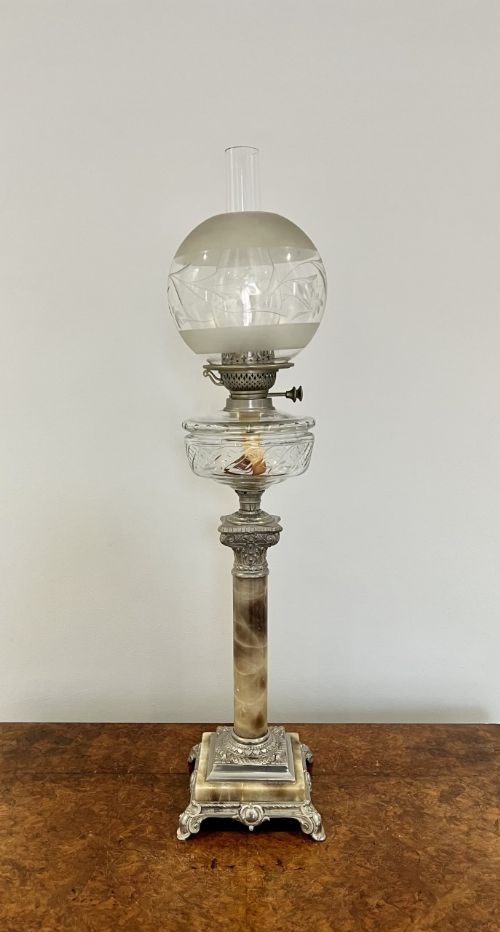
Vintage marble table lighting spans functional illumination pieces grounded in stone, featuring table lamps, standard lamps, and converted oil lamps. These items draw from nineteenth-century classical revivals as well as twentieth-century decorative movements.
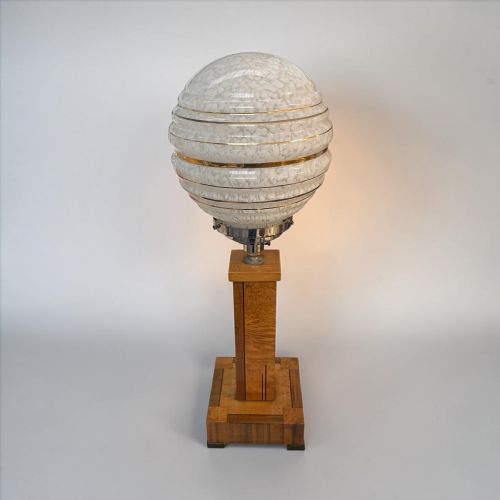
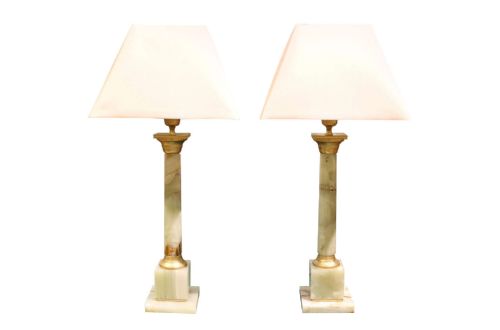
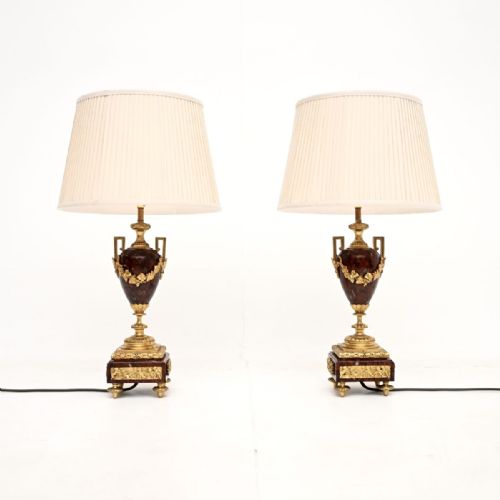
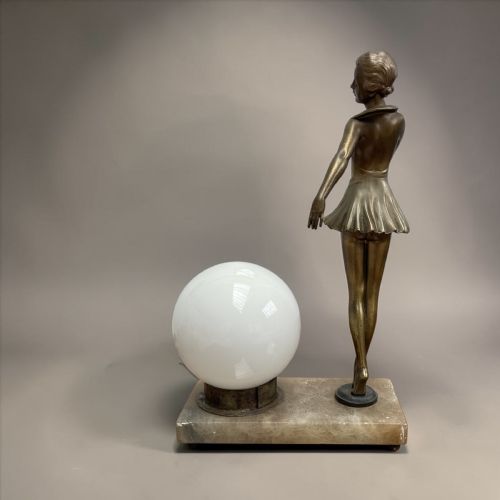
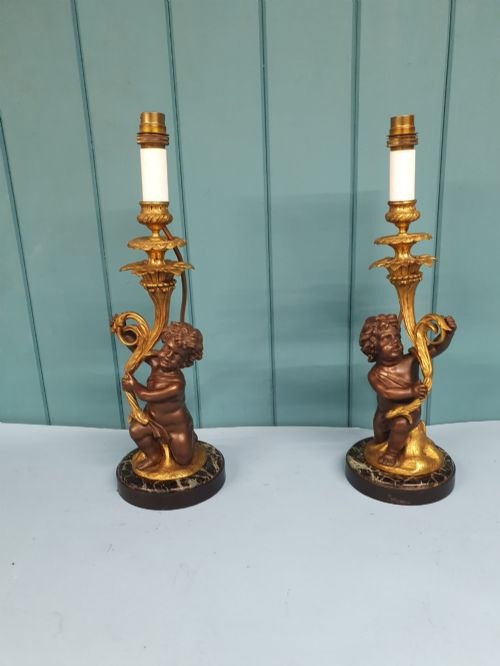
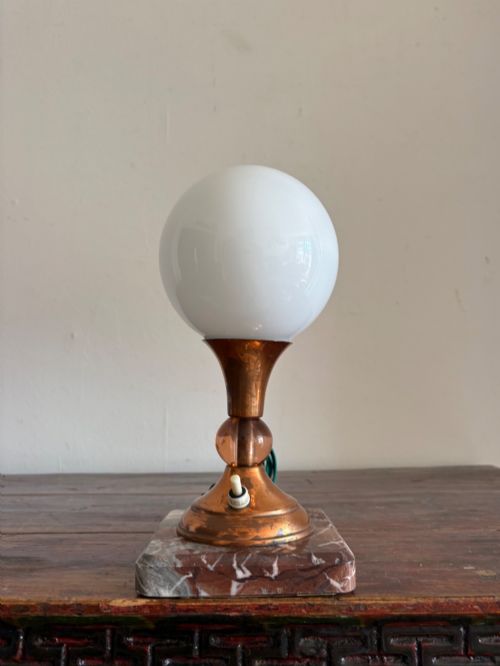
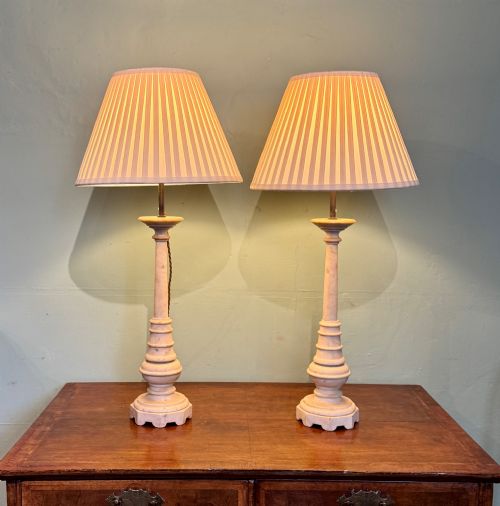
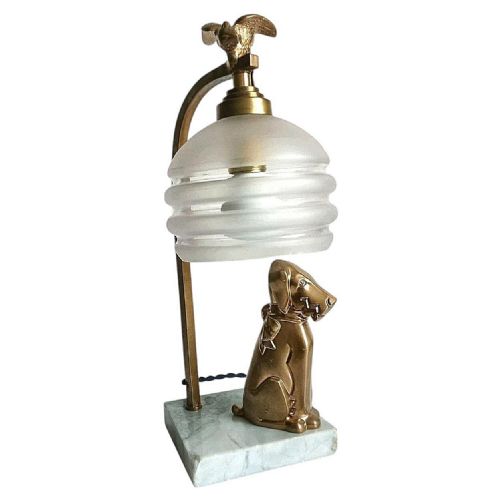
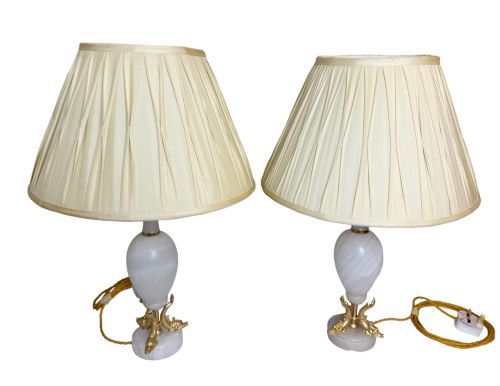
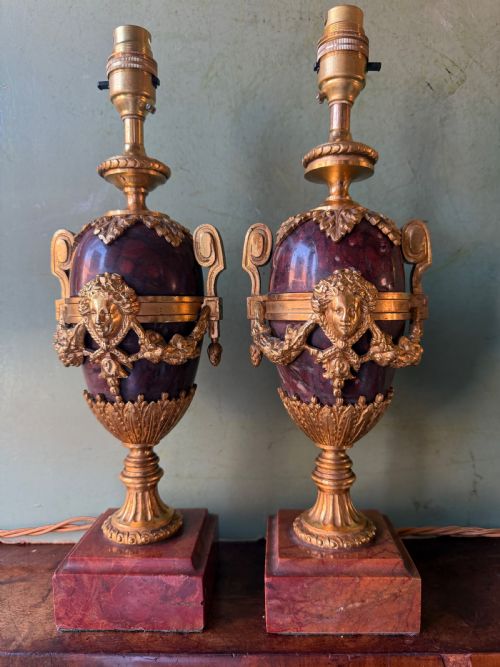
The selection here most frequently delivers French and English designs from the Victorian, Edwardian, and Art Deco eras. Buyers encounter white or rouge marble, onyx, and alabaster paired with cast brass, gilt bronze, and frosted glass.
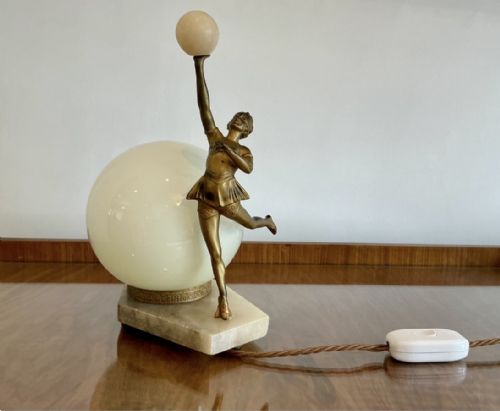
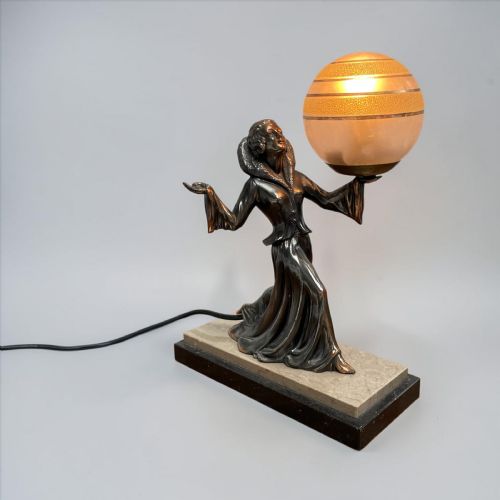
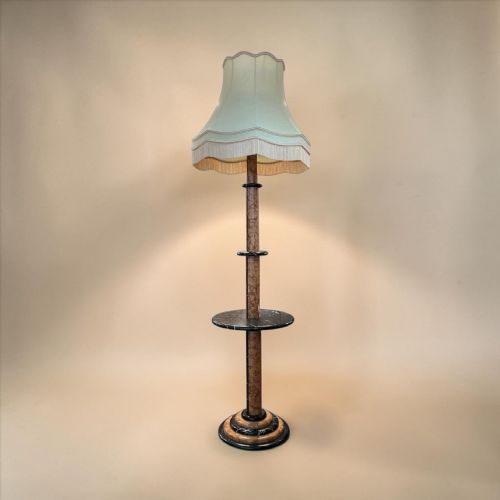
Beyond standard tabletop lighting, the selection includes heavy architectural columns, figurative statuary lamps, and urn bases adapted for electricity. These pieces combine substantial mineral weight with decorative metalwork to create stable, decorative lighting fixtures.
How these pieces were made
Makers shaped natural stone into columns, urns, and plain geometric bases using lathe turning and hand polishing. They combined these mineral bodies with cast bronze, brass, or spelter mounts, securing the components with central threaded rods.
Electrical fittings, fabric shades, and opaline glass elements were added during period production or through later conversions from oil lamps. Gilt bronze and ormolu mounts were cast and chased separately before attachment to the stone bodies.
Vintage Marble Table Lighting Retail Price Guide 2026
Typical asking prices for vintage marble table lighting among the pieces listed under this phrase on Sellingantiques today, from the lower quarter to the upper quarter. They describe what is for sale here now, not the wider market.
Periods represented on this page range from Victorian and Edwardian to Art Deco and nineteenth-century classical revivals.
What varies in quality
Quality rests in the density and grain of the stone, alongside the crispness of the metal cast work. Solid, finely grained marble or translucent alabaster separates superior examples from composite materials.
The weight of the bronze or brass mounts and the precision of their fit against the stone dictate the standard of execution. Well-balanced proportions and heavier gauge metals indicate superior workshop production.
The Vintage Marble Table Lighting Glossary
- Alabaster
- A fine-grained, translucent stone used for carved lamp bases and shades. It allows light to diffuse softly through the mineral surface.
- Onyx
- A banded variety of chalcedony quartz frequently utilised in twentieth-century decorative lighting. Its layered mineral patterns provide distinct visual depth.
- Spelter
- A zinc alloy commonly cast into figurative or decorative mounts during the Art Deco period. It often received bronze or gilt finishes to imitate heavier metals.
- Ormolu
- Gilded bronze applied to furniture and lighting mounts, particularly in French styles. The mercury gilding process creates a deep, lasting metallic lustre.
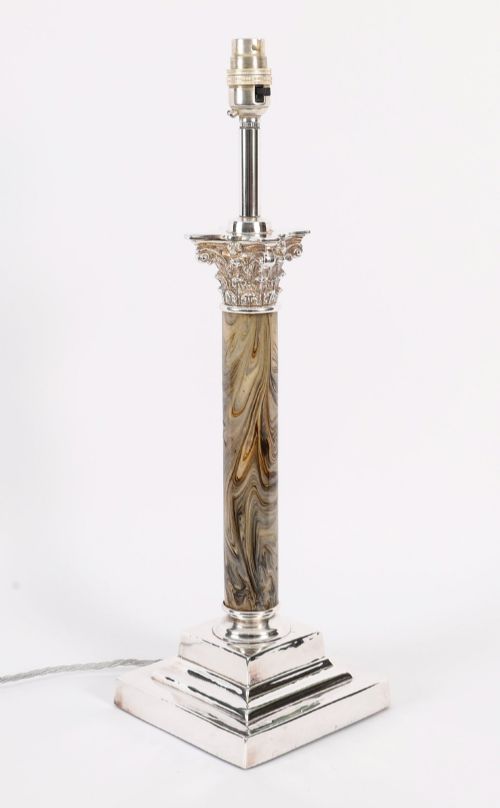
- Corinthian column
- A classical architectural column form featuring ornate acanthus leaves on the capital. Victorian lighting makers frequently replicated this order in plated brass.
Vintage Marble Table Lighting: Frequently Asked Questions
How do I clean marble bases?
Use a soft, dry microfiber cloth to remove dust from the stone surface. Avoid acidic cleaners or excess water, which can penetrate porous marble.
For stubborn marks, a damp cloth with mild soap suffices, followed immediately by thorough drying to protect the finish.
Are these lamps converted oil lamps?
Several tall and column-style examples began life as nineteenth-century paraffin or oil lamps before receiving modern electrical wiring. This conversion practice preserves the original metal and stone reservoirs.
Inspect the central column for threaded passages where burners once sat to identify these older domestic pieces.
How do I date Art Deco pieces?
Art Deco lighting relies on geometric abstraction, stylised animal figures, and streamlined metal mounts combined with onyx or marble. These objects typically date from the nineteen-twenties and nineteen-thirties.
Look for stepped bases and playful motifs such as dogs, parrots, and dancing figures.
What is gilt bronze?
Gilt bronze consists of a cast bronze base coated with a thin layer of gold or gold-coloured alloy. This technique prevents oxidation and provides a rich metallic finish.
It appears frequently on French neoclassical and Louis XVI style lighting mounts.