
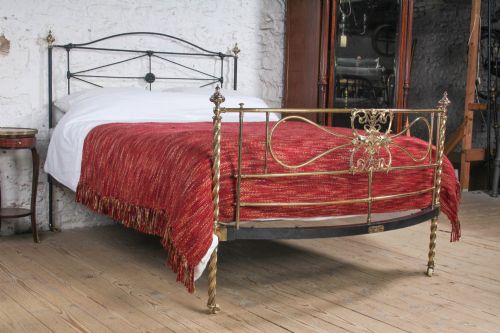

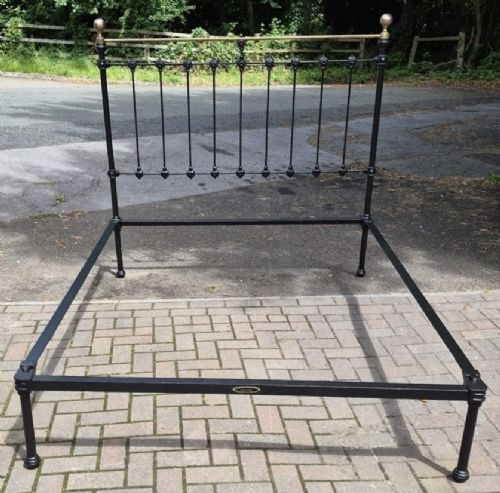
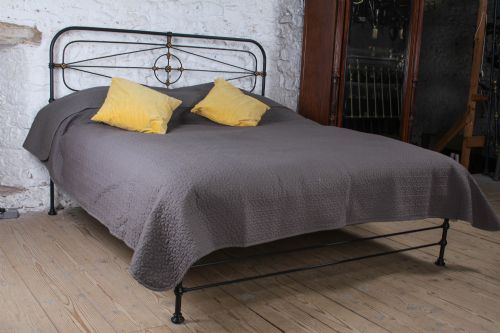
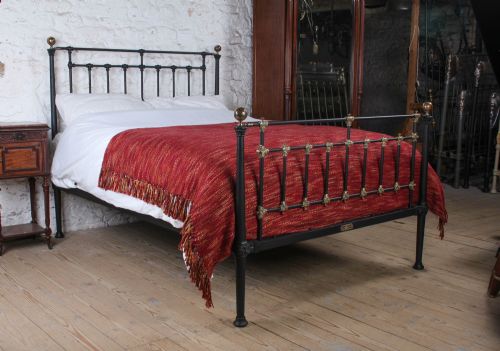
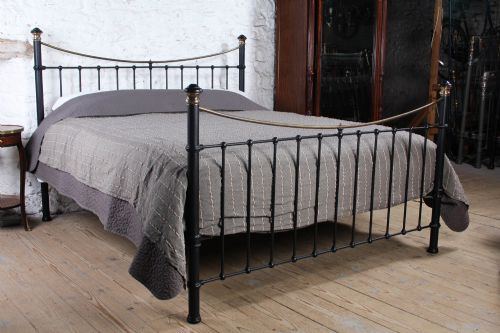


Black Brass King Bed
A black brass king bed brings striking Victorian and Edwardian presence to a bedroom through contrasting dark iron frames and polished metallic mounts.
Black Brass King Bed
A black brass king bed combines a dark painted iron framework with warm brass finials, rails, and spindles. These substantial pieces span from the mid nineteenth century into the early twentieth century, encompassing Victorian and Edwardian eras.
The most common formats found here are Victorian and Edwardian bedsteads in king and super king sizes, often featuring no-end designs or traditional dip-rails. French styles and hospital frames also appear among the surviving examples.
Makers such as Winfield, Maple and Co., and Heals produced these robust frames using cast iron, wrought iron, and brass components. Buyers select them for their blend of historical character and generous proportions.
What Varies in Quality
Quality rests in the crispness of the iron casting, the complexity of the brass details, and the integrity of the original black finish. Finer examples display distinct maker marks, substantial brass gauge, and well-proportioned tapered posts or spindles.
Simpler utilitarian frames share space with ornate designs featuring specialised hardware, upstands, and half tester structures. The presence of original japanning or aged brass surfaces preserves the integrity of the piece.
Listings span the Victorian and Edwardian eras, utilising cast iron, wrought iron, and polished brass.
Winfield·Maple and Co.·Heals
The Black Brass King Bed Glossary
- Dip Rail
- A top rail on a headboard or footboard that dips downward in the centre. This style is frequently seen on Edwardian bedsteads.
- Japanned Lacquer
- A heavy, dark resin finish baked onto iron to simulate traditional Japanese lacquer work. It provides a durable, glossy black protective coating.
- No End Bed
- A bed frame featuring a tall headboard but lacking a high footboard. This configuration creates an open feel in smaller rooms.
- Half Tester
- A bed featuring a partial canopy extending over the head of the mattress. It combines the grandeur of a full tester with a lighter footprint.
- Upstand
- A decorative vertical projection rising above the main line of the headboard. It adds formal height and architectural detail to the frame.
Black Brass King Bed: Frequently Asked Questions
What mattress size fits these antique beds?
These frames were manufactured in British king and super king dimensions, though older tolerances can vary slightly from modern standard sizing. Professional mattress suppliers can accommodate these historical widths easily.
Buyers should measure the internal width and length of the side rails carefully before ordering a modern mattress. Custom slatted bases often provide the ideal modern support for these historic frames.
How do I care for the black iron and brass?
Maintenance involves dusting the painted iron gently and avoiding abrasive cleaners that might damage the dark japanned finish. Brass components respond well to periodic light cleaning with a soft cloth to preserve their natural glow.
Keeping the metal away from damp environments prevents oxidation and protects the original surface patination. Gentle care ensures the contrasting finishes remain sharp for decades.
Are these beds easy to assemble?
Most antique bedsteads utilise heavy iron side-rail wedges and slot-in joints that lock together securely under weight. Two people can assemble the headboard, footboard, and rails within minutes using basic hand tools.
The robust cast iron and brass construction makes the individual components quite heavy. Proper alignment during assembly protects the original corner joints from unnecessary strain.
How do I distinguish Victorian from Edwardian frames?
Victorian models often feature heavier castings, elaborate brass spindles, and prominent finials with rich ornamentation. Edwardian examples tend toward simpler, cleaner lines such as the popular dip-rail profile.
Examining the decorative motifs and the weight of the brass tubing helps reveal the manufacturing decade. Maker marks and registration numbers stamped into the iron provide definitive dating evidence.