
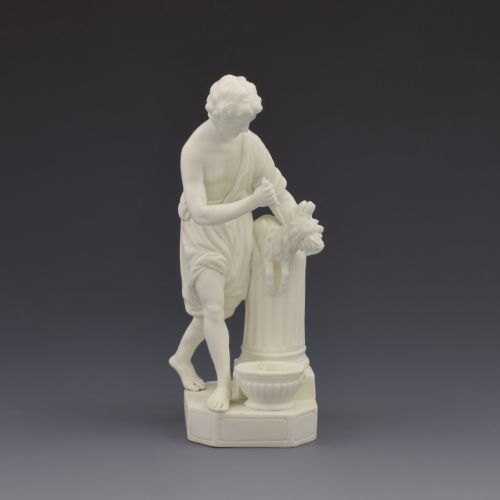


Biscuit Porcelain Statuettes
Biscuit porcelain statuettes are unglazed ceramic figures capturing classical grace and delicate human form, prized for their matte finish and sculptural detail.
Biscuit Porcelain Statuettes
Biscuit porcelain statuettes represent a refined sculptural tradition spanning the eighteenth and nineteenth centuries, taking the form of figurines and elaborate figure groups. When exploring biscuit porcelain statuettes, a buyer encounters examples from English works such as Derby as well as continental French and German pieces.
The selections on this page demonstrate distinct regional interpretations, ranging from Neoclassical figures and French Rococo Revival models to Victorian domestic scenes. Many of these pieces depict classical mythology, allegorical subjects, or children and animals modelled with tender realism.
Most items appearing here belong to the nineteenth century, including Victorian productions and late nineteenth-century continental pieces, alongside earlier eighteenth-century Georgian examples. Collectors find single figurines and pairs designed for mantelpieces and display cabinets.
Materials and production methods
These figures are made from unglazed ceramic body compositions, commonly known as bisque porcelain, biscuit porcelain, or Parian ware. Unlike glazed porcelain, this material is fired without a glossy surface, leaving a smooth, chalky texture that closely resembles carved marble.
The listings on this site combine eighteenth-century Georgian works with Victorian and late nineteenth-century French and German productions.
Judging quality and execution
The distinction between standard figures and superior examples lies in the crispness of the modelling and the depth of the undressed porcelain surface. Finer pieces retain sharp facial expressions, distinct fingers, and cleanly cast drapery without blurring or loss of definition from worn moulds.
The sophistication of the subject and the reputation of the workshop also determine the standing of a piece, with complex multi-figure groups demanding greater technical mastery than single standing figures. The presence of identifiable factory marks or model numbers often points to more ambitious production.
Ernst Bohne Söhne·Triebner Ens Co·Vion et Baury
The Biscuit Porcelain Statuettes Glossary
- Biscuit porcelain
- Unglazed ceramic fired once or twice to achieve a matte, porous finish resembling marble. It is also referred to as bisque porcelain.
- Parian ware
- A type of fine-grained white biscuit porcelain developed in the nineteenth century to imitate carved marble statuary. It was widely utilised for portrait busts and classical figures.
- Neoclassical
- A style inspired by the art and architecture of classical antiquity, characterised by restrained dignity and classical drapery. It appears frequently in eighteenth and nineteenth-century figures.
- Figurine
- A small, freestanding sculptural model depicting a human or animal figure. In porcelain, these range from single decorative subjects to complex narrative groups.
Biscuit Porcelain Statuettes: Frequently Asked Questions
How do I clean biscuit porcelain?
Because the surface is unglazed and slightly porous, biscuit porcelain absorbs dirt and moisture readily if treated improperly. Dust the figures gently with a soft, dry brush.
Avoid using water, soap, or chemical cleaners, as these can permanently stain the matte surface or discolour delicate hand-painted details.
What is the difference between bisque and Parian ware?
Bisque porcelain is traditional unglazed ceramic body material used across Europe from the eighteenth century onwards for sculptural figures. Parian ware is a specific nineteenth-century development designed with a lower vitrification temperature to closely mimic carved marble.
Parian ware often has a slightly more translucent and creamy appearance than standard biscuit porcelain.
Were these figures meant for display?
These statuettes were produced strictly as decorative ornaments for middle and upper-class interiors. They were typically displayed on mantelpieces, side tables, and in glazed cabinets.
Their matte finish was chosen specifically to catch the light in domestic drawing rooms without the glossy reflection of traditional tableware.
How can I tell an eighteenth-century piece from a Victorian one?
Eighteenth-century examples, such as those from Derby, often display softer paste bodies and dynamic modelling associated with Rococo or early Neoclassical tastes. They frequently feature hand-modelled elements and subtle variations unique to early ceramic chemistry.
Victorian and later nineteenth-century figures tend to use harder porcelain bodies, crisper machine-pressed mould lines, and subjects reflecting nineteenth-century sentimentality.