




Pastoral Porcelain Ornaments
Pastoral porcelain ornaments capture idealised rural life through painted figurines, bringing 18th-century country charm into the home.
Pastoral Porcelain Ornaments
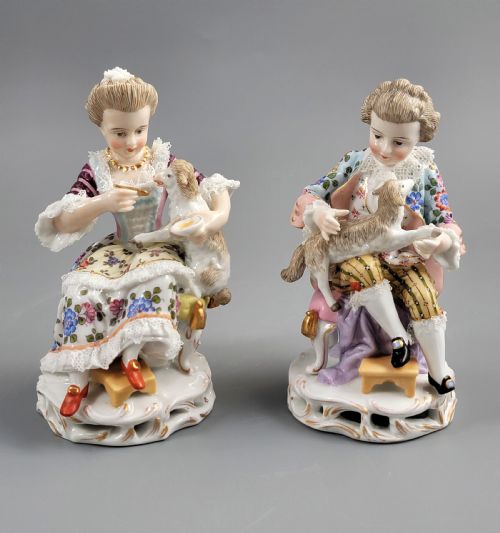
When you search for pastoral porcelain ornaments, you encounter decorative figurines depicting shepherds, shepherdesses, children, and farm workers in rural settings. The examples on this page span from the Georgian era through the Victorian period, originating from English and continental European factories.
You are most likely to meet 19th-century German figures modelled in earlier Derby or Chelsea styles, alongside genuine 18th-century pieces from English manufactories such as Derby and Ludwigsburg. These range from single figures to balanced pairs and multi-character groups in garden settings.
The forms typically feature rural labourers accompanied by livestock such as lambs, sheep, and cows, rendered in dynamic or stationary poses. These decorative ornaments reflect an enduring fascination with rustic themes across several centuries of ceramic production.
What varies in quality
Painting precision separates standard production from superior pieces, particularly in the delicate application of enamel colours and gold leaf highlights. The crispness of underlying porcelain body forms also indicates the precision of the original moulds used by the factory.
Countless 19th-century continental workshops happily repurposed 18th-century English shepherdess designs for Victorian mantelpieces.
Derby Porcelain·Samson·Bloor Derby·KPM·Sitzendorf·Meissen·Ludwigsburg
The Pastoral Porcelain Ornaments Glossary
- Bisque porcelain
- Unglazed ceramic material that provides a matte, marble-like finish. This surface texture is frequently used for skin tones and delicate details.
- Soft-paste porcelain
- An artificial ceramic paste fired at lower temperatures than true hard-paste porcelain. It was widely used in 18th-century English factories.
- Hard-paste porcelain
- A true ceramic composition containing kaolin and petuntse, fired at high temperatures. This material yields a durable, vitrified body.
- Enamel
- Vitreous coloured decoration applied over the glaze and fired at a lower temperature. It provides the vibrant palette seen on garments and natural elements.
- Gilt
- A thin layer of gold applied to surface details such as bases, clothing trims, and decorative flourishes. This embellishment enhances the visual richness of the figure.
Pastoral Porcelain Ornaments: Frequently Asked Questions
How do I identify a reproduction?
Study the crispness of the modelling in the faces, hands, and foliage. Earlier pieces and quality continental reproductions exhibit sharper detail than mass-produced later copies.
Examine the base and glaze for signs of age, wear, and factory marks. Understanding the typical palette and paste of the stated period helps verify authenticity.
Where were these ornaments displayed?
Pastoral figures were traditionally placed on mantelpieces, side tables, and within cabinet displays in wealthy homes. They served as decorative conversation pieces reflecting an idealised view of country life.
During the 19th century, revival styles allowed Victorian households to recreate 18th-century interior aesthetics using continental imports.
How should I clean porcelain figures?
Dust the ornaments gently with a soft, dry brush to prevent dirt accumulation in intricate crevices. Avoid harsh chemical cleaners that can damage delicate enamel paints and gilding.
Take particular care around protruding elements like branches, sheep, and limbs, which are vulnerable to accidental breakage during handling.
What is a shepherdess figure?
A shepherdess figure depicts a woman tending livestock, typically accompanied by sheep or lambs in a rural landscape. These subjects derive from European pastoral poetry and theatrical themes.
Paired figures often include a male counterpart holding a crook or floral garland, designed to sit symmetrically on a mantel.