




Birdseye Maple Table
A birdseye maple table brings distinctive figuring and rich grain into a room, offering both practical surface space and a striking decorative focal point.
Birdseye Maple Table
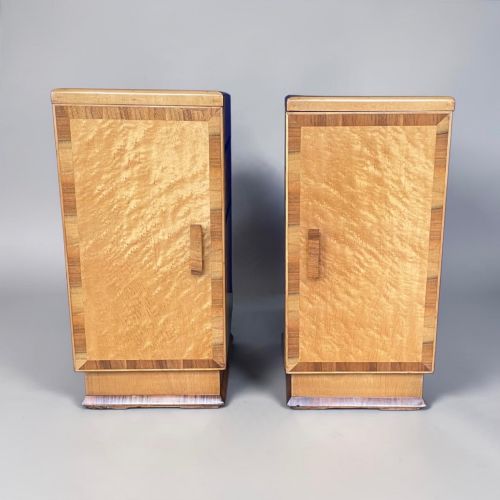
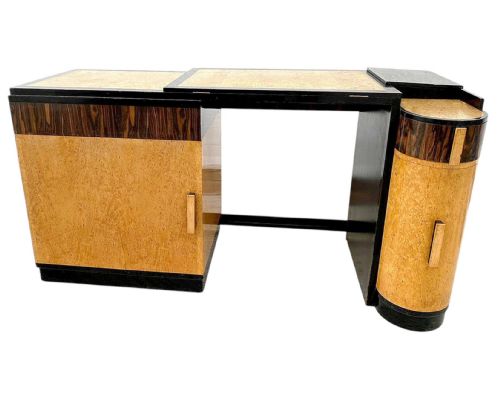
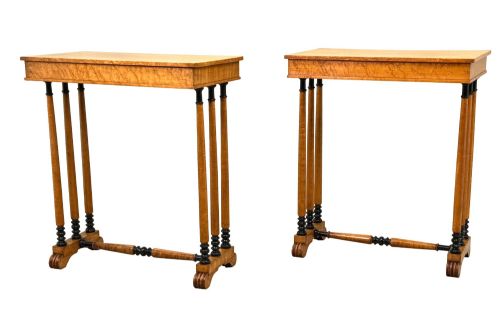
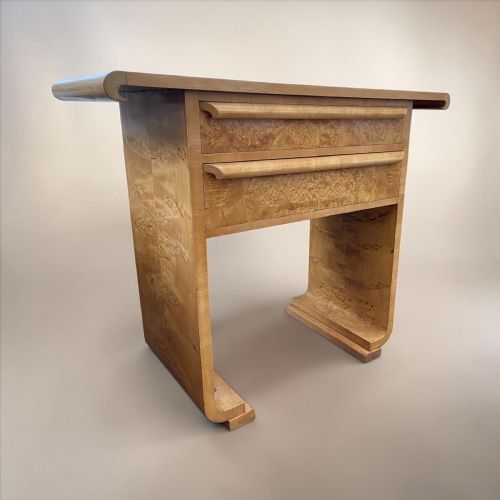
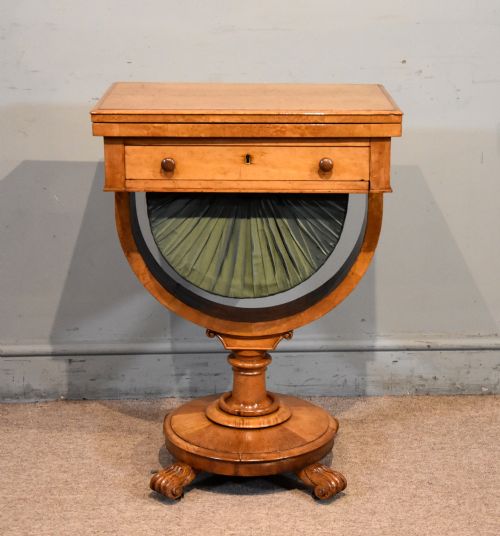
A birdseye maple table encompasses a variety of forms ranging from compact occasional pieces to large dining tables. Buyers searching for a birdseye maple table will encounter designs spanning several distinct eras, notably the Regency period and the Art Deco style of 1930.
Console tables, work tables, and occasional tables appear frequently across the inventory. Dining tables and side tables also emerge, demonstrating the versatility of this timber across different functional forms.
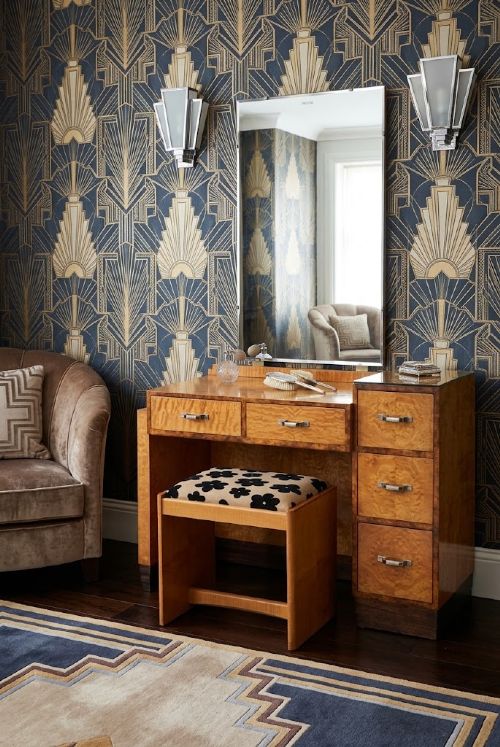
The material pairings shift according to the period. Regency examples often combine the figured wood with walnut or ebonised wood, whilst 1930s Art Deco pieces integrate rosewood, silvered glass, or fabric.
How they were made
Cabinet makers utilised maple, burr maple, and birdseye maple veneers to showcase the unique speckled grain patterns of the timber. Solid wood components were shaped and joined using traditional carpentry techniques suited to each specific era.
Makers often contrasted the pale, dotted figuring of the maple with darker woods such as walnut, rosewood, mahogany, and ebonised wood. Inlaid details and turned pillars further articulated the construction of these tables.
Birdseye Maple Table Retail Price Guide 2026
Typical asking prices for birdseye maple table among the pieces listed under this phrase on Sellingantiques today, from the lower quarter to the upper quarter. They describe what is for sale here now, not the wider market.
Listings span multiple eras including the Regency period and 1930, featuring materials such as maple, burr maple, walnut, rosewood, and ebonised wood.
What varies in quality
The visual impact of a birdseye maple table depends heavily on the density and consistency of the figuring across the primary surfaces. Finer examples display an even, uninterrupted distribution of the characteristic small eye formations in the grain.
The sophistication of the secondary timber choices and decorative inlays distinguishes standard production from superior pieces. Skilled execution in contrasting woods like rosewood or ebonised trim elevates the overall presence of the furniture.
Fortnum and Mason
The Birdseye Maple Table Glossary
- Birdseye maple
- A figure in maple wood where the grain swirls around small spots, resembling tiny eyes. This pattern occurs naturally and is highly prized for decorative veneer work.
- Regency
- An English stylistic period spanning the early nineteenth century, characterised by classical restraint and refined proportions. Tables from this era often feature elegant turned supports.
- Art Deco
- A design movement prominent around 1930, known for sleek geometric forms and modern material combinations. Pieces from this era frequently pair figured veneers with glass or dark woods.
- Console table
- A table designed to stand against a wall, sometimes fixed in place. These pieces often serve an entry hall or living space as a decorative surface.
Birdseye Maple Table: Frequently Asked Questions
What periods do these tables come from?
The selection includes pieces from the Regency era, the nineteenth century, and the 1930s Art Deco period. Each era brings distinct structural lines and material pairings.
Early examples often feature classical Regency proportions, whilst twentieth-century pieces embrace streamlined geometric designs.
How do I care for a maple surface?
Keep the wood away from direct sunlight and excessive heat sources to prevent the veneer from drying out. Regular dusting with a soft cloth maintains the finish.
Avoid harsh chemical cleaning agents and use coasters or mats to protect the polished top from moisture and heat damage.
What other woods are paired with maple?
Cabinet makers frequently combined birdseye maple with contrasting dark timbers. Walnut, rosewood, mahogany, and ebonised wood appear regularly across different styles.
These contrasting materials highlight the pale, dotted figuring of the maple through crisp borders and structural details.
Are these tables suitable for dining?
Dining tables appear in the Art Deco style, offering generous surface areas for meals. These pieces combine robust construction with striking figured veneers.
Smaller formats like work tables and occasional tables suit smaller spaces or specific functional roles.