


Birdseye Maple Framed Painting
A birdseye maple framed painting brings warmth and distinctive pattern to a wall, combining rich timber grain with period artistry.
Birdseye Maple Framed Painting
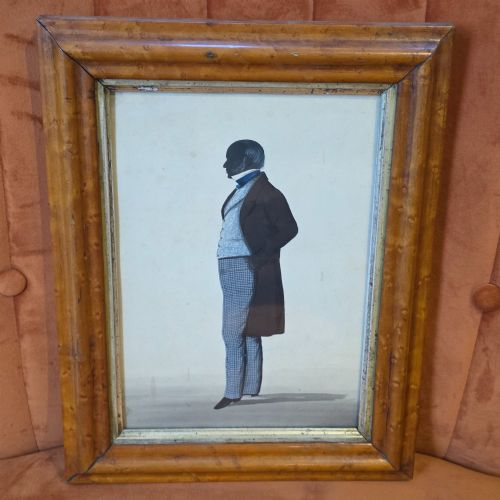
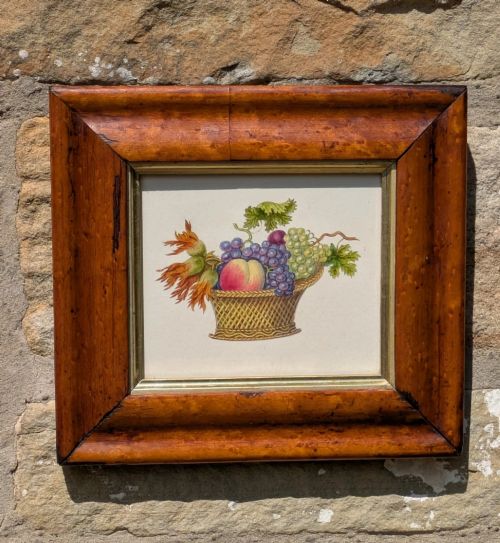
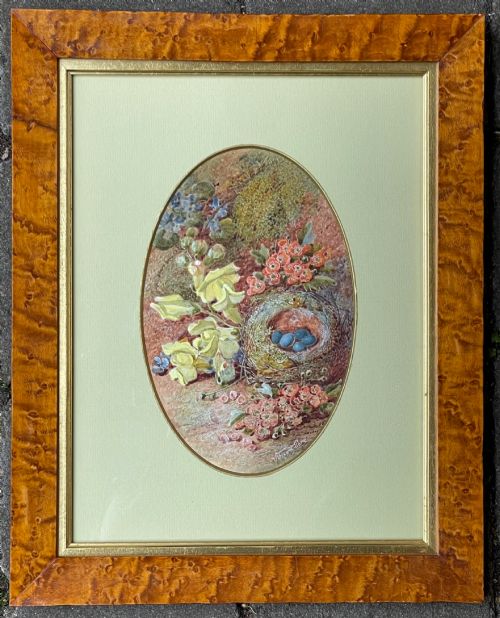
A birdseye maple framed painting encompasses framed artworks and wall art encased in distinctively figured timber. Buyers searching for a birdseye maple framed painting encounter 19th-century works, including portraits, still life paintings, and naive watercolours.
The selections span Georgian, Regency, and Victorian periods, showcasing traditional classical styles alongside folk art and Victorian naturalism. Most pieces present intimate watercolours or oil on canvas works preserved in their original timber surrounds.
How they were made
Craftsmen utilised maple veneer and solid wood to construct frames that accentuate the characteristic small, swirling eyes of the timber. Gold leaf often accents these surrounds, adding a subtle metallic contrast to the figured wooden grain.
Artworks within these frames utilise paper, glass, watercolour, and oil on canvas. Painters applied pigments by hand to create detailed portraits, still life compositions of fruit, and domestic interior scenes.
Surrounds utilise maple veneer and solid wood, occasionally complemented by gold leaf details around the artwork.
What varies in quality
Quality rests significantly in the density and visual impact of the maple figure across the moulding, where sharply defined birdseyes command greater attention than plain grain. The preservation of the timber surface and any original gilding also dictates the overall merit of the framing.
On the pictorial side, the execution of the painting or silhouette establishes the standard of the piece. Fine brushwork in portraits or detailed rendering in still life subjects elevates the work above simpler naive folk art examples.
Vincent Clare·J F Marie Huet Villiers·Robert Faulkner
The Birdseye Maple Framed Painting Glossary
- Birdseye maple
- A figure in maple wood where the grain swirls in small circles resembling bird eyes. This pattern occurs naturally and is prized for decorative veneer.
- Watercolour
- A painting method where fine pigment is suspended in a water-soluble binder. Artists apply these transparent washes to paper.
- Still life
- An artwork depicting mostly inanimate subject matter, typically commonplace objects or natural items such as fruit. These compositions test an artist's ability to render light and form.
- Naive art
- Visual art created by a person without formal training, often characterised by a childlike simplicity in perspective and proportion.
Birdseye Maple Framed Painting: Frequently Asked Questions
How do I care for these frames?
Keep the timber away from direct sunlight and damp environments to protect the veneer and underlying wood. Dust the moulding gently with a dry cloth without using harsh polishes.
Ensure any glass protects the paper or canvas from atmospheric moisture. Stable room temperatures prevent the timber from warping over time.
Are these frames original to the art?
Many period pieces retain their original surrounds, which complement the age and style of the artwork. Examining the construction reveals period joining techniques that match the era of the painting.
Subtle wear on the timber often confirms long association with the artwork inside. A matching patina between the frame and the painting further supports their shared history.
What subjects appear most often?
Portraits of gentlemen, ladies, and young women form a substantial portion of these works. Still life compositions featuring fruit also feature prominently among the selections.
Domestic scenes and silhouettes complete the range of subjects. Each genre reflects the artistic tastes of the Georgian and Victorian periods.
How do I identify a Victorian piece?
Victorian works often display naturalistic details or expressive folk art qualities characteristic of the later nineteenth century. Signatures and dated inscriptions on the backing or paper provide direct evidence of the era.
Framing styles from this time also exhibit distinct moulding profiles compared to earlier Georgian examples. Material choices such as specific grades of maple veneer help confirm the period.