




Georgian Naive Painting
Georgian naive painting brings unvarnished domestic character and direct charm into a room, offering immediate visual history without the polish of the academy.
Georgian Naive Painting
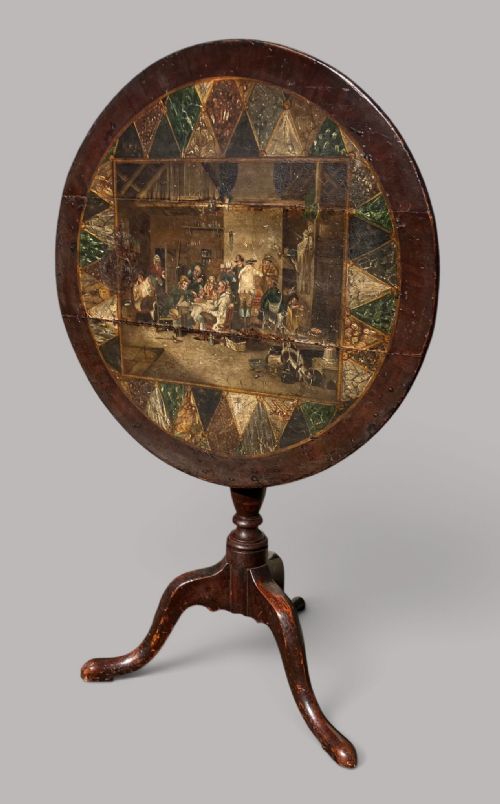
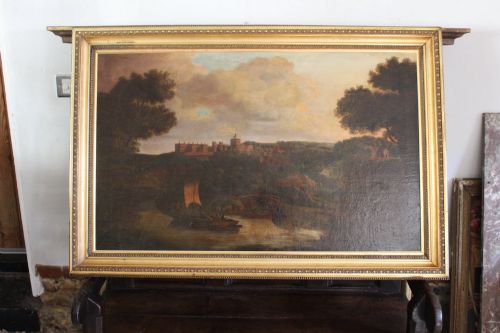
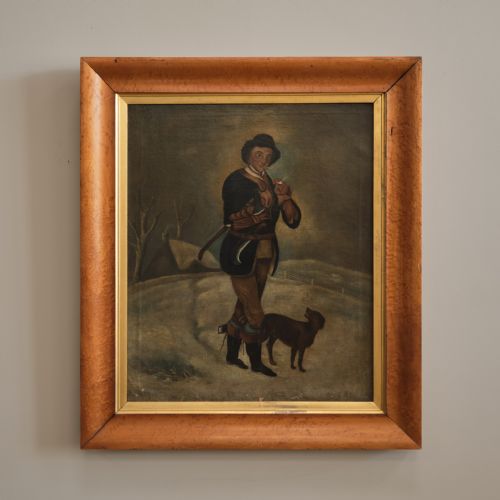
When you search for georgian naive painting, you are looking at works executed outside the formal academic traditions of the period, capturing subjects with sincerity rather than strict proportion. The examples you meet here span portraits of gentlemen, ladies, and children, alongside topographical scenes, animal studies, and decorative objects like trays or wall plaques.
The material forms vary considerably across the selection, moving from oil paintings on canvas and panel to works on paper, framed artwork, and papier-mâché. Dating ranges from the mid-eighteenth century through the Regency era and into the nineteenth century, reflecting the tastes of regional makers and provincial artists working independently of metropolitan standards.
Materials and construction
The physical support reflects whatever materials were readily to hand in a provincial workshop or domestic setting, including timber panels, stretched canvas, and heavy paper sheets. Artists applied oil paint or watercolour directly to these surfaces, sometimes incorporating ink for fine details or mounting works within modest brass or wooden frames.
Larger decorative pieces utilise papier-mâché for moulded trays or wood for painted wall plaques and dummy boards, often finished with a protective layer of varnish. The handling of medium and support remains straightforward, prioritizing durability and immediate visual impact over complex layering.
Among the portraits is a three-month-old infant documented with absolute gravity as a three-year-old in ink and watercolour.
Judging quality in provincial art
Quality in this field rests entirely on the strength of character captured by the hand, the confidence of the brushwork, and the preservation of the original surface. A compelling composition with strong use of pigment and distinct physiognomy stands apart from weaker, more hesitant exercises.
The integrity of the original support matters greatly, whether an untouched oil on panel or an early framed work retaining its period brass elements. Pieces that convey a distinct narrative or regional subject with directness tend to hold the eye longer than formulaic decorative items.
The Georgian Naive Painting Glossary
- Naive art
- Art produced by a person lacking formal professional training, often characterised by a charming disregard for perspective and academic proportion.
- Oil on panel
- A painting executed with oil-based pigments upon a wooden board rather than woven canvas.
- Dummy board
- A painted figure cut from wood or metal, designed to give the illusion of a real person standing in a room.
- Topographical painting
- An artwork depicting a specific landscape, building, or recognizable geographical location.
- Regency chinoiserie
- A decorative style inspired by Chinese artistic traditions, interpreted through European taste during the early nineteenth century.
Georgian Naive Painting: Frequently Asked Questions
What defines a naive painting?
A naive painting is created by an artist without formal academic training, resulting in a style that prioritizes direct expression over strict rules of perspective or anatomy.
These works rely on honest observation and bold colour, giving them a distinct and unpretentious character that differs significantly from academic studio portraiture.
How old are these artworks?
The pieces shown here date from the mid-eighteenth century through the Regency period and into the nineteenth century.
They reflect the domestic and provincial tastes of Georgian Britain, produced during a time when local artists recorded families, animals, and landscapes independently of major urban academies.
What surfaces were used?
Makers utilised a variety of surfaces depending on the object type, including stretched canvas, wooden panels, heavy paper, and papier-mâché.
Oil paint and watercolour were the primary mediums applied to these supports, often housed within simple wooden or brass frames suited to domestic interiors.
How do I display them?
These works suit traditional or eclectic interiors where their direct character can be appreciated up close on panelled or painted walls.
Smaller portraits and framed works pair well with antique furniture, while larger decorative trays and wall plaques offer striking focal points for a room.