




English Victorian Wall Art
English Victorian wall art brings together oil paintings, watercolours and framed prints that capture nineteenth-century rural life, portraiture and sporting scenes.
English Victorian Wall Art
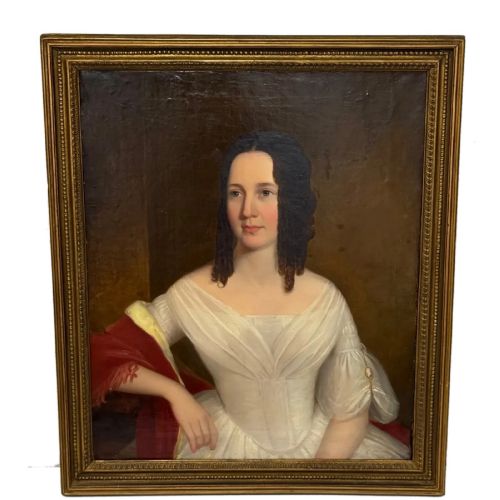
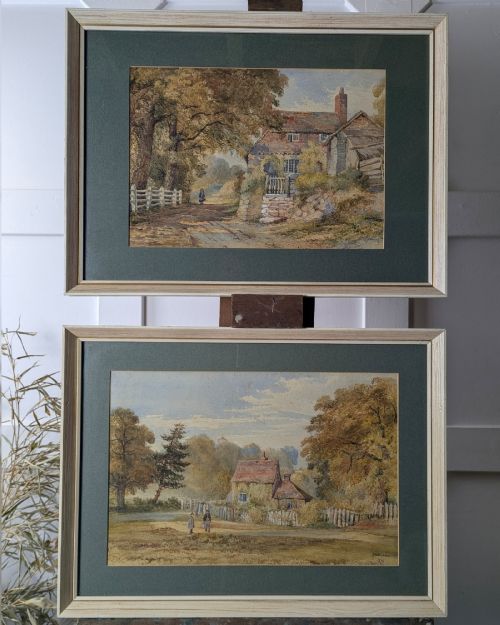
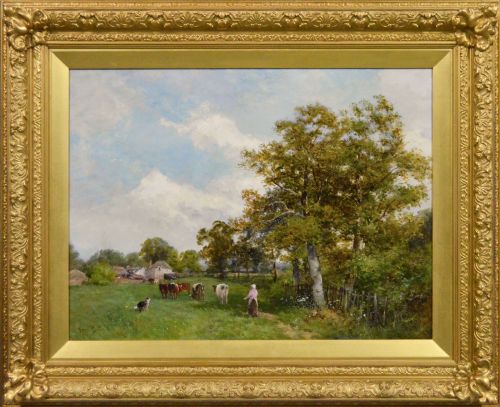
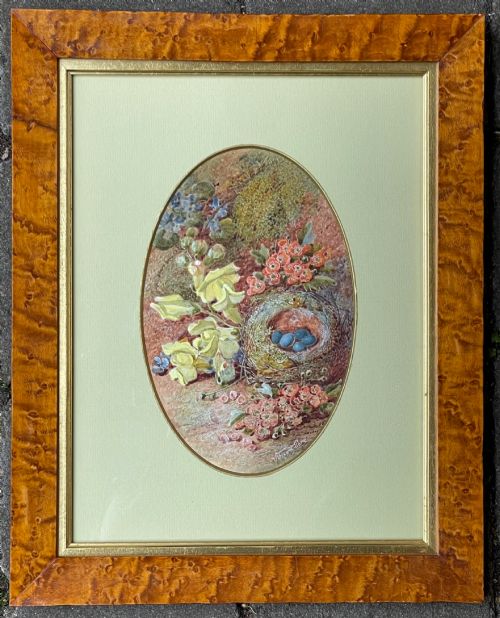
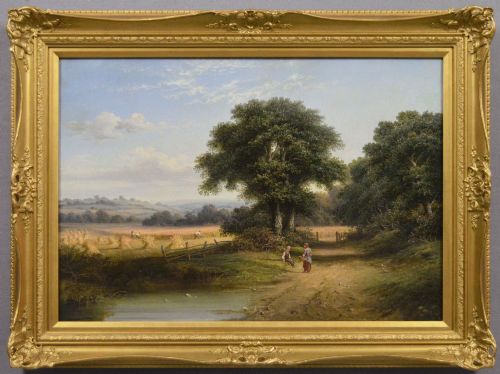
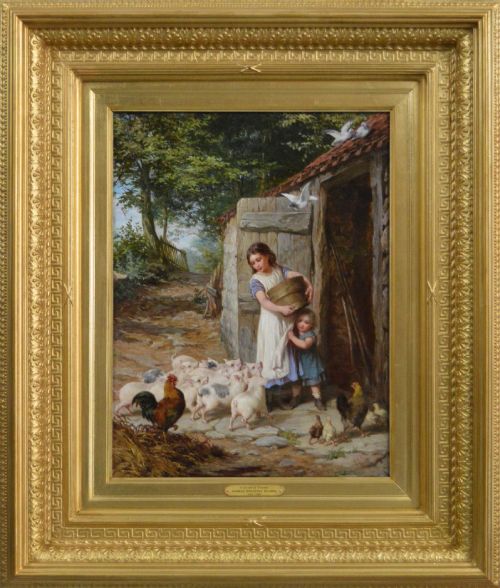
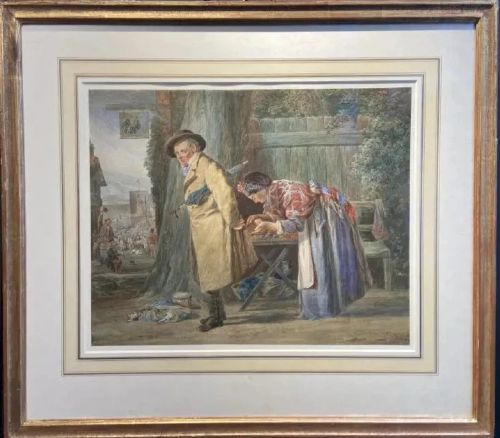
English Victorian wall art encompasses oil paintings on canvas, delicate watercolours, charcoal drawings and decorative pottery plaques created during the nineteenth century. These pieces record pastoral landscapes, coastal views, genre scenes of daily life, and portraits of people and animals.
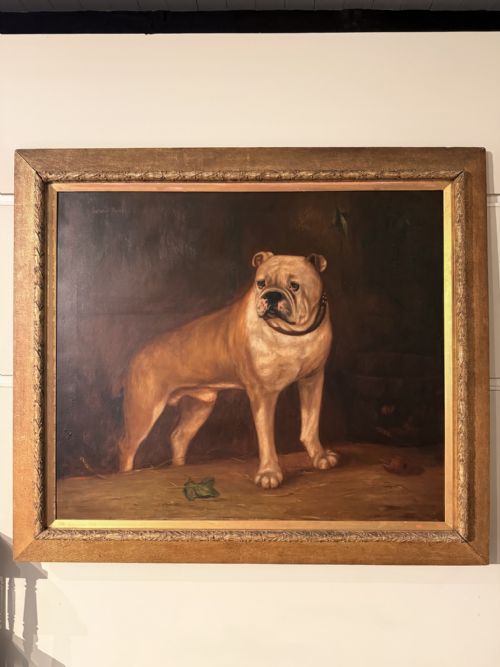
The version most commonly encountered on this page is the nineteenth-century oil painting on canvas, often housed in a giltwood frame. Alongside these, buyers regularly find watercolour paintings and framed prints depicting British rural scenery and historical subjects.
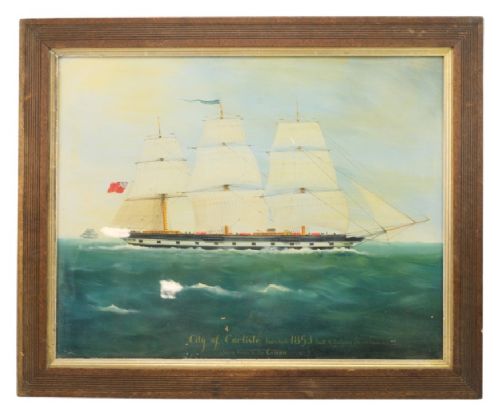
The selection ranges from works by named nineteenth-century artists to pieces produced by the broader British School. Subjects lean heavily towards Victorian landscape art, pastoral scenes, sporting art and maritime views.
Materials and methods
Painters of this period utilised oil paint on stretched canvas or applied watercolours to paper, frequently capturing fine detail in landscape and portrait subjects. Frames were constructed from wood and finished in giltwood or gilt gesso to complement the artwork.
Support materials include paper, wood, glass and canvas, with some works executed as pencil drawings or lithographs. Ceramic plaques also appear, painted with detailed landscape scenes and fired with coloured glazes.
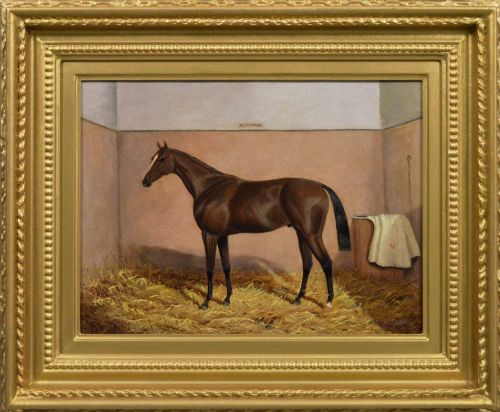
Several Victorian paintings capture dogs participating in daily farm tasks and horses posing for their racing portraits.
Assessing quality
Quality in these works rests upon the handling of light, brushwork fluidity and the precision of composition. Stronger pieces display confident draughtsmanship and careful observation of natural tone, particularly in landscape and animal portraiture.
The relationship between the artwork and its original frame matters significantly. Period giltwood and gesso frames that retain their original surfaces and proportions elevate the piece above those housed in later replacements.
James Orrock·Alfred Young Nutt·John Horace Hooper·William Banks Fortescue·Robert A Nottingham·David Bates·Vincent Clare·Walter Heath Williams·Albert Clark·George Augustus Holmes·George Finch Mason·John Sargent Noble·Charles Hunt·Henry Yeen King·C R Breytle·William Yale·Henry H Parker·John Sherrin·Thomas Walker Bretland·David Cox·Charles Edward Wilson·Sydney Yates Johnson·Alfred George Morgan·John Arthur Lomax·George Bernard O'Neill
The English Victorian Wall Art Glossary
- Oil on Canvas
- Pigments bound in a drying oil applied to a woven fabric surface stretched across a wooden frame. This was the primary medium for substantial nineteenth-century paintings.
- Watercolour
- Pigments suspended in a water-soluble vehicle applied to paper. It allows for translucent washes and delicate detail in landscapes.
- Giltwood
- Wood, typically carved, that has been coated with a thin layer of gold leaf or metallic powder. It was standard for framing fine Victorian art.
- Genre Painting
- Depictions of everyday life and ordinary people engaged in familiar activities. These scenes often carry narrative or moral elements.
- Pastoral
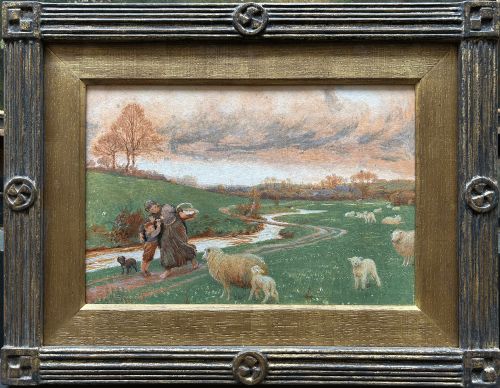
- Artistic works portraying rural life and idealized country landscapes. They frequently feature figures near rivers, harvest fields or cottages.
English Victorian Wall Art: Frequently Asked Questions
What subjects are common in Victorian wall art?
Landscapes, coastal scenes, animal portraits and domestic genre paintings dominate this period. Artists frequently turned to the British countryside, rivers and rural laborers for their inspiration.
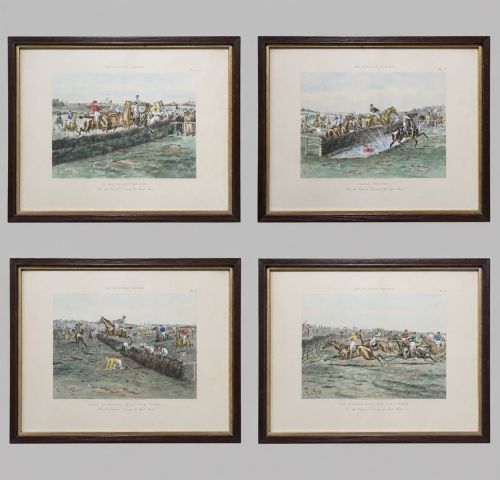
Sporting art, including horse racing and hunting scenes, also forms a substantial category among these nineteenth-century works.
How do I identify a watercolour from an oil painting?
Watercolours are executed on paper, display a translucent quality, and are typically displayed behind glass. Oil paintings utilise a textured canvas or wood panel surface and are usually unglazed.
Examining the surface closely under good light reveals the distinct weave of the canvas or the flat matte finish of paper.
Are these pieces usually framed?
Many works retain their original nineteenth-century frames, constructed from wood and finished with giltwood or gesso ornamentation. These frames are integral to the character and presentation of the art.
Some pieces may be acquired in later frames, making the assessment of the framing material an important detail for collectors.
What is a Copeland pottery plaque?
Copeland ceramic plaques are flat earthenware or porcelain panels painted with detailed scenic views and signed by factory artists. They functioned as decorative wall art rather than tableware.
These pieces combine fine ceramic manufacture with pictorial art, often depicting specific Welsh or English views.