

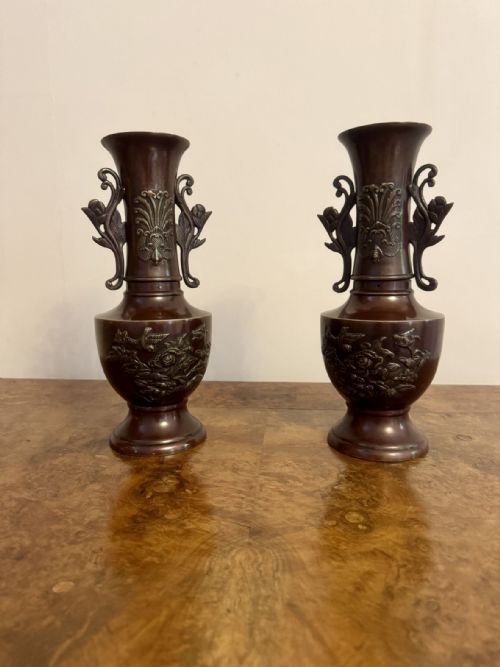


Bird Relief Bronze Vase
A bird relief bronze vase brings sculptural avian detail and heavy metal presence into a room, largely drawn from late nineteenth-century Japanese workshops.
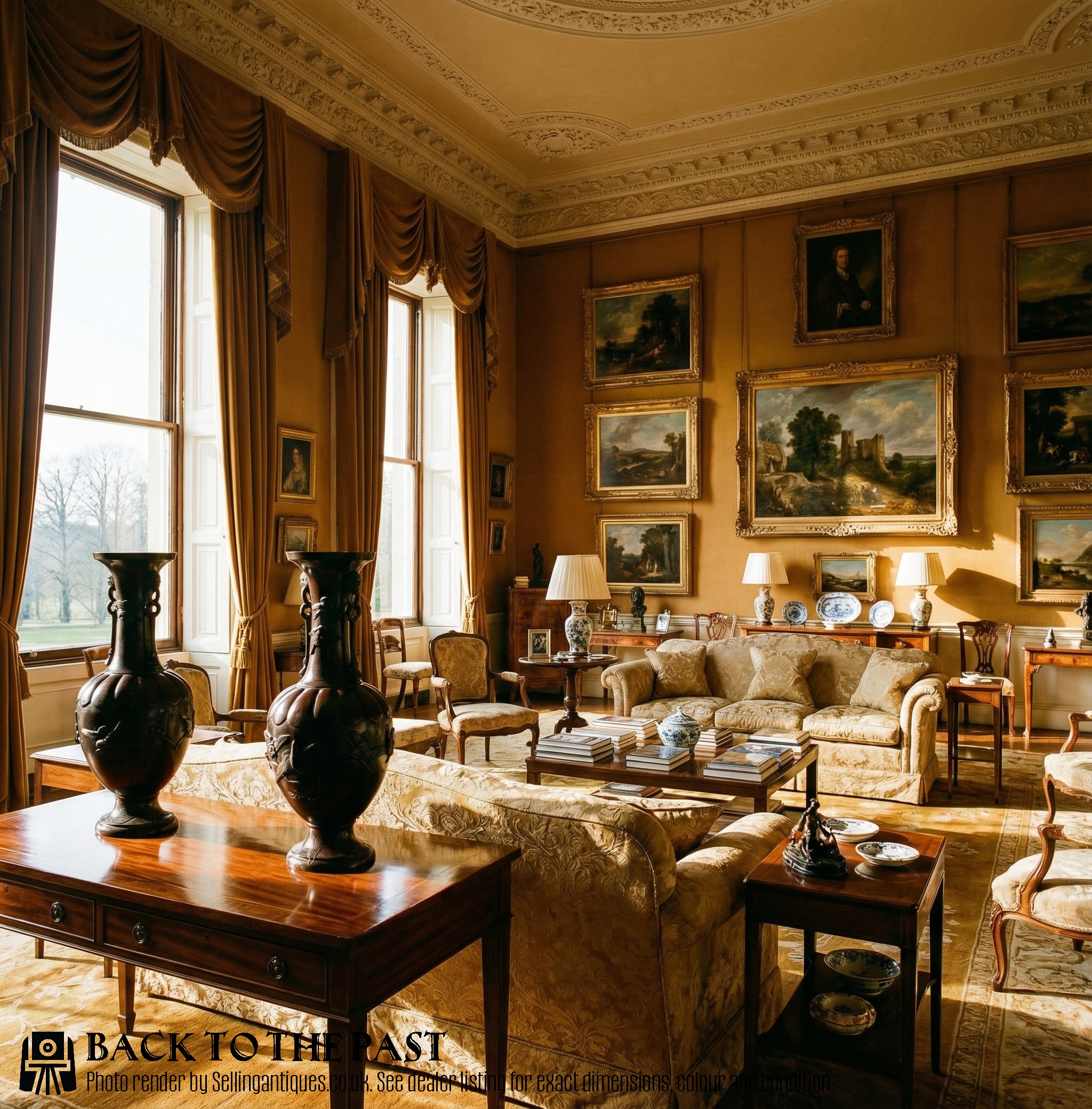
Bird Relief Bronze Vase
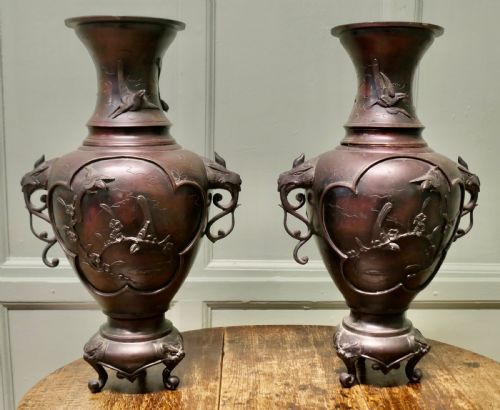
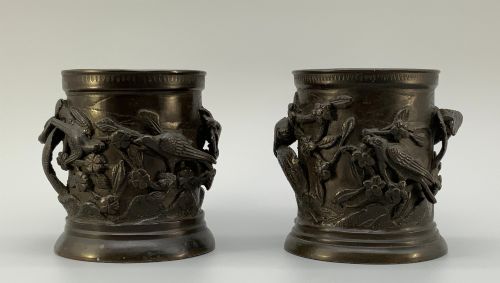
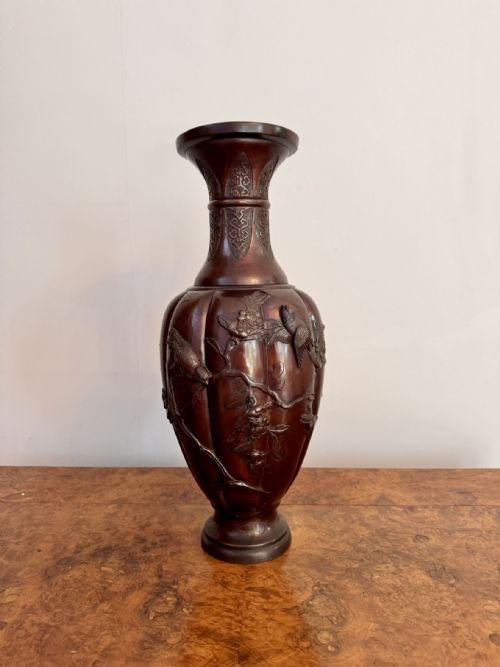
When you search for a bird relief bronze vase, you encounter heavy cast vessels originating primarily from the Japanese Meiji period and the nineteenth century. These objects frequently present as baluster urns, stem vases, or larger display vessels featuring raised avian motifs alongside floral elements. Pairs dominate the selection, alongside individual large urns and jardinieres suited to prominent placement.
The aesthetic bridges traditional East Asian metalwork and Victorian decorative tastes, as many pieces date from the latter half of the nineteenth century into the early twentieth. Alongside Japanese works, the listings include Chinese bronzes from similar decades, sharing the robust metallic weight and raised surface decoration. Forms range from compact fifteen-centimetre posy vessels to imposing presentation pieces standing well over forty centimetres tall.
Materials and construction methods
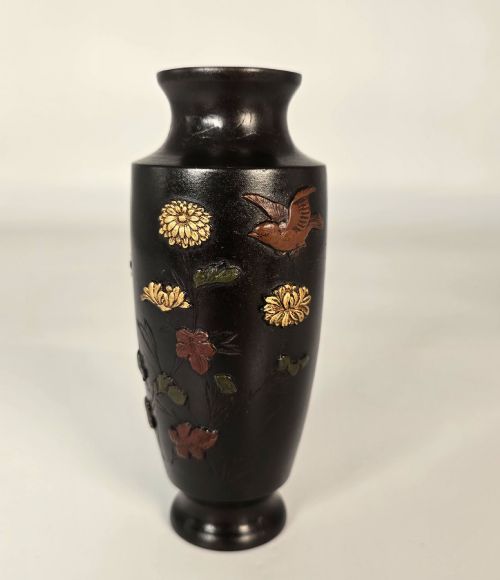
The primary material is cast bronze, often finished with chemical patination to deepen the metallic tone or enriched with mixed metal elements such as gold inlay and silver details. Artisans utilised lost-wax casting methods to achieve the intricate raised bird and blossom reliefs that define these vessels. Surfaces frequently combine patinated bronze bodies with contrasting metallic highlights applied to the plumage of the birds and the petals of the floral scenes.
Makers applied meticulous finishing techniques, including chiselling and surface engraving, to sharpen the definition of the raised motifs after casting. Twin handles appear on several forms, cast separately and securely joined to the main body of the vase or urn. The integration of gold and silver alloys directly into the bronze ground demonstrates advanced metallurgical competence.
Bird Relief Bronze Vase Retail Price Guide 2026
Typical asking prices for bird relief bronze vase among the pieces listed under this phrase on Sellingantiques today, from the lower quarter to the upper quarter. They describe what is for sale here now, not the wider market.
The listings show dates spanning from the Victorian era through the Meiji period, encompassing both Japanese and Chinese bronze fabrication.
Distinguishing quality in cast bronze
Quality rests upon the crispness of the relief work and the depth of the patination. Superior examples display sharply rendered plumage and flora that stand clear from the vessel wall without surface pitting or casting flaws. The integration of mixed metal inlay reveals the skill of the metalworker, where gold and silver accents remain flush and secure within the bronze ground.
The weight and balance of the vessel also indicate standard of manufacture, alongside the subtlety of the colour variation across the patinated surface. Finer pieces maintain proportion across paired sets, where handles, height, and relief depth align precisely. The baseline is set by solid bronze construction, while the upper tier shows through masterclass chasing and refined surface detailing.
The Bird Relief Bronze Vase Glossary
- Patinated bronze
- Bronze that has been treated with chemical solutions to produce a specific surface colour, ranging from deep brown to black or greenish tones. This finish protects the metal and defines the aesthetic character of the vessel.
- Mixed metal
- A technique combining bronze with contrasting metals such as gold, silver, and copper to create multicoloured decorative effects. Artisans inlay or apply these metals directly to the surface.
- Baluster urn
- A vase form characterised by a bulbous lower body that tapers towards a narrower neck and flared rim. Many nineteenth-century presentation vessels follow this classical silhouette.
- Meiji period
- The era in Japanese history spanning from 1868 to 1912, noted for a surge in decorative metalwork destined for international export. Pieces from this time frequently feature naturalistic bird and flower motifs.
Bird Relief Bronze Vase: Frequently Asked Questions
How do I clean a bronze vase?
Dust the surface gently with a soft, dry cloth to remove accumulated particles without disturbing the patination.
Avoid commercial metal polishes or liquids, as these abrasive substances strip away the historic finish and damage the raised relief work.
Are these vases watertight?
Most antique bronze vessels were created primarily for decorative display rather than holding water for fresh flower arrangements.
Utilising a discreet internal glass liner protects the historic metal interior if you intend to use the piece for fresh stems.
How do I date a bronze vase?
Examine the casting method, surface patination style, and any stylistic markers that align with nineteenth-century manufacturing techniques.
Japanese pieces from this era often correlate with the Meiji period, showing specific combinations of raised bird motifs and mixed metal highlights.
Why do these vases come in pairs?
Victorian and Meiji decorative conventions favoured symmetrical display on mantelpieces, sideboards, or architectural ledges.
Craftsmen produced matching sets to satisfy this demand for balanced interior ornamentation, casting them concurrently in the workshop.