




Bird Motif Wool Carpet
Bird motif wool carpet designs bring woven wildlife into interiors through tribal and village floor coverings from Persia and the Caucasus.
Bird Motif Wool Carpet
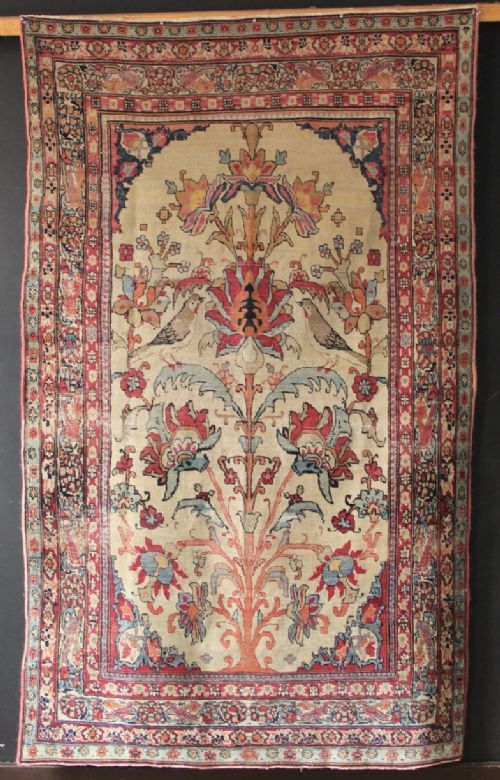
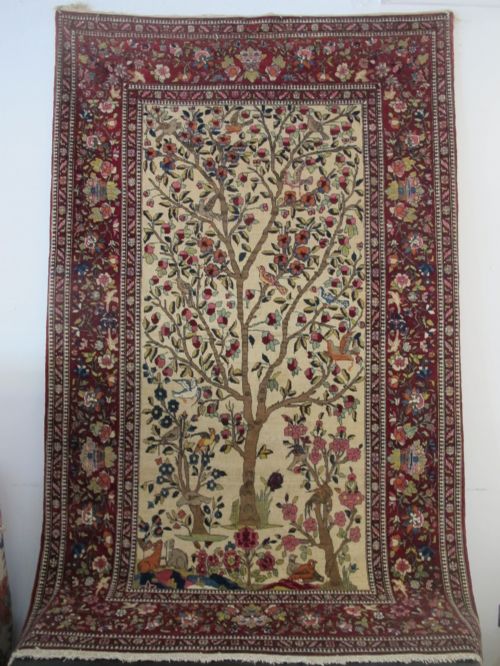
A bird motif wool carpet represents woven textiles featuring avian figures, ranging from paired birds and pecking chickens to stylized falcons and botanical perches. These pieces span late nineteenth and early twentieth century production, originating primarily from Persian tribal and village workshops alongside Caucasian weaving centres.
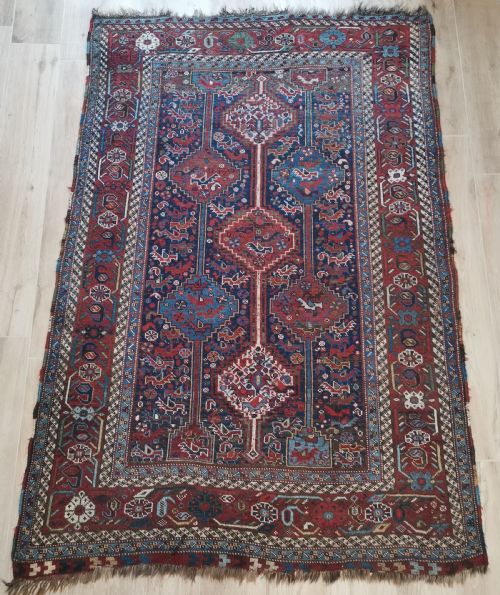
The most frequent examples encountered on this page belong to Khamseh tribal weaving traditions from south west Persia. These particular rugs display characteristic small avian and chicken figures arranged across deep fields, often accompanied by geometric plants and animals.
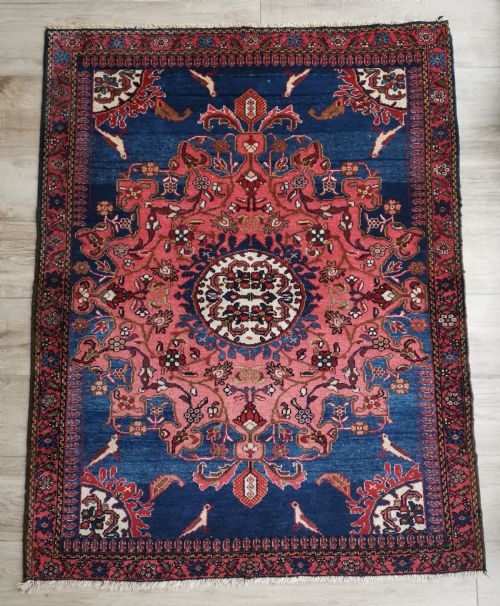
Other recurring regional formats include Caucasian Shirvan rugs featuring specific bird borders, Malayer carpets with boteh and bird arrangements, and smaller format bag faces. These floor coverings bridge utilitarian nomadic weaving and decorative village art through symbolic animal iconography.
Materials and construction methods
Weavers constructed these carpets using hand-spun wool for the pile, often combined with cotton foundations for stability in village workshops. Nomadic pieces frequently incorporate wool or goat hair warps andwefts, yielding supple structures suited to floor use or transport.
Natural and vegetable dyes provided the palette for these textiles, resulting in saturated tones that soften gradually over decades. Artisans utilised durable knotting techniques alongside specialised flatweave structures such as Soumak work for bag faces and smaller storage pieces.
Materials documented across these pieces include hand-spun wool, cotton foundations, goat hair, canvas, and natural vegetable dyes.
Determinants of quality
Quality in these textiles rests upon the density of the knotting and the crispness of the avian drawing against the field. Finer pieces demonstrate precise control over small-scale animal and botanical forms, whereas simpler village work relies on bolder, more geometric stylisation.
The condition of the wool pile and the integrity of the original selvedges and ends dictate the structural grade of each rug. Depth of dye saturation and the complexity of the surrounding borders further separate standard village output from exceptional tribal commissions.
The Bird Motif Wool Carpet Glossary
- Boteh
- A pear-shaped almond motif of Persian origin often associated with fertility and flames. It frequently appears alongside floral sprays and bird designs in village carpets.
- Soumak
- A flatweave technique involving wrapped supplementary weft threads that create a textured surface without a cut pile. This method appears on structural bag faces and storage containers.
- Warp
- The vertical foundation threads stretched lengthwise across the loom before knotting begins. Cotton and wool serve as the primary materials for these structural elements.
- Weft
- The horizontal threads passed across the warp strands after each row of knots to secure the pile. Wool and goat hair frequently form these binding lines in nomadic weaving.
- Pile
- The soft nap formed by the cut ends of knotted wool yarn projecting from the foundation. The height and density of this surface layer influence the handle and durability of the carpet.
Bird Motif Wool Carpet: Frequently Asked Questions
How do I clean an antique wool carpet?
Professional dusting and specialist low-moisture washing remain the safest maintenance methods for antique pile textiles. Domestic cleaning products and excessive water cause dye bleed and fibre degradation.
Regular gentle vacuuming without a beater bar prevents dust accumulation in the wool pile. Lifting the rug rather than dragging it protects the fragile historical foundation threads.
Where were these bird carpets made?
The pieces originate predominantly from Persian tribal confederations and Caucasian village workshops active during the nineteenth and early twentieth centuries. Specific regions include south west Persia for Khamseh output and the Caucasus for Shirvan designs.
Nomadic groups and sedentary village weavers both contributed to this corpus of animal iconography. Local access to regional dye plants and specific tribal traditions shaped the final appearance of each textile.
Are these rugs suitable for high traffic areas?
Hand-spun wool and sturdy foundational weaving provide natural resilience for daily domestic use. Low traffic rooms or spaces without direct sunlight exposure preserve the structural integrity of older pieces best.
Placing a suitable underlay beneath the carpet prevents slipping and reduces friction between the wool pile and hard flooring. This simple addition extends the working life of nineteenth and twentieth century floor coverings.
How are different regional styles identified?
Attribution relies on examining palette choices, border geometries, knotting structures, and specific animal drawing styles. Khamseh rugs often display dense arrays of small chickens and quadrupeds, whereas Caucasian pieces favour structured borders and geometric medallions.
Material analysis of the foundation yarns provides further clues to geographic origin. Goat hair edges and eccentric colour combinations point directly towards nomadic rather than urban workshop production.