




Wool Tapestry Floor Rug
A wool tapestry floor rug brings texture and pattern to a room, drawing on traditions from French Aubusson to tribal kilims.
Wool Tapestry Floor Rug
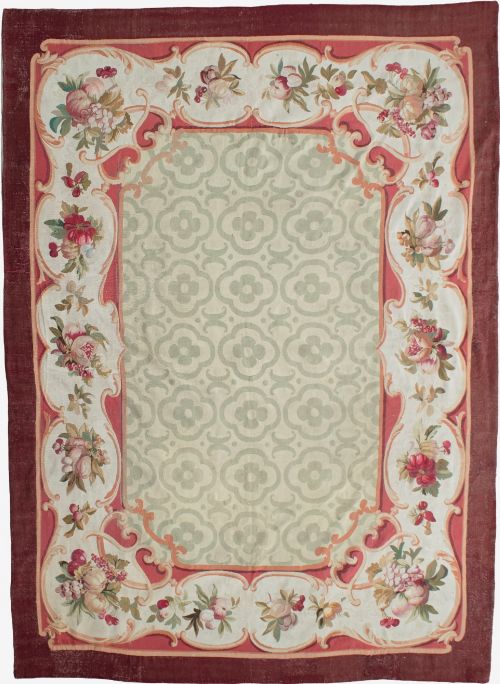
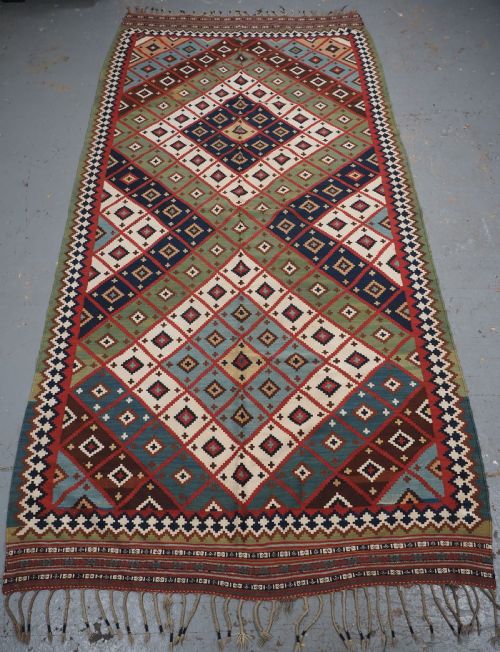
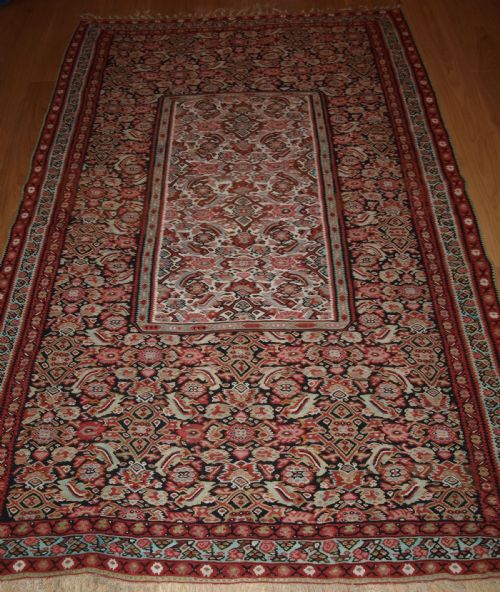
When you search for a wool tapestry floor rug, you encounter flatweaves, needlepoints and carpets spanning the mid-nineteenth century to the mid-twentieth century. The selection includes French Aubusson weaves alongside regional kilims from Anatolia, Bessarabia, Persia and Central Asia.
You are most likely to meet European kilims and French carpets on this page, often featuring floral motifs or geometric bands. These textiles served primarily as decorative floor coverings in formal reception rooms and domestic interiors.
The materials and origins range widely, reflecting diverse weaving traditions from Portuguese needlepoints to Uzbek and Qashqai tribal pieces. Each object carries the distinct aesthetic of its producing region and period.
How they were made
These textiles rely primarily on wool, cotton, canvas and silk, combined to create durable flatweaves and pileless carpets. Weavers utilised wool for the main body and pattern work, occasionally introducing cotton or canvas as structural foundations.
Techniques vary from the needlepoint stitching seen in Portuguese pieces to the slit-weave construction of kilims and the fine tapestry weaving of Aubusson carpets. Artisans worked by hand on looms or frames, building intricate patterns through careful colour placement.
Listings span from the 1850s to the 1940s, uniting French Aubusson carpets with Bessarabian, Ushak, and Qashqai kilims.
What varies in quality
Quality in a wool tapestry floor rug rests upon the precision of the weave and the complexity of the design. Tighter structures and finely handled pictorial or floral details separate standard items from superior examples.
The integrity of the fibres and the retention of original dyed colours influence the overall presence of the piece. Subtle gradations in tone and secure structural joins indicate careful historic production.
The Wool Tapestry Floor Rug Glossary
- Kilim
- A flatwoven carpet or rug produced in regions from the Balkans to Central Asia. These pieces lack a pile, relying instead on interlocking weft threads to form geometric or banded patterns.
- Aubusson
- A style of French tapestry carpet woven without a pile, traditionally produced in the town of Aubusson. They frequently display classical floral and architectural motifs derived from French Rococo and Neoclassical design.
- Needlepoint
- A type of embroidery stitched onto a canvas foundation rather than woven on a loom. Portuguese examples demonstrate this technique in dense floral designs.
- Flatweave
- A textile constructed by interlacing warp and weft threads without creating a raised pile surface. This category includes kilims and many traditional tribal rugs.
- Suzani
- A traditionally embroidered textile from Central Asia, often worked in silk or wool on a cotton ground. Pieces incorporate distinct regional motifs and strip construction.
Wool Tapestry Floor Rug: Frequently Asked Questions
How do I clean a wool tapestry floor rug?
Professional specialist cleaning is essential for antique textiles to protect delicate wool and silk fibres. Regular gentle surface vacuuming without a beater bar helps remove loose dust.
Avoid saturation and harsh chemical treatments, which can damage historic dyes and weaken the underlying canvas or cotton structure.
Are these rugs suitable for high-traffic hallways?
Flatweave kilims and tapestry rugs were designed primarily for decorative use in lighter-traffic areas such as drawing rooms and bedrooms. Placing them in heavy-traffic corridors accelerates wear on historic wool and flatwoven structures.
Using a quality underlay helps absorb foot pressure and prevents the rug from slipping on hard floors.
How can I tell a Bessarabian kilim from an Anatolian one?
Bessarabian pieces typically feature dark grounds with naturalistic floral sprays influenced by Western European decorative arts. They date from the nineteenth and early twentieth centuries.
Anatolian kilims lean towards geometric patterns, tribal symbols, and banded layouts reflecting distinct regional weaving traditions.
What is the difference between a kilim and an Aubusson?
Kilims are generally flatwoven tribal or regional textiles featuring geometric or traditional banded designs. They originate from areas including the Caucasus, Persia, and Eastern Europe.
Aubusson carpets are fine French tapestries woven with classical floral and architectural motifs, reflecting European court styles.