


Birch Wood Centre Table
A birch wood centre table brings luminous pale grain and stately continental presence to a room.
Birch Wood Centre Table
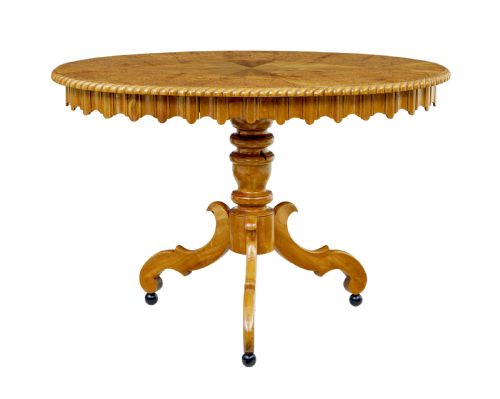
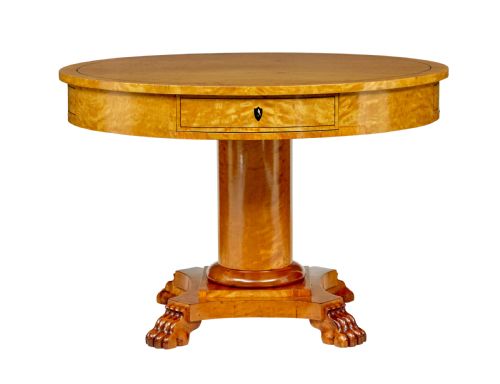
A birch wood centre table is a freestanding occasional or principal table designed to anchor a room, typically encountered in nineteenth century Biedermeier and twentieth century Art Deco forms. These pieces serve as functional surfaces for display while offering distinct architectural silhouettes derived largely from Swedish and broader Scandinavian workshops.
The selection ranges from circular and oval occasional tables to sofa tables, breakfast tables, and low coffee tables. Buyers will frequently encounter nineteenth century examples featuring burr or satin birch, alongside later twentieth century iterations from the Art Deco and Swedish Grace movements.
How they were made
Cabinetmakers utilised solid birch and applied veneers of burr birch, satin birch, and walnut to achieve striking grain patterns across expansive table tops. These wooden surfaces are occasionally accented with contrasting dark inlays of ebony or elm to delineate geometric borders and architectural panels.
Structural embellishments include cast solid brass sabots on legs and hand-carved details that complement the polished wooden bodies. Construction methods rely on traditional joinery paired with precise timber selection to showcase the natural figure of the birch.
Some nineteenth century tables carry the distinct ghost of a breakfast spread across their polished satin birch tops.
What varies in quality
Quality rests upon the selection and matching of the birch veneers, where symmetrically arranged burr patterns command greater visual presence than plain timber. The depth of the finish and the clarity of the figuring dictate how well the wood reflects light across the surface.
Proportion and the restraint of decorative inlays distinguish masterwork tables from simpler utilitarian examples. Integrated details such as cast brass sabots and finely carved elements further elevate the overall execution of the piece.
Cottier and Co
The Birch Wood Centre Table Glossary
- Burr birch
- A growth deformity in the tree that produces intricate, swirling grain patterns highly prized for decorative veneer work. It creates a rich, mottled texture across large table tops.
- Biedermeier
- A influential Central European and Scandinavian design style spanning the nineteenth century, characterised by clean lines, utilitarian comfort, and striking wood veneers rather than heavy ornamentation.
- Satin birch
- A bright, pale timber variant with a smooth, shimmering grain that catches the light. It was frequently utilised during the nineteenth century for formal breakfast and occasional tables.
- Sabot
- A protective metal sleeve fitted to the foot of a furniture leg, commonly cast in brass on nineteenth century and Art Deco pieces. It finishes the terminal point of the leg with a crisp metallic accent.
- Sofa table
- A rectangular table traditionally designed to stand directly in front of or behind a sofa, often fitted with drop leaves and pedestal supports. These pieces accommodate writing and light dining.
Birch Wood Centre Table: Frequently Asked Questions
What is a birch wood centre table used for?
These tables are designed to stand freely in the middle of a room or serve as a principal surface in a reception space, holding lamps, books, or decorative objects.
Historically, specific forms such as sofa tables and breakfast tables fulfilled functional domestic needs for dining and writing while displaying fine timber grain.
How do I identify a Biedermeier table?
Biedermeier tables typically feature unadorned architectural forms that let the natural figure of woods like birch take precedence over carved ornamentation.
They date primarily from the nineteenth century and lean towards restrained, elegant geometries rather than heavy historical revivals.
What distinguishes Art Deco birch tables?
Art Deco examples from the twentieth century lean into streamlined modernism, often pairing birch with contrasting woods like elm or ebony.
These pieces embrace geometric clarity and smooth, polished finishes that reflect the progressive design movements of the interwar period.
How do I care for a birch surface?
Maintain the wood by dusting with a soft, dry cloth and avoiding direct exposure to strong sunlight that can alter the pale tone of the birch.
Keep humidity levels stable in the room to prevent timber movement and protect the polished veneer finish from moisture.