
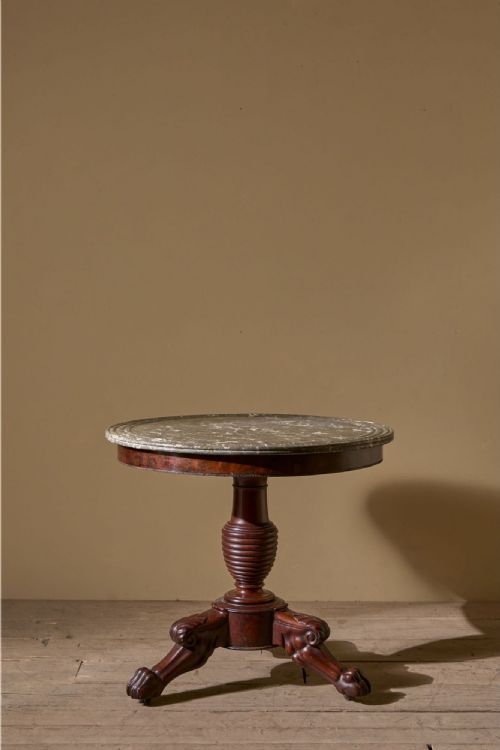


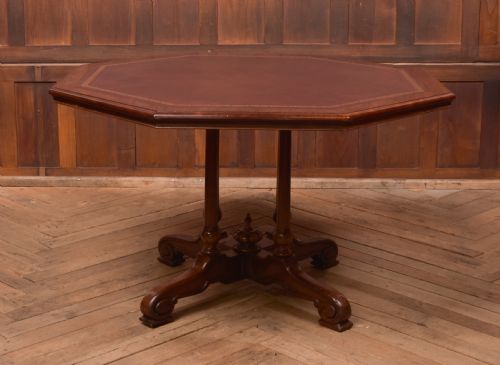

Carved Column Centre Table
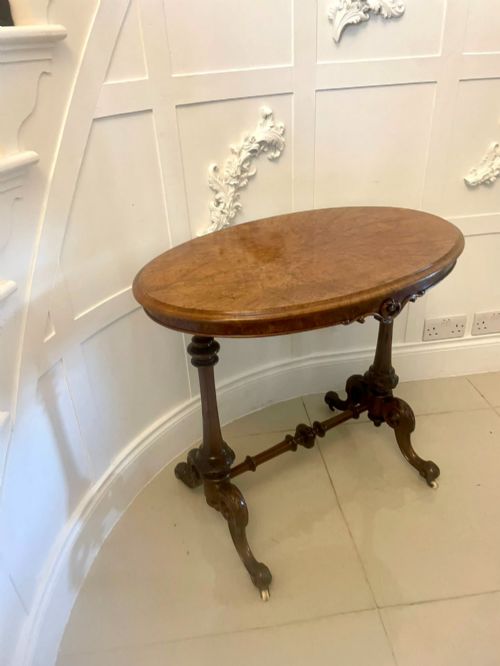
A carved column centre table sits freestanding in a room, offering a sturdy surface and a focal point created by timber turning and carving.
Carved Column Centre Table
When you search for a carved column centre table, you encounter nineteenth-century occasional, coffee, dining, and entrance hall tables designed to stand away from walls. These pieces come in Victorian, Grand Regency, Biedermeier, and French styles, reflecting diverse European origins including Swedish craftsmanship.
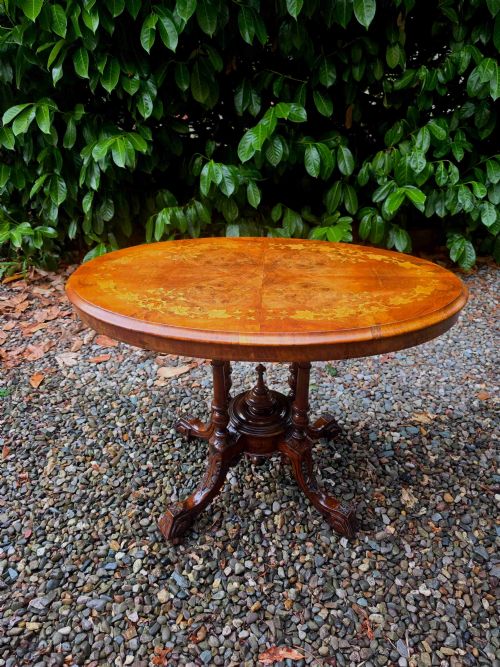
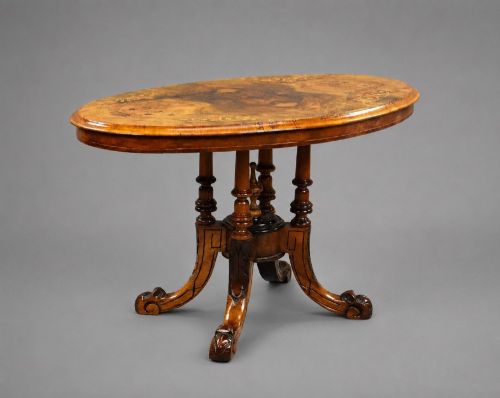
The most frequent examples on this page are Victorian burr walnut, mahogany, and birch tables, often featuring inlaid details and circular or oval tops. They serve practical functions as lamp tables, breakfast tables, and coffee tables while displaying rich timber grains.
How they were made
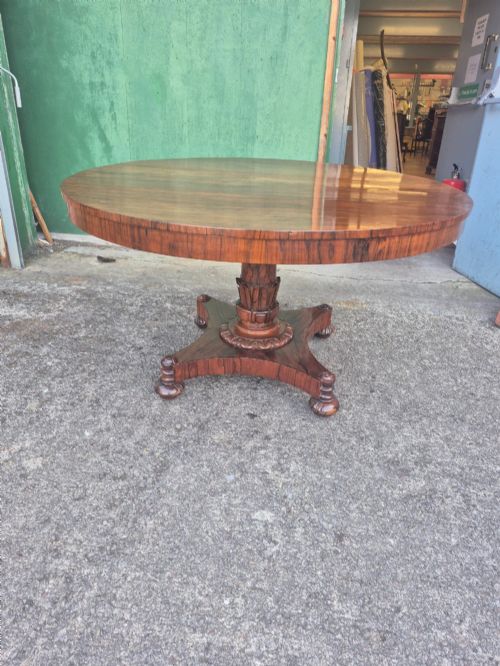
Cabinet makers utilised solid woods and veneers, selecting burr walnut, burr birch, mahogany, and rosewood for their striking figures. These timbers were shaped into circular and oval tops, frequently enhanced with hardwood inlay and brass fittings.
Structural support relied on turned or carved central columns, sometimes paired with marble tops such as grey marble or painted surfaces. Bases ranged from simple pedestals to quadruple supports fitted with castors for mobility.
What varies in quality
The standard of a carved column centre table depends on the selection of timber veneers and the crispness of the carved details on the column and base. Highly figured burr walnut and burr birch elevate the visual weight of the piece compared to plainer hardwoods.
Sophistication of design also separates standard examples from finer ones, particularly where inlay work, marble inserts, or elaborate friezes are integrated into the construction. The cohesion between the top, the central column, and the supporting base dictates the overall success of the piece.
The Carved Column Centre Table Glossary
- Gueridon
- A small French round table, often with a central pillar or column, designed for holding lamps or decorative items.
- Burr walnut
- A wood harvested from the burl growth of a walnut tree, prized for its swirling, highly figured grain patterns in antique furniture.
- Tilt top
- A table top hinged to the pedestal so it can be tipped vertically when not in use, saving space in a room.
- Inlay
- A decorative technique where contrasting woods or materials are set into the surface of a piece to create patterns.
Carved Column Centre Table: Frequently Asked Questions
Where should I place a centre table?
These tables are designed to stand in the middle of a room, hallway, or grand entrance, allowing access from all sides.
Because they feature finished decoration around the entire perimeter and prominent central columns, they work best away from walls.
What is the difference between a centre table and a coffee table?
Traditional centre tables are taller and were originally used for breakfast, reading, or displaying lamps in the nineteenth century.
Many period examples now function as coffee tables due to their generous proportions and stable column bases.
How do I identify a Victorian centre table?
Victorian examples frequently employ dark timbers like mahogany and highly figured burr walnut, often featuring rich grain patterns.
They commonly display turned columns and substantial pedestal bases, sometimes incorporating brass castors for movement.
Are these tables suitable for daily use?
Solid hardwood and heavy veneer construction makes these tables robust for holding books, lamps, and daily household items.
Polished wood surfaces require coasters and gentle cleaning to preserve the historical finish and timber inlay.