
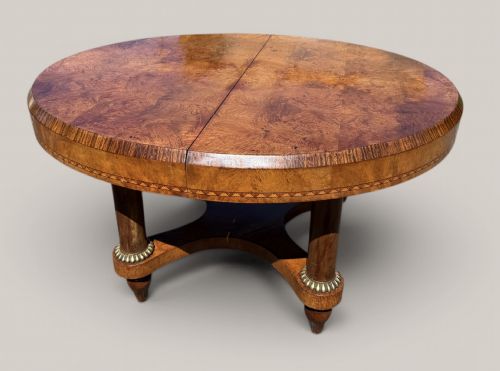


Biedermeier Circular Table
These biedermeier circular table pieces combine architectural simplicity with warm figured veneers, offering an elegant focal point for both period and modern interiors.
Biedermeier Circular Table
A biedermeier circular table brings clean lines and striking timber grains to a room, functioning primarily as a centre table, occasional table, or lamp table. Buyers searching for a biedermeier circular table encounter pieces predominantly from the nineteenth century, alongside occasional twentieth-century revival examples.
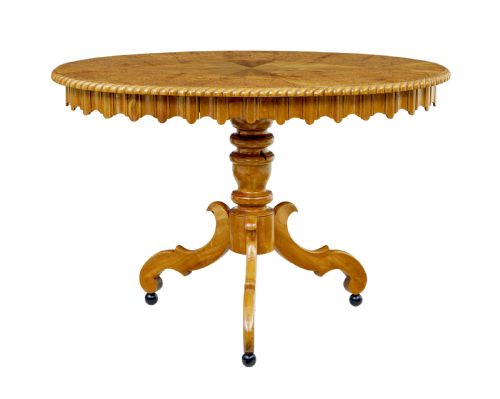
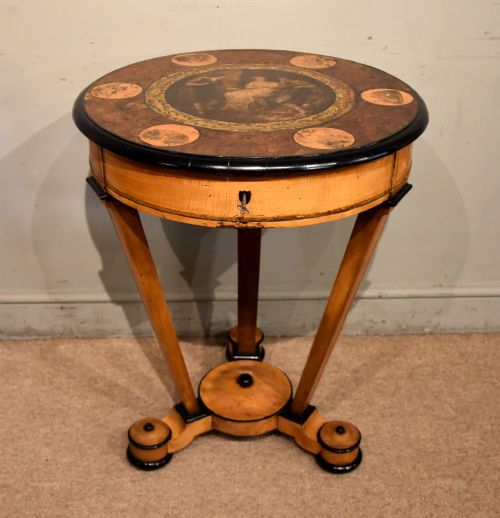
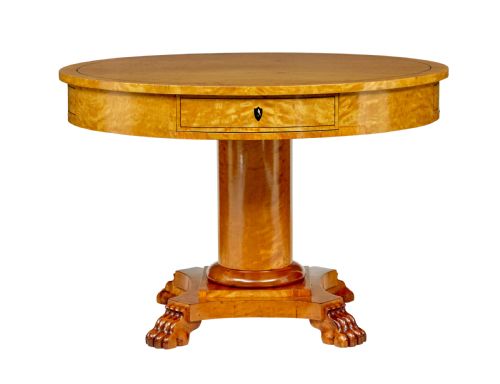
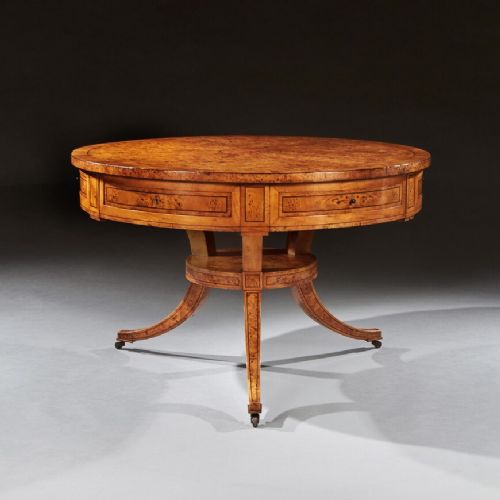
The forms span from pedestal centre tables and tilting occasional tables to drum tables resting on substantial bases. Swedish variants frequently appear among the selection, often utilising pale birch or burr birch timbers.
Makers drew on French Empire and Scandinavian Neo-Classical traditions, paring back heavy ornamentation to let the natural wood figure dominate. The resulting furniture suits spaces requiring functional surfaces with strong decorative presence.
Construction and materials
Cabinet makers utilised native and exotic timbers, applying intricate veneers of birch, burr birch, satin birch, and burr elm over stable core woods. Contrasting details in ebonised wood or brass frequently accent the primary grain.
Surfaces were meticulously prepared to highlight the natural figure of root maple, birch, and elm, creating rich patterns across the table tops. Construction techniques included robust pedestal supports and tilt-top mechanisms designed for daily utility.
Listings feature nineteenth-century and twentieth-century pieces, incorporating birch, burr elm, brass, and ebonised wood across various table forms.
Assessing craftsmanship and finish
Quality rests upon the selection and matching of wood veneers, where symmetrical burr patterns and rich colour depth elevate a piece. Superior examples display seamless application around curved edges and stable structural joints.
The harmony of proportion between the central pillar, base, and top distinguishes finer examples. Refined surface preparation preserves the tactile warmth of the timber without excessive gloss.
The Biedermeier Circular Table Glossary
- Veneer
- A thin slice of figured wood applied to a stable underlying structure. This technique allowed cabinet makers to display dramatic grain patterns like burr birch across large table surfaces.
- Centre table
- A freestanding table designed to be viewed from all sides in the middle of a room. These pieces often feature circular tops supported by a central column.
- Drum table
- A circular table with a deep, enclosed skirt containing drawers or dummy drawers. They typically rest on a central pillar with spreading feet.
- Tilt top
- A hinged tabletop mechanism that allows the surface to be folded vertical when not in use. This practical design saved space in nineteenth-century interiors.
- Ebonised wood
- Timber treated to resemble ebony through a dark staining process. It provides sharp visual contrast against pale birch veneers.
Biedermeier Circular Table: Frequently Asked Questions
What is a biedermeier circular table used for?
These tables serve as functional centrepieces, lamp stands, or occasional surfaces in living spaces. Their compact circular format allows them to fit comfortably in various room layouts.
Historically, they provided stable surfaces for lighting, books, or decorative objects while adding warmth through figured wood veneers.
How do I identify a nineteenth-century piece?
Nineteenth-century examples typically display traditional construction methods, hand-cut joinery, and rich patination on the timber surface. The materials often include solid birch or carefully applied burr veneers.
Stylistic cues such as Scandinavian Neo-Classical restraint or French Empire influence also point toward this period of origin.
Where were these tables made?
Many surviving examples originate from Sweden and broader Scandinavian regions, reflecting distinct local interpretations of the style. Makers in these areas favoured pale birch and clean architectural lines.
Later revival pieces and related continental designs also appear, broadening the geographic scope of available tables.
How should I care for a wood veneer top?
Protect the surface from direct sunlight and excessive moisture by using coasters and avoiding placement near heat sources. Regular dusting with a soft, dry cloth maintains the finish.
Applying appropriate wax occasionally helps nourish the historic timber without buildup.