




Bilston Enamel Trinket Box
A bilston enamel trinket box is a small, hinged Georgian container painted with lively scenes or mottoes that collectors prize for its delicate artistry.
Bilston Enamel Trinket Box
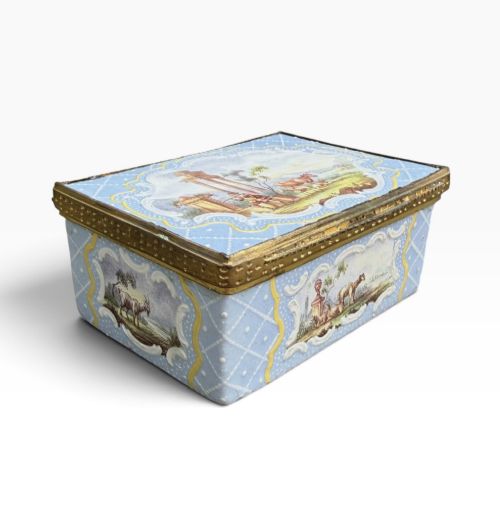
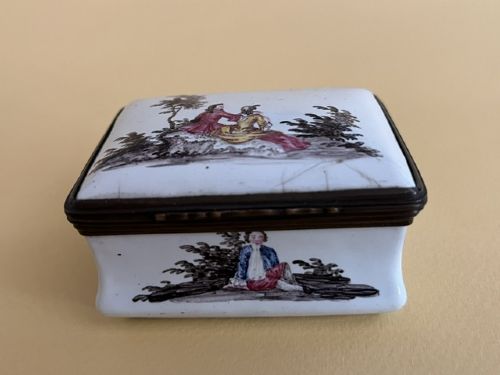
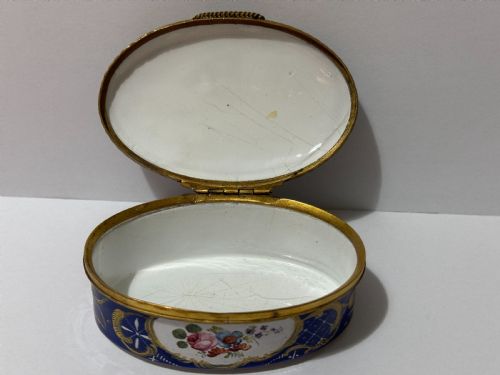
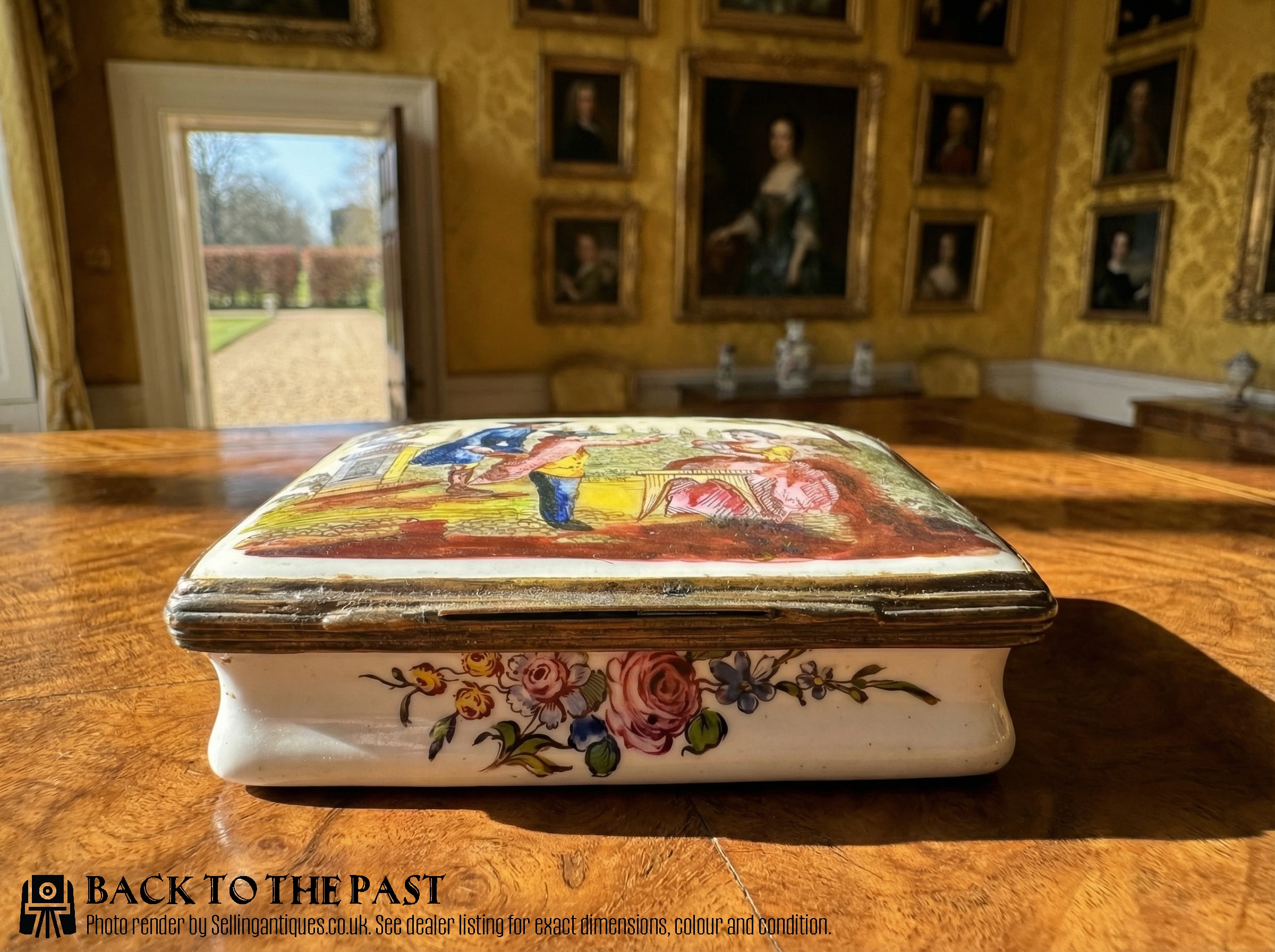
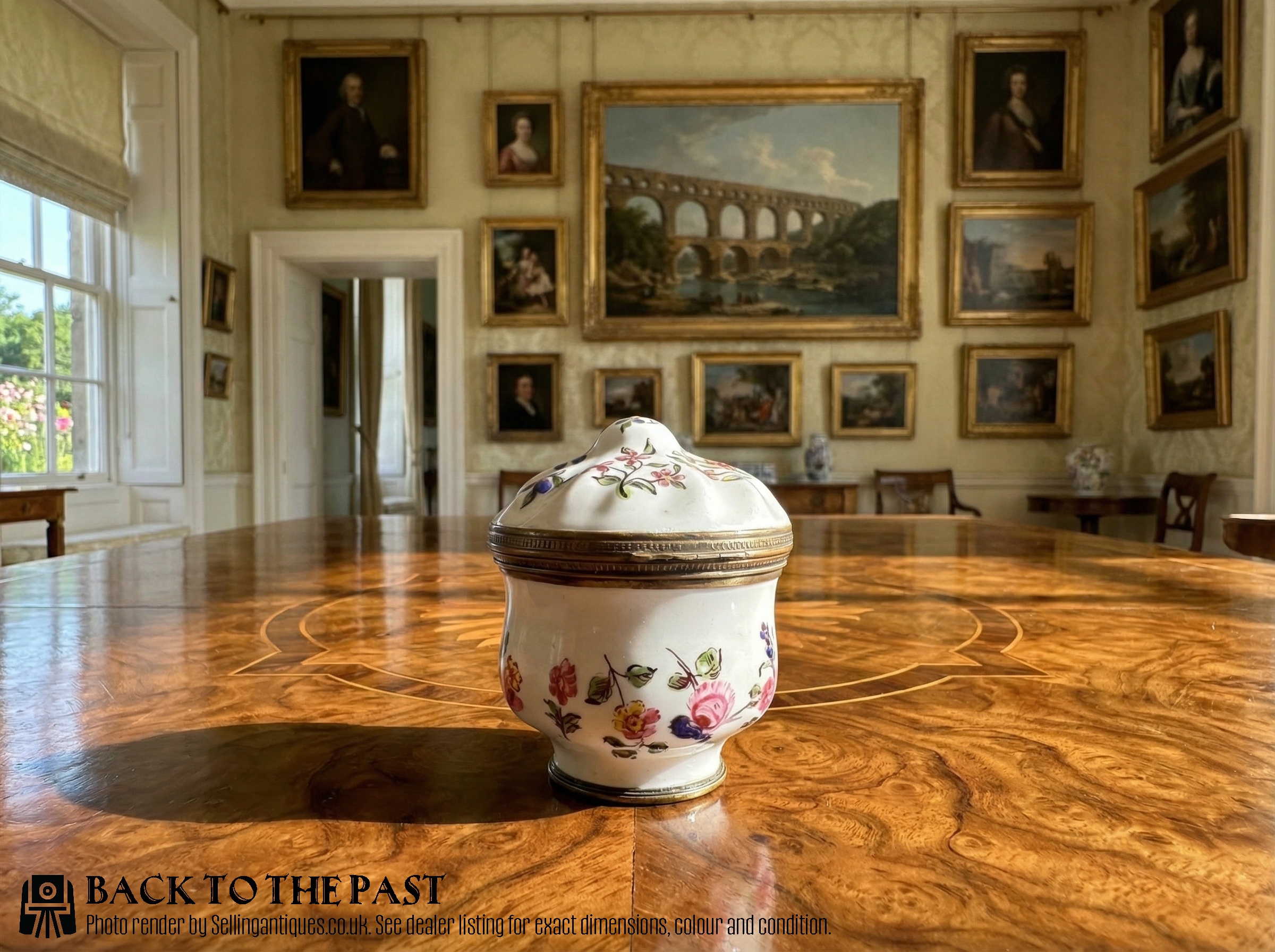
When you search for a bilston enamel trinket box, you are looking at small eighteenth-century and nineteenth-century containers produced in the West Midlands. These pieces take the form of patch boxes, snuff boxes, bonbonniere and decorative boxes designed to hold small personal items. Most examples on this page date from the Georgian era, specifically around the seventeen-seventies and seventeen-eighties.
The objects frequently feature inscriptions, topographical views like Cheltenham Wells, or pastoral scenes including musicians in parkland. Some items present specific figural shapes, such as novelty boxes or animal subjects like a King Charles Cavalier spaniel. They bridge the gap between portable utility and miniature canvas work.
How they were made
Makers formed these containers using copper bases coated in opaque white or coloured enamel, which was then fired in a kiln. Artisans applied hand-painted polychrome enamel details and inscriptions directly onto the fired surface. Gilt metal or brass mounts provided the hinges and rims that joined the box and lid together.
The metalwork components were cast or shaped to fit the enamel bodies precisely before being pinned or secured. Powder pink and other ground colours were achieved through specific mineral oxides mixed into the glass paste prior to firing.
Bilston Enamel Trinket Box Retail Price Guide 2026
Typical asking prices for bilston enamel trinket box among the pieces listed under this phrase on Sellingantiques today, from the lower quarter to the upper quarter. They describe what is for sale here now, not the wider market.
What varies in quality
The crispness of the hand-painted decoration separates standard production from finer work. Boxes featuring finely detailed landscape scenes or clear armorial motifs show superior brushwork compared to simpler geometric patterns.
The integrity of the enamel surface and the precision of the gilt metal mounts determine the overall refinement of a piece. Well-preserved hinges and minimal crazing or restoration elevate an example within its period.
The Bilston Enamel Trinket Box Glossary
- Bilston enamel
- A type of vitreous enamel on copper produced in the Staffordshire town of Bilston during the eighteenth and nineteenth centuries. These items served as fashionable accessories for snuff, patches, and small trinkets.
- Patch box
- A small container equipped with a mirror inside the lid, originally used to hold small silk or velvet patches applied to the face. Georgian society used them to mask blemishes or display decorative shapes.
- Snuff box
- A lidded receptacle designed to hold dry powdered tobacco for inhalation. These pocket-sized containers were often richly decorated on both the lid and base.
- Bonbonniere
- A small ornamental box intended to hold sweets or sugarplums. They frequently take imaginative shapes or novelty forms.
- Gilt metal
- Metal treated with a thin layer of gold or gold-coloured wash to simulate solid gold mounts. It provides the structural rims and hinges on enamel boxes.
Bilston Enamel Trinket Box: Frequently Asked Questions
What is a bilston enamel trinket box?
A bilston enamel trinket box is a small eighteenth or nineteenth-century container made from copper and coated with fused glass enamel. These items were manufactured primarily in Staffordshire and painted with miniature scenes or inscriptions.
They functioned as portable luxury items for holding patches, snuff, or small keepsakes. Today, they survive as collectible examples of Georgian miniature art.
How were patch boxes used?
Patch boxes were carried in pockets or reticules to hold small adhesive patches made of silk or court plaster. Eighteenth-century men and women wore these patches on their faces for decorative effect.
The interior lid often contained a small mirror so the owner could check their appearance when applying a fresh patch.
How do I date an enamel box?
Dating relies on stylistic clues, mounting techniques, and the types of copper foundations used. Eighteenth-century examples often feature lighter copper gauges and specific rococo or neoclassical painting styles.
Inscriptions and named views, such as Cheltenham Wells, also help anchor pieces to specific decades between seventeen-seventy and eighteen-hundred.
Are all these boxes from Bilston?
While commonly attributed to Bilston, many pieces originated from various workshops across South Staffordshire. The broader region shared techniques, materials, and painting styles during the Georgian period.
Specific attribution can be difficult without clear provenance, so collectors often refer to them generally as Staffordshire or Bilston enamels.