
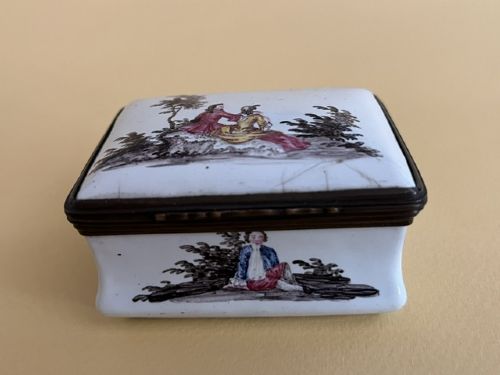


White Enamel Patch Box
A white enamel patch box is a small, hinged container for artificial beauty spots, and these Georgian examples show exquisite artistry.
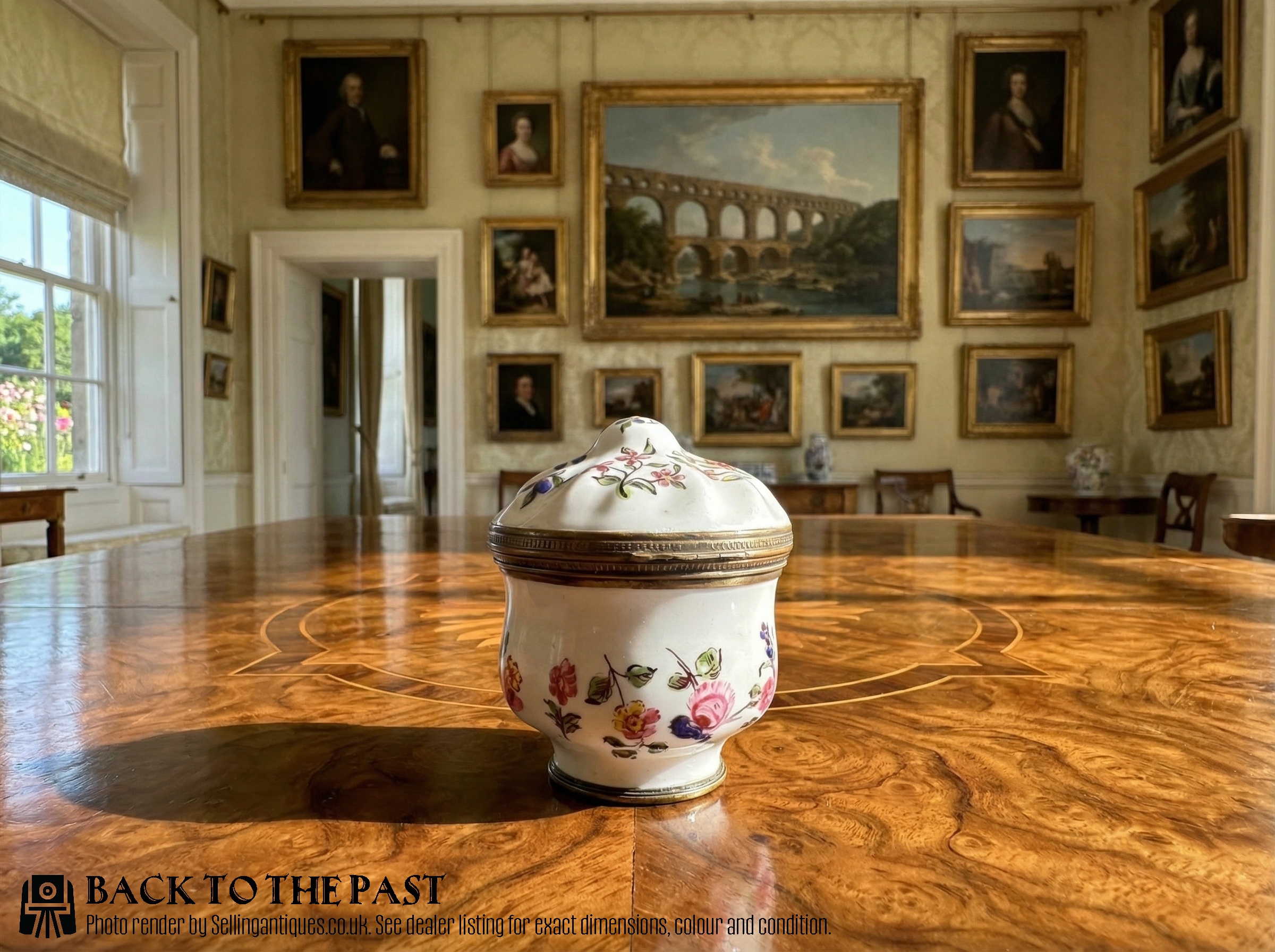
White Enamel Patch Box
A white enamel patch box is a small, hinged container fashioned to hold the tiny fabric patches worn on the face during the Georgian era. These pieces belong primarily to the eighteenth and nineteenth centuries, including items from the Georgian period.
The versions most commonly met on this page take rectangular or bonbonniere forms. They represent decorative boxes, snuff boxes, and trinket boxes originating from workshops in Bilston and South Staffordshire.
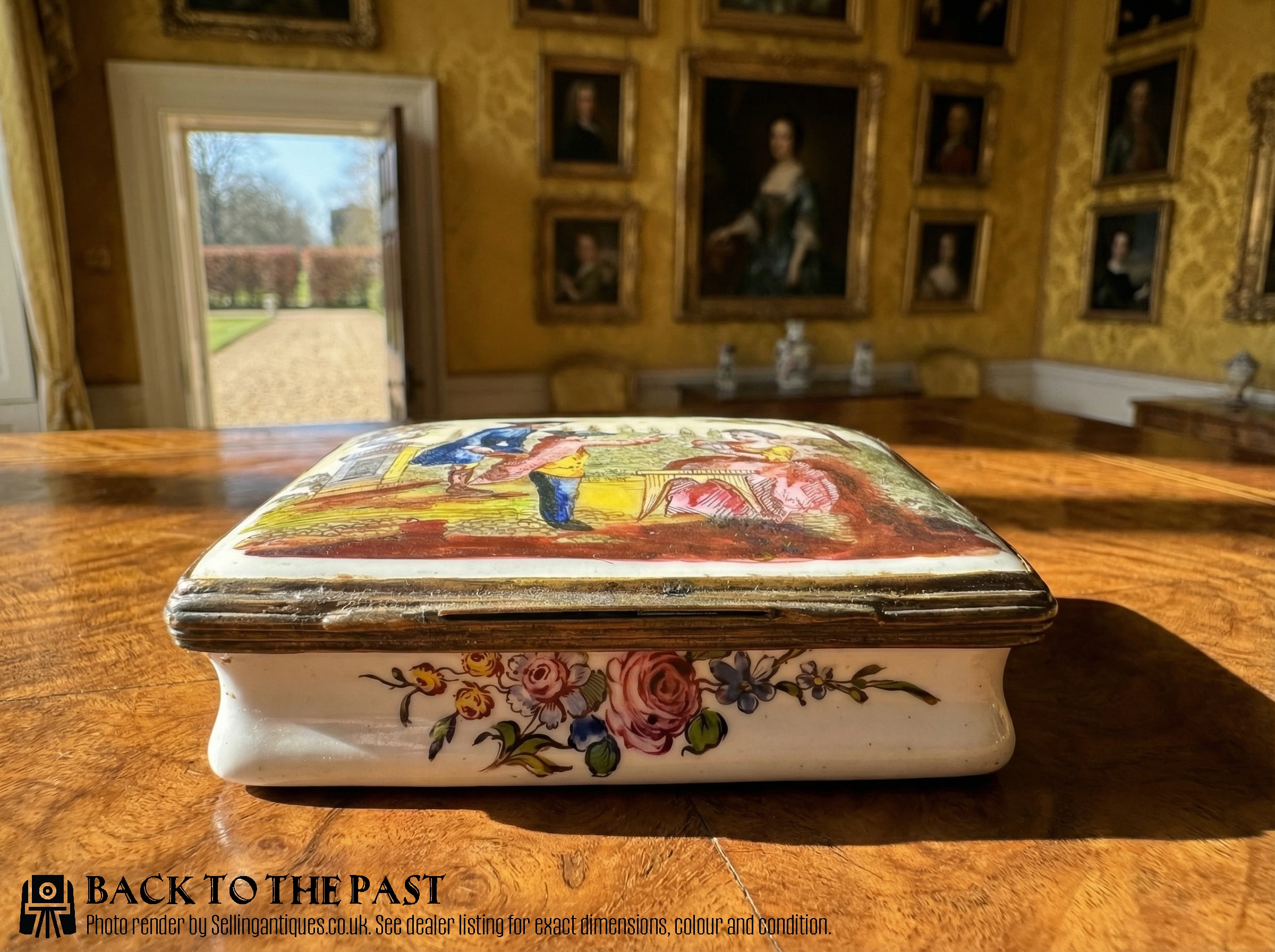
How they were made
Makers formed these containers using copper or brass carcasses before coating the metal in a smooth white enamel surface. Many pieces incorporate gilt metal, gilded metal, or copper gilt mounts and hinges to secure the lid.
Decoration often involved hand-painted scenes such as musicians in parkland or topographical views like Cheltenham Wells, executed directly onto the enamel surface in the eighteenth century.
Musicians still play quietly in parklands frozen on eighteenth-century lids, waiting for patches that vanished centuries ago.
What varies in quality
The distinction between ordinary and exceptional pieces lies in the crispness of the hand-painted decoration and the delicacy of the copper or brass framing. Early eighteenth-century examples display finer pictorial detail and smoother enamel glazing.
Stylistic execution also dictates value, particularly where rococo revival influences or specific topographical subjects like Cheltenham Wells lift a piece beyond standard production.
South Staffordshire·Bilston
The White Enamel Patch Box Glossary
- Patch box
- A small box designed to hold cosmetic patches made of silk, velvet, or taffeta. These containers frequently included a small interior mirror.
- Bilston
- A town in Staffordshire renowned for its eighteenth-century enamel production. Bilston factories produced many of the finest decorated boxes of the period.
- Bonbonniere
- A small ornamental container used for holding sweets or sugarplums. These often took whimsical or figural shapes alongside standard rectangular forms.
- Gilt metal
- Metal that has been thinly coated with gold or a gold-coloured alloy. This material provided a decorative edge to the enamel body.
White Enamel Patch Box: Frequently Asked Questions
How were patch boxes used?
Georgian ladies and gentlemen used patch boxes to carry small fabric shapes adhered to the face to conceal blemishes or display social status. The fitted interior mirrors allowed wearers to adjust these patches throughout the day.
They sat upon dressing tables or were carried in pockets as fashionable accessories.
How can you tell an 18th-century box?
Eighteenth-century boxes typically feature characteristic copper gilt mounts, hand-applied enamel surfaces, and specific regional characteristics associated with Staffordshire production. The weight and construction of the metal carcass differ from later nineteenth-century revivals.
Pictorial subjects, such as parkland scenes or named places like Cheltenham Wells, often point to this earlier period.
What styles do these boxes come in?
The inventory on this page shows Georgian and rococo revival styles across rectangular and bonbonniere forms. Decoration ranges from scenic landscape paintings to simple white enamel finishes.
They encompass trinket boxes, snuff boxes, and dedicated patch boxes from the eighteenth and nineteenth centuries.