



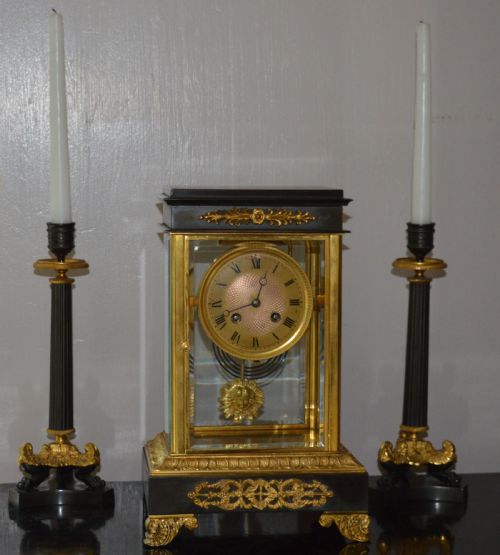
Bevelled Glass Regulator Clock
A bevelled glass regulator clock is a precise French mechanical timepiece housed in crystal panels, prized for its crystal-clear display of the movement.

Bevelled Glass Regulator Clock
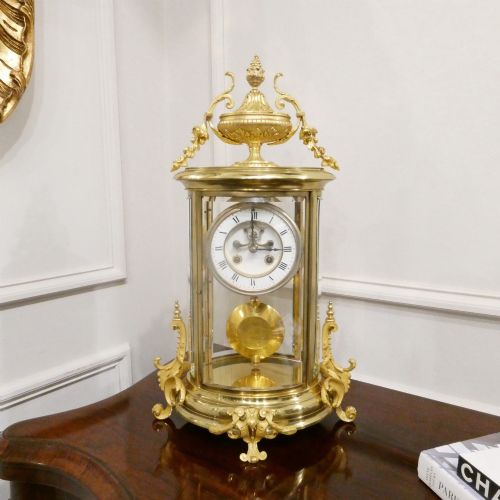
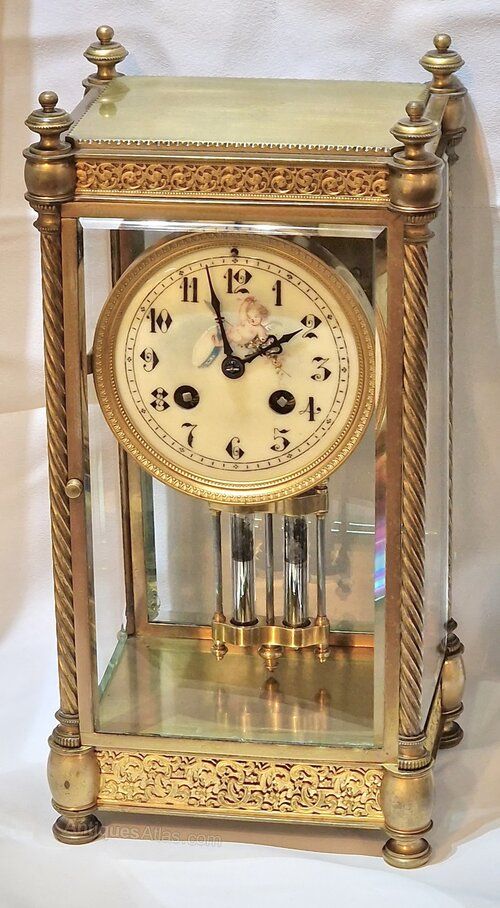
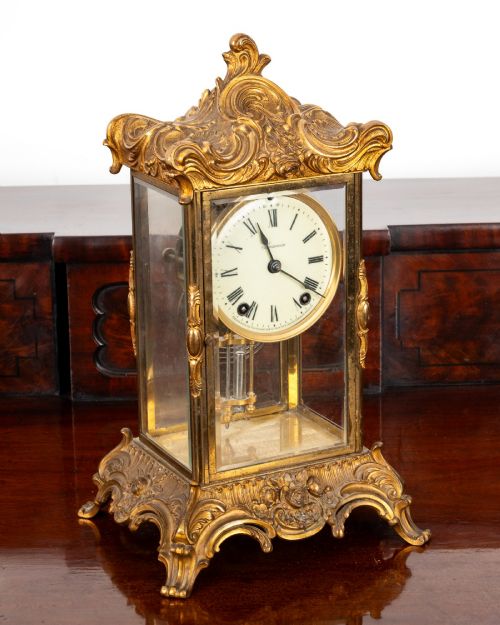
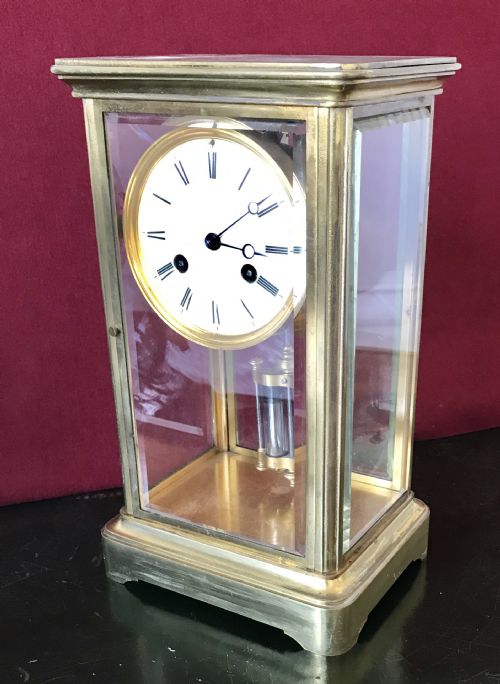
A bevelled glass regulator clock sits on the mantelpiece, displaying a sophisticated mechanical movement encased in transparent glass panels that allow light to pass through the clock face and gear train from every angle. When collectors search for a bevelled glass regulator clock, they generally encounter grand French four glass mantel clocks alongside American crystal regulator variants dating from the late nineteenth century.
Makers such as Samuel Marti and L Epee produced these elaborate timepieces during the nineteenth century, establishing a tradition of architectural brass framing combined with heavy bevelled glass. Buyers often find smaller striking models or grander clock sets complete with matching side ornaments.
Markers of quality
Quality in these timepieces rests upon the crispness of the bronze casting and the precision of the brass movement, where renowned makers applied superior finishing to the escapement and gear trains. The clarity and thickness of the bevelled glass panes also separate standard production from finer luxury examples.
The inclusion of complications such as moon-phase dials, striking mechanisms, or specialist enamel work elevates a piece above simpler time-only models. Original mercury pendulums and matched garniture sets further distinguish the upper tier of surviving examples.
Periods represented include the Victorian era, the Belle Epoque, and the mid-twentieth century through makers such as Samuel Marti and L Epee.
Samuel Marti·Ansonia New York·L Epee France
The Bevelled Glass Regulator Clock Glossary
- Regulator clock
- A precision timepiece designed for high accuracy, often featuring a mercury or compensated pendulum to counteract temperature changes. These clocks served as time standards in workshops and grand households.
- Four glass clock
- A mantel clock enclosed by glass panels on the front, back, and both sides to reveal the movement. This style gained immense popularity in late nineteenth-century France.
- Gilt bronze
- Copper alloy cast and coated with a layer of gold, historically using mercury gilding or electroplating. It provides a durable metallic finish that resists tarnishing.
- Moon-phase dial
- A mechanical sub-dial displaying the lunar cycle through painted representations of the moon. It tracks the phases from new moon through full moon and back.
- Bevelled glass
- Glass panes finished with an angled edge ground along the perimeter. This treatment catches the light and adds depth to the transparent housing.
Bevelled Glass Regulator Clock: Frequently Asked Questions
How do I wind a regulator clock?
Wind the clock using the appropriate key inserted into the winding squares on the dial face, turning gently until resistance stops the movement. Take care not to overwind the springs, as this can damage the internal mechanism.
Ensure you wind both the time train and the strike train if your model includes a striking mechanism. Keeping the clock level on the mantelpiece helps the pendulum swing evenly after winding.
Where should I place a glass clock?
Position the clock on a stable, level mantelpiece or shelf away from direct sunlight and heavy vibrations. A firm surface prevents the heavy brass movement and pendulum from losing correct beat.
Keep the piece out of damp areas to protect the gilt bronze surfaces and enamel dials from deterioration. Adequate clearance allows you to view the movement from multiple angles.
How do I identify the period?
Examine the dial signature, casting style, and materials to determine the era of manufacture. Late nineteenth-century French pieces often feature maker stamps on the brass backplate alongside distinct styling such as Rococo Revival or Belle Epoque details.
Victorian examples frequently display heavy cast brass framing and enamel cartouches on the dial. Later twentieth-century versions show subtle differences in machining and escapement design.
What is a crystal regulator?
A crystal regulator is a mantel clock featuring heavy bevelled glass panels on all sides supported by a brass or gilt bronze frame. This design exposes the dial and the swinging pendulum to view from every direction.
American and French makers produced these models extensively during the late nineteenth century. The transparent housing emphasises the mechanical complexity of the inner gear train.