




Bevelled Glass Overmantel Mirror
A bevelled glass overmantel mirror anchors a chimney breast with scale and reflected light.
Bevelled Glass Overmantel Mirror
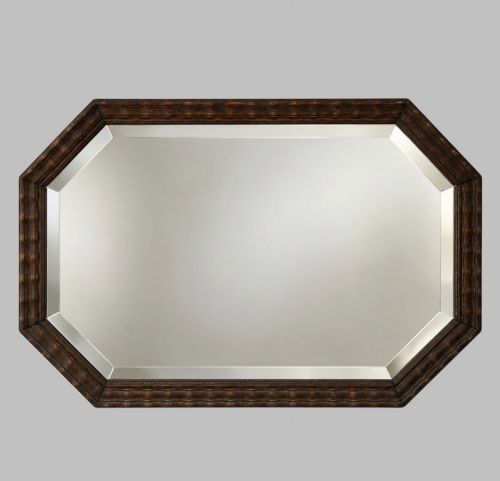
A bevelled glass overmantel mirror is designed to sit directly above a fireplace, filling the wall space where paintings or portraits once hung. These pieces bring height and depth to a room, catching daylight from windows and throwing it back across the floorboards. Most examples encountered here span the Victorian, Edwardian, and Art Deco periods, ranging from domestic mahogany frames to grand gilt creations.
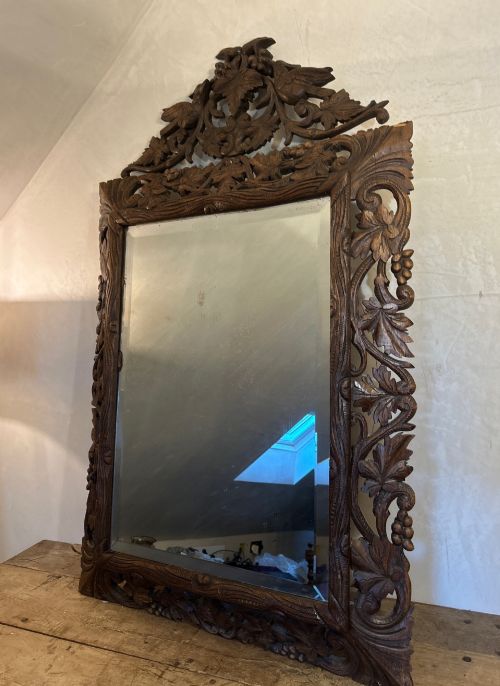
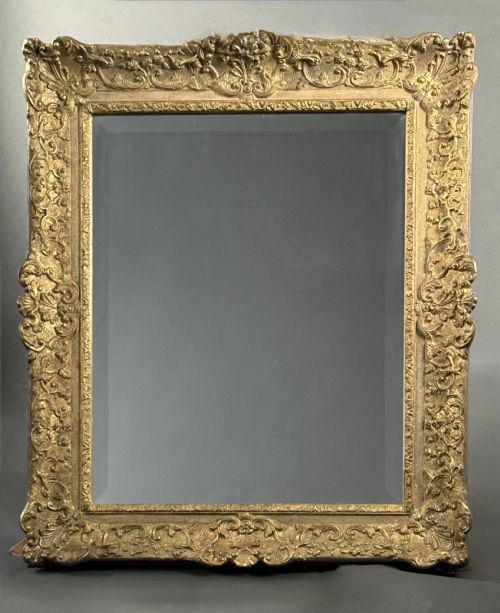
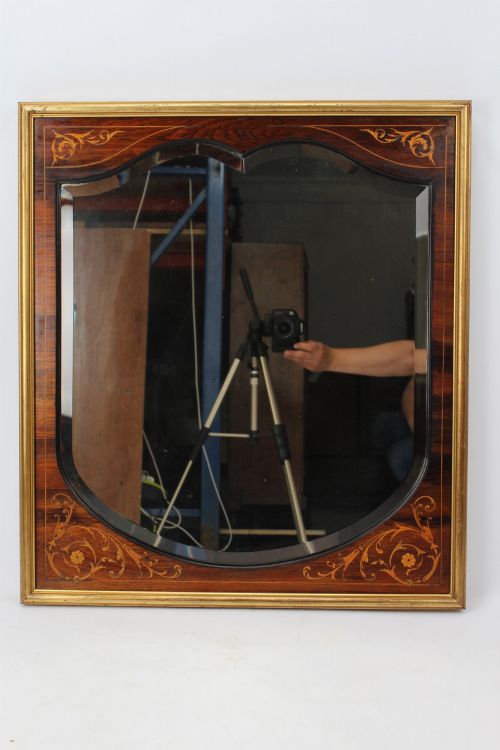
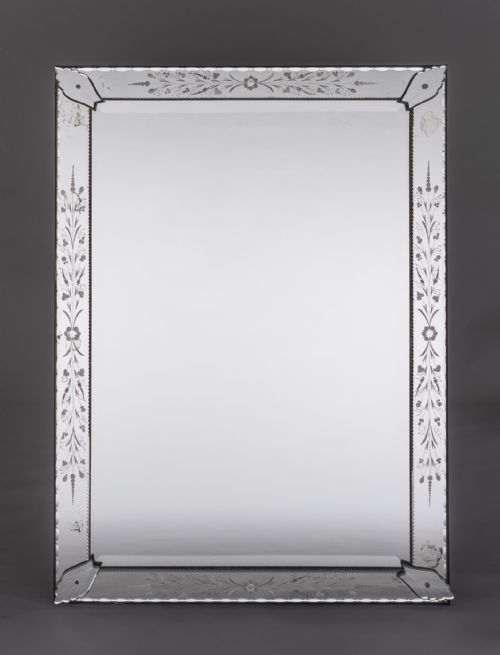
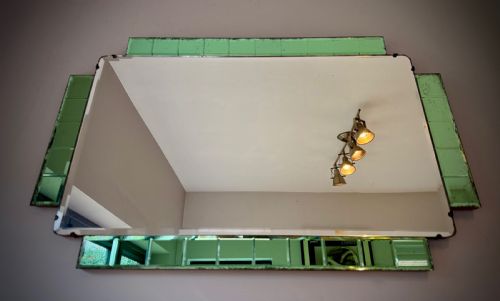
The format shifts according to the decade of its manufacture. Nineteenth-century examples often feature architectural timber frames in oak or walnut, sometimes enriched with carved gilt gesso. Later Edwardian and Art Deco iterations introduce marquetry, emerald green glass panels, and geometric diamond silhouettes that suit more streamlined interiors.
Materials and Construction
Frames rely on solid timbers such as oak, mahogany, walnut, and rosewood, carved directly or built up with moulded gesso before receiving layers of gold leaf or parcel gilt. Gilding involves applying thin sheets of gold over a prepared chalk and size ground, which allows intricate foliate scrolls and crestings to catch the light. In French and Italian workshops, carvers shaped soft woods into ornate Rococo Revival or Renaissance Revival flourishes.
The mirror plates themselves were cast or cylinder-blown before undergoing beveling along the outer edges at a shallow angle. This angled perimeter refracts light into distinct prismatic bands. Mercury silvering appears on the earliest plates, while later examples utilise standard silver nitrate solutions behind flat or shaped glass.
Current listings feature oak, mahogany, walnut, and giltwood frames spanning the Victorian, Edwardian, and Art Deco periods.
Assessing Quality
Quality rests in the crispness of the carving and the depth of the frame's construction. Superior pieces display hand-carved gesso work where undercut details remain sharp and defined, rather than soft or filled in with excessive plaster. The weight of the timber frame and the thickness of the original glass plate dictate the structural stability required to hang a heavy overmantel safely.
The integrity of the mercury or silvered backing and the precision of the bevel edge distinguish finer examples. Original glass retains subtle surface ripples and oxidation that modern replacements lack. A well-balanced composition where the frame proportions complement the scale of the central mirror plate separates workshop masterworks from standard commercial production.
Waring and Gillow
The Bevelled Glass Overmantel Mirror Glossary
- Bevel
- The angled edge ground along the perimeter of a mirror plate. This technique creates a prismatic border that refracts incoming light.
- Gesso
- A plaster-based mixture applied to wood frames and carved or gilded. It provides a smooth surface for gold leaf application.
- Overmantel
- A large mirror or painting specifically scaled to hang on the wall directly above a mantelpiece. These pieces visually anchor the fireplace within the room.
- Giltwood
- Timber that has been coated with gold leaf. It reflects ambient light effectively in formal reception rooms.
- Marquetry
- Inlaid wood veneers forming decorative patterns. Craftsmen use contrasting timbers to create floral or geometric motifs on the frame.
Bevelled Glass Overmantel Mirror: Frequently Asked Questions
How do I hang a heavy overmantel mirror safely?
Secure the frame directly into structural wall studs using heavy-duty steel brackets or mirror plates rated for the weight. Overmantels carry substantial mass due to dense timber and thick glass plates.
Ensure the hanging wire or chain is dispensed with in favour of direct wall fixing through the frame or robust battens to prevent accidental slips.
Can I clean antique mirror glass without damaging it?
Wipe the glass gently with a soft, lint-free cloth slightly dampened with distilled water. Avoid spraying liquid directly onto the surface.
Keep moisture away from the edges where the silvering or mercury backing meets the frame, as liquid seeping behind causes dark spots and corrosion.
How do I tell Victorian from Art Deco mirrors?
Victorian examples lean towards heavy gilt gesso, carved mahogany, and ornate Rococo or Chippendale revival motifs. Their frames are richly textured and historically referenced.
Art Deco pieces from the 1920s and 1930s favour geometric lines, emerald green glass panels, and streamlined silhouettes without historical ornament.