

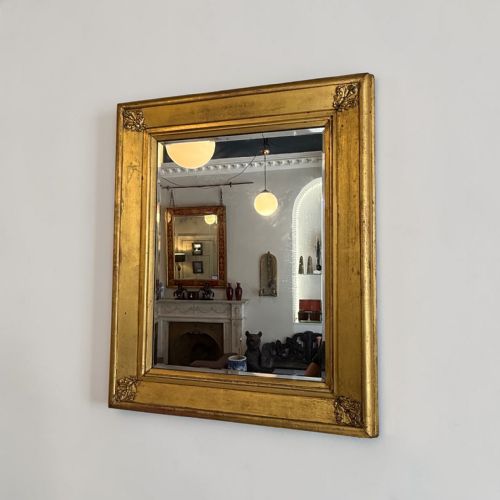
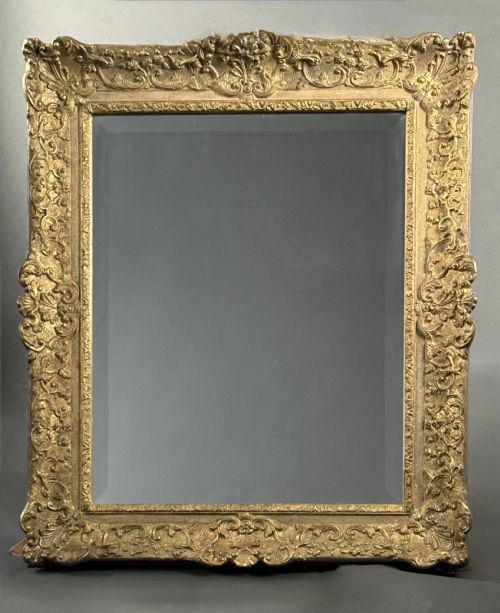
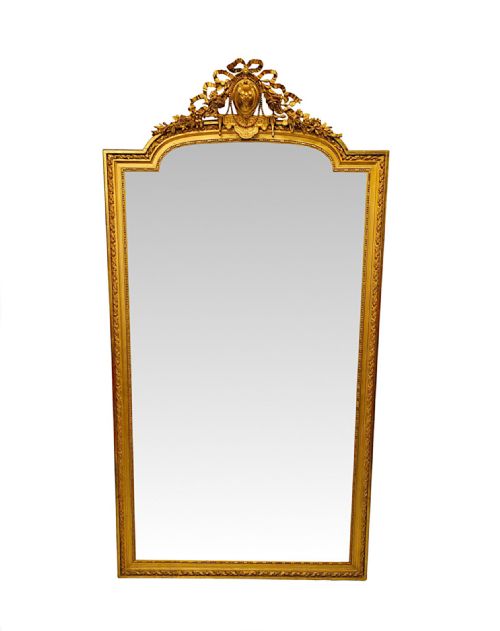
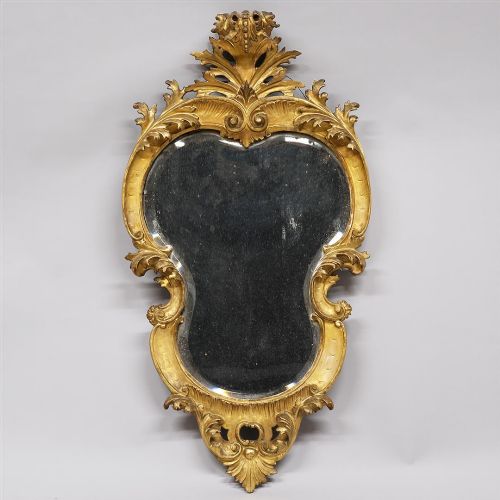
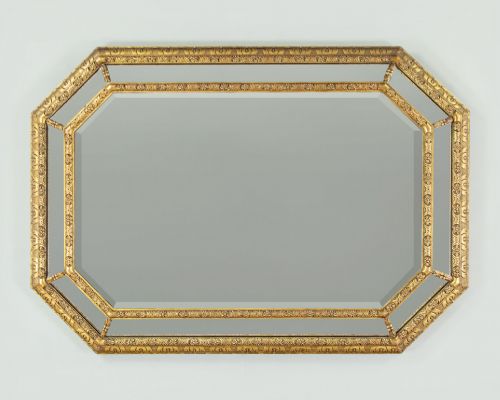


Bevelled Giltwood Wall Mirror
A bevelled giltwood wall mirror brings warmth and reflective depth to a room through gilded surfaces and shaped glass.
Bevelled Giltwood Wall Mirror
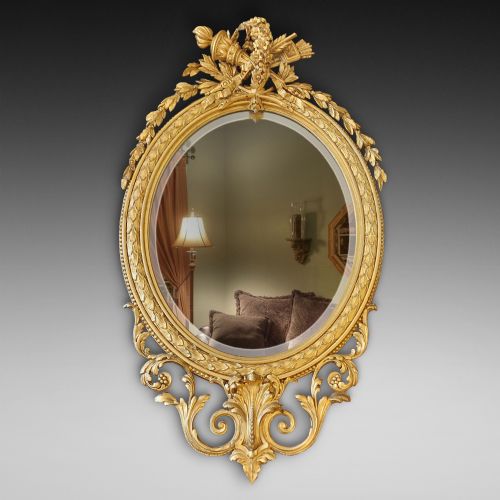
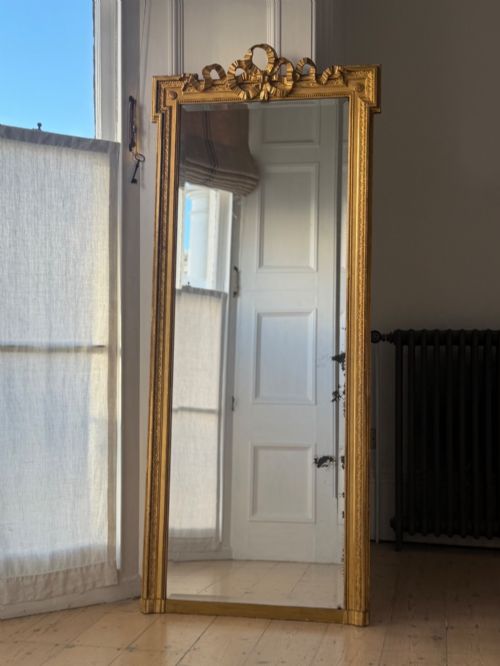
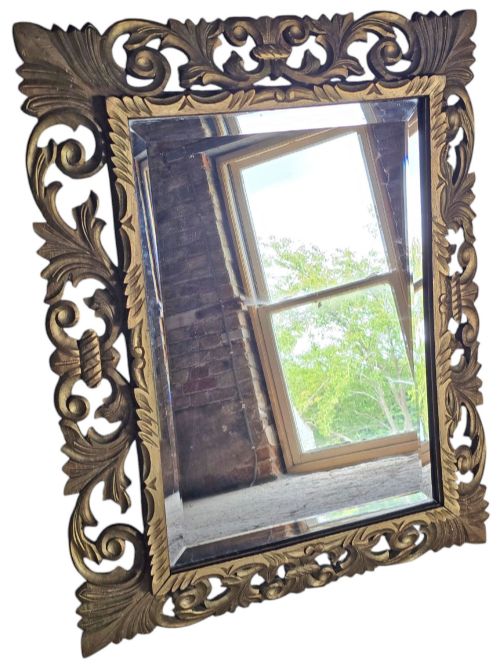
A bevelled giltwood wall mirror combines gilded wooden framing with glass plates featuring angled edges, appearing across 18th century, Georgian, Victorian, and 20th century periods. Overmantel mirrors and tall wall mirrors dominate the forms, originating from English, French, and Italian workshops in styles ranging from Rococo Revival to Louis XVI.
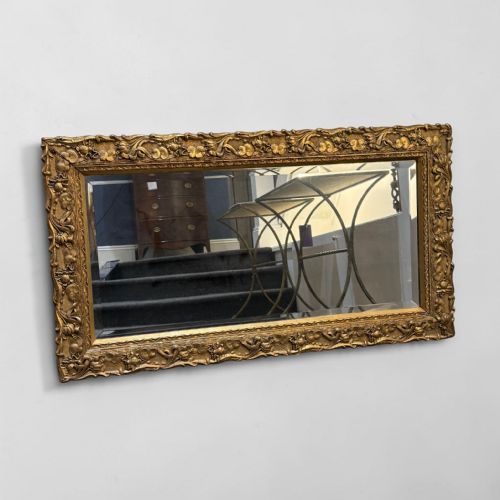
Victorian examples in this selection frequently display ornate gesso ornamentation and cushion frames, whilst earlier Georgian pieces lean towards classical pier mirror designs. French influences appear through intricate crests and gilded decorative motifs tailored for principal reception rooms.
How they were made
Makers built the structural carcases using timber or composition materials, applying layers of gesso to create high-relief carving before applying gold leaf or liquid gilding. Glass plates were cut with angled bevels along the borders to refract light.
Traditional construction methods relied on hand-carved wood and applied gesso ornamentation, resulting in frames that hold metallic leaf securely over decades of domestic use.
Bevelled Giltwood Wall Mirror Retail Price Guide 2026
Typical asking prices for bevelled giltwood wall mirror among the pieces listed under this phrase on Sellingantiques today, from the lower quarter to the upper quarter. They describe what is for sale here now, not the wider market.
Some oval cushion frames bounce light around corners like golden portholes.
What varies in quality
The crispness of the carved gesso decoration and the depth of the gilding separate standard production from finer work. Superior examples retain original mercury glass or early bevelled plates with minimal silvering loss.
Frame integrity depends on the retention of original timber backing boards and the precision of the mitred joints, where lesser pieces show shrinkage or replacement elements.
John Belchier
The Bevelled Giltwood Wall Mirror Glossary
- Giltwood
- Wood that has been coated with gold leaf or metallic gilding. This finish provides the characteristic metallic sheen seen on antique frames.
- Gesso
- A plaster-like mixture applied to timber frames to create a smooth base for carving and gilding. It allows intricate relief ornamentation.
- Bevelled glass
- A mirror plate with edges ground and polished at an angle. This technique creates a prismatic border effect.
- Pier mirror
- A tall, narrow mirror designed to hang on the wall between windows. These pieces often match console tables or mantelpieces.
Bevelled Giltwood Wall Mirror: Frequently Asked Questions
How do I date a giltwood mirror?
Dating relies on examining the construction of the timber frame, the composition of the gesso, and the characteristics of the mirror plate. Earlier pieces often feature hand-carved wooden frames, whilst later Victorian versions frequently utilise moulded gesso.
Backboards and fixings also offer clues. Older mirrors retain hand-sawn boards and original fixings rather than modern screws.
What is the difference between an overmantel and a pier mirror?
Overmantel mirrors are wide and designed specifically to hang above a fireplace mantelpiece. Pier mirrors are taller and narrower, traditionally placed on the wall space between two windows.
Proportions dictate their placement in historic interiors. Overmantels command horizontal presence, whereas pier mirrors draw the eye vertically.
How should I hang a heavy giltwood mirror?
Heavy antique frames require secure wall fixings suited to the weight of timber and glass. Professional mirror hangers utilise heavy-duty wall anchors attached to structural studs or masonry.
Distributed weight prevents strain on the original frame joints. Hanging wire alone is often insufficient for large overmantel examples.
How do I clean a giltwood frame?
Giltwood frames require gentle dusting with a soft, dry brush to avoid damaging delicate gesso and gold leaf. Moisture and chemical cleaners strip the historic metallic finish.
Preserving the surface involves avoiding all liquid solvents. Regular light maintenance keeps the gilded finish stable.