

Bedside Pedestal Cabinet
A bedside pedestal cabinet offers compact bedside storage and surface space, emerging in forms ranging from Georgian mahogany to Art Deco walnut.
Bedside Pedestal Cabinet
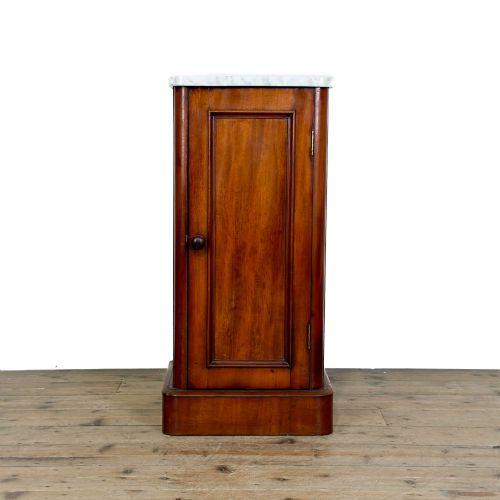
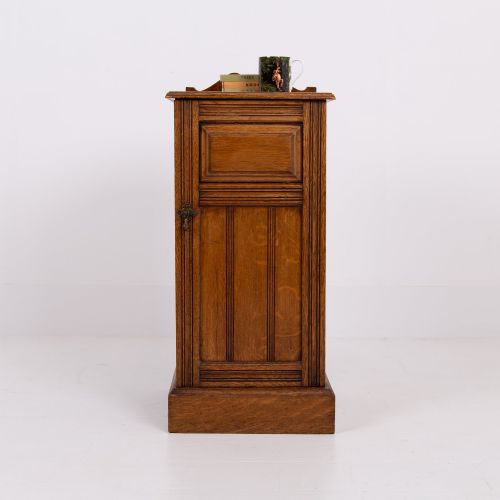
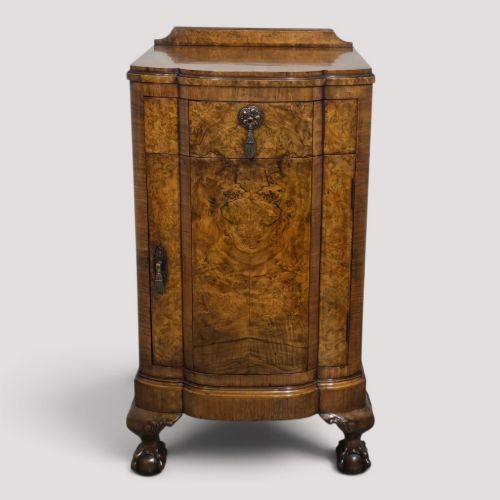
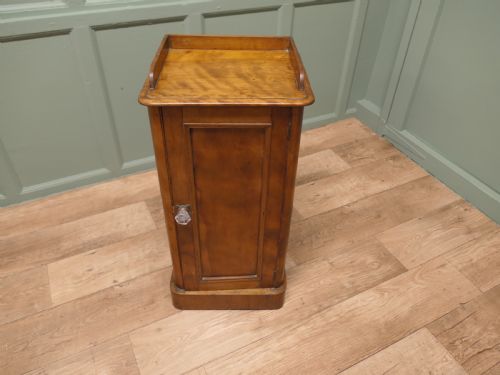
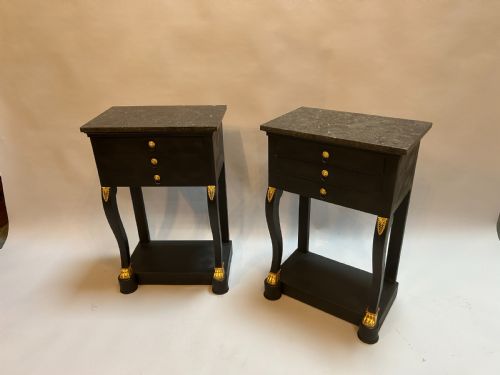
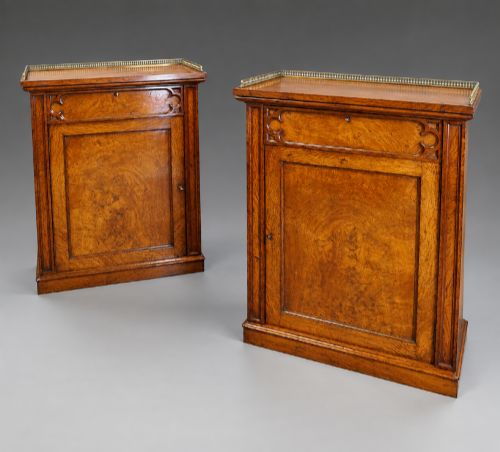
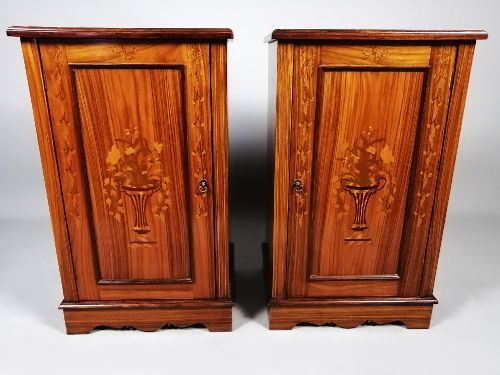
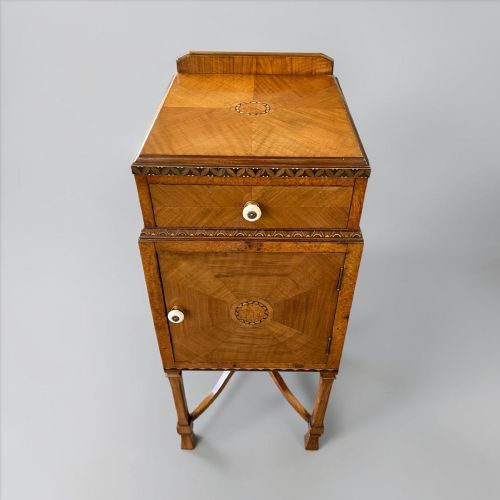
When you search for a bedside pedestal cabinet, you are looking at small-scale freestanding cupboards and drawer units designed to sit beside a bed. The listings show forms ranging from traditional Georgian and Victorian pieces to Edwardian satinwood and Art Deco walnut variants.
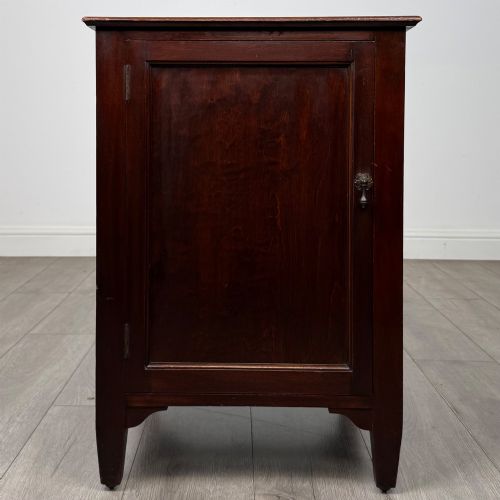
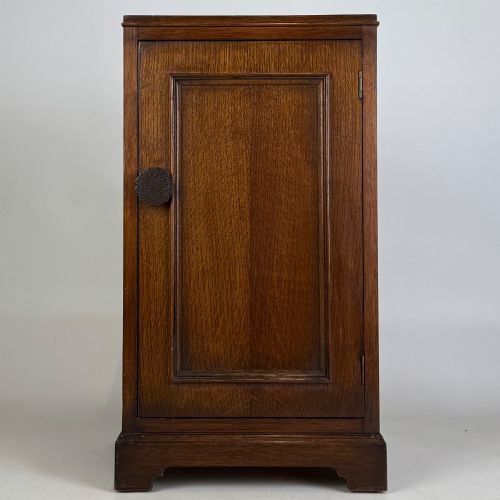
The version you are most likely to meet on this page is a mahogany or walnut cabinet from the Victorian or Edwardian eras, often built with a single cupboard door or a small stack of drawers. These pieces also appear under descriptions such as nightstands, pot cupboards and bedside chests.
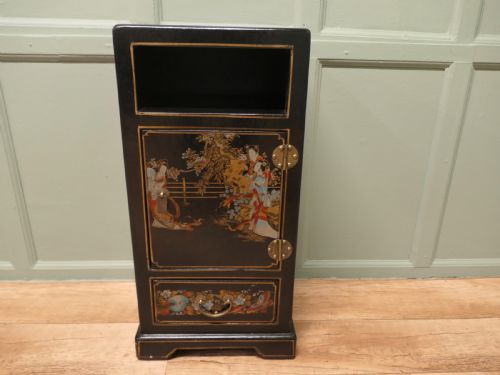
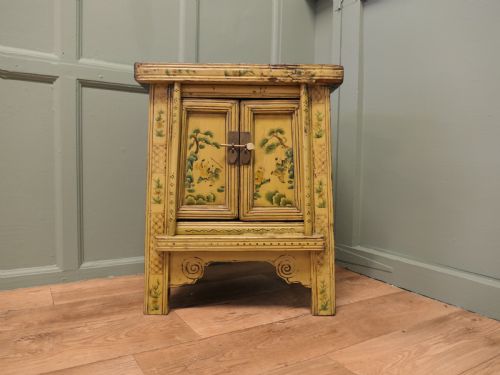
Originating primarily from British workshops, these cabinets span multiple stylistic revivals including Queen Anne and Sheraton, alongside painted Chinoiserie and French inlaid designs. Their compact footprint makes them practical for modern bedrooms while retaining historical character.
Materials and construction
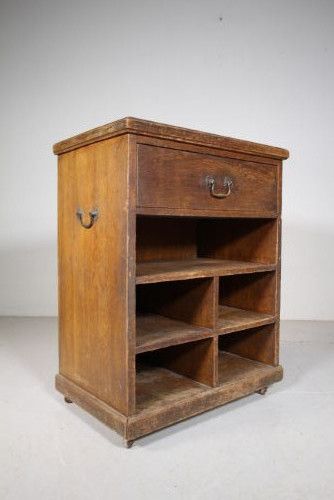
Cabinet makers relied heavily on hardwoods such as mahogany, walnut and burr walnut, frequently utilising satinwood, oak and pitch pine for interiors and secondary structures. Timber selection determined both the weight and the visual grain pattern of the finished piece.
Surface decoration involved marquetry inlay, painted Chinoiserie motifs, and flame mahogany veneers matched symmetrically across doors and drawer fronts. Brass hardware, marble tops and occasional chrome detailing completed the construction of these functional bedside items.
Victorian cabinet makers designed several of these compact pedestals specifically to keep chamber pots politely out of sight until morning.
Judging quality and craftsmanship
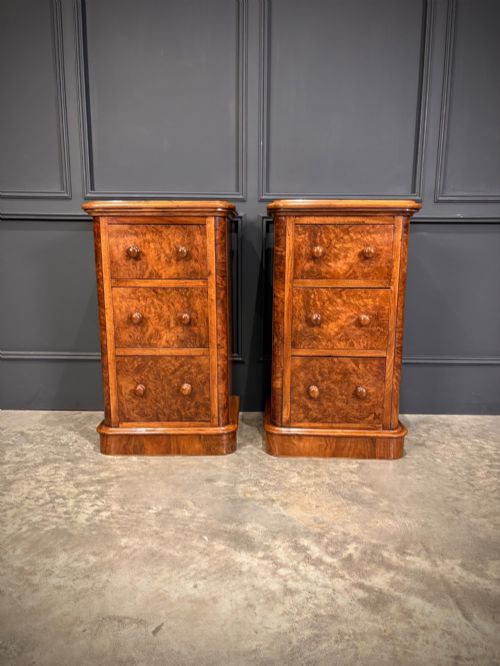
Quality in a bedside pedestal cabinet rests on the precision of the cabinet work and the selection of timber veneers. Pieces with book-matched burr walnut or flame mahogany display superior grain alignment compared to simpler plain timber constructions.
Construction methods distinguish finer examples from standard production, seen in the use of hand-cut dovetail joints on drawers and solid secondary woods. Surviving maker stamps from firms like Morant and Co or Edwards and Roberts indicate workshop provenance.
Denby and Spinks·Walter Carter Harrods·Morant and Co·Edwards Roberts·Holland and Sons
The Bedside Pedestal Cabinet Glossary
- Pedestal cabinet
- A tall, narrow freestanding cupboard designed to stand beside a bed or desk. These units typically feature a single door enclosing a shelf or a compartment for chamber pots.
- Marquetry
- Decorative woodwork where pieces of veneer are fitted into a background panel to form geometric or pictorial designs. This technique frequently appears on French and Georgian examples.
- Flame mahogany
- A veneer cut from the fork of a mahogany tree that produces a distinctive flickering flame pattern. It is prized for its decorative visual impact on cabinet doors.
- Burr walnut
- Timber taken from a tree growth that creates swirling, knotty grain patterns. Cabinet makers valued this material for high-status Victorian and Art Deco surfaces.
- Pot cupboard
- An alternative historical term for a bedside cabinet that originally housed a chamber pot. They often include a small enclosed shelf space behind the main door.
Bedside Pedestal Cabinet: Frequently Asked Questions
What is a bedside pedestal cabinet?
A bedside pedestal cabinet is a small, enclosed piece of furniture designed to hold night-time essentials and sit beside a bed. They provide a surface for a lamp alongside concealed storage behind a door or within drawers.
Historically, many versions functioned as pot cupboards to keep chamber pots out of sight. Today, they serve primarily as compact bedside tables with functional internal shelving.
How do I date a bedside cabinet?
Dating relies on identifying the prevailing timber choices, hardware types, and stylistic revivals present in the construction. Georgian and Victorian pieces typically employ solid mahogany or burr walnut with hand-cut joinery.
Later Edwardian and Art Deco examples introduce lighter satinwood, teak, or streamlined geometric veneers. Maker stamps and attribution marks also help anchor a piece to a specific era.
Were these cabinets made in pairs?
Makers frequently produced bedside cabinets as matching pairs to flank larger double beds. Surviving pairs often display mirrored veneer patterns across the cabinet doors.
Single cabinets were also common, particularly in smaller rooms or earlier periods before matching bedroom suites became standard practice.
How do I fit one into a modern bedroom?
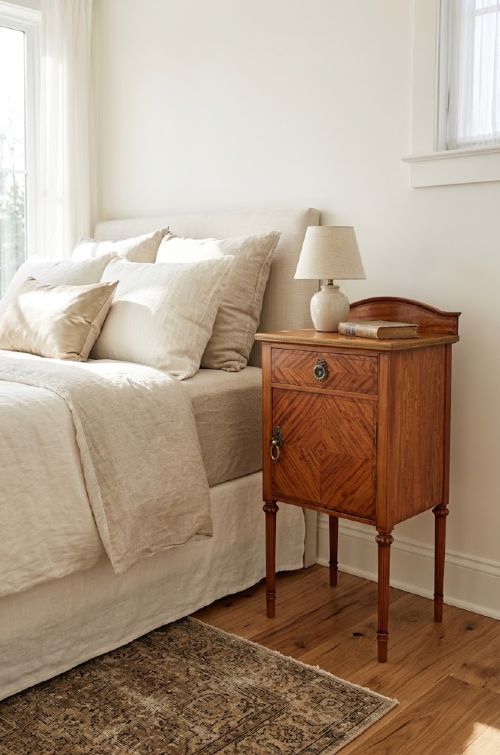
Their compact dimensions allow these cabinets to function effectively alongside modern bed heights and contemporary decor. The enclosed storage keeps charging cables and books hidden away while the top surface holds a lamp or glass.
Mixing period woods like mahogany or oak with modern interiors adds textural contrast and historical depth to a bedroom layout.