
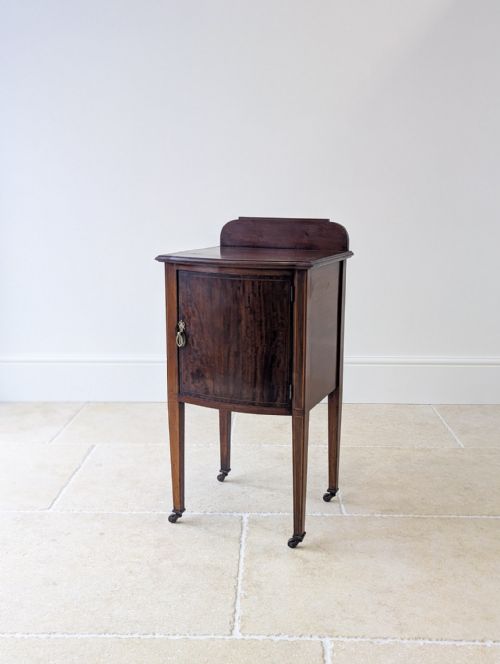
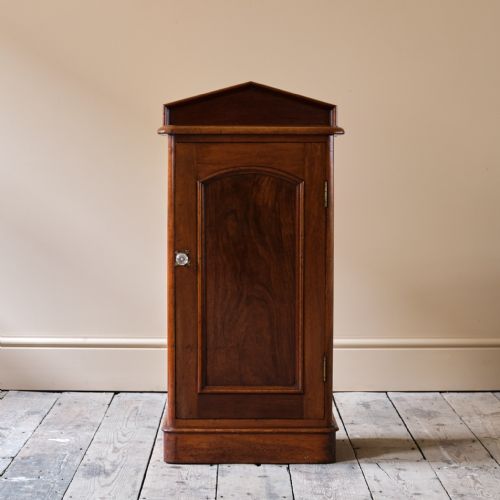
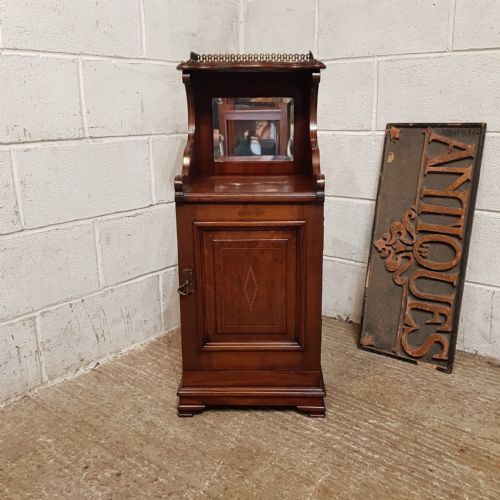
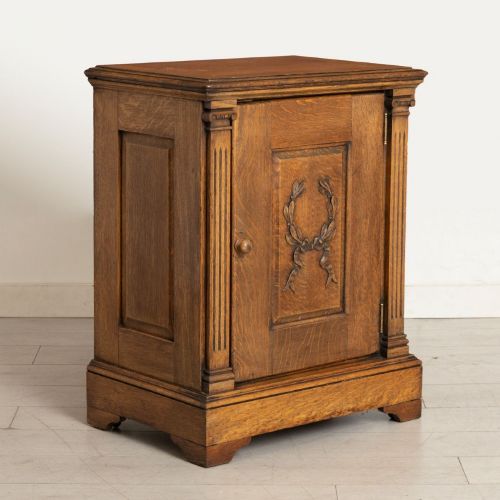
Single Door Pedestal
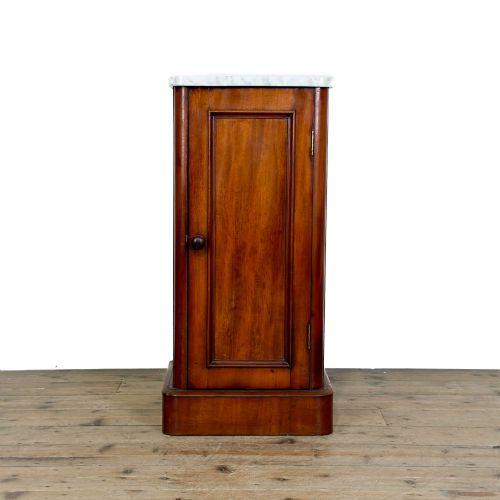
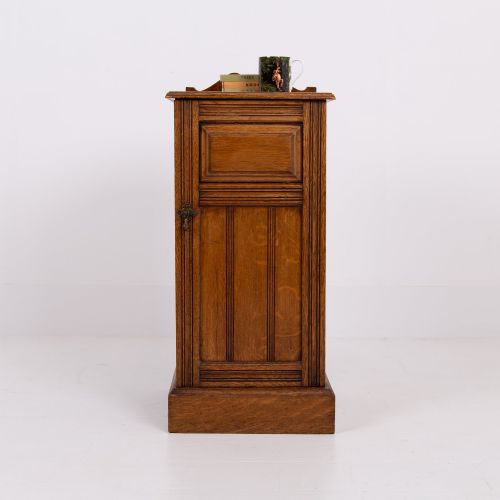
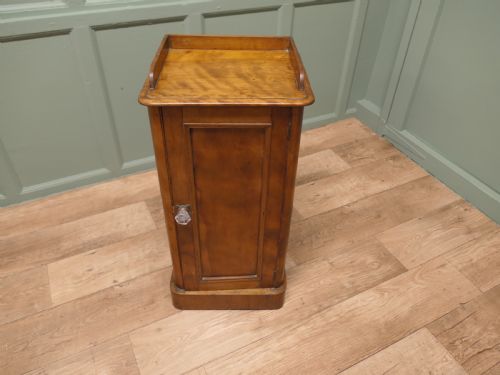
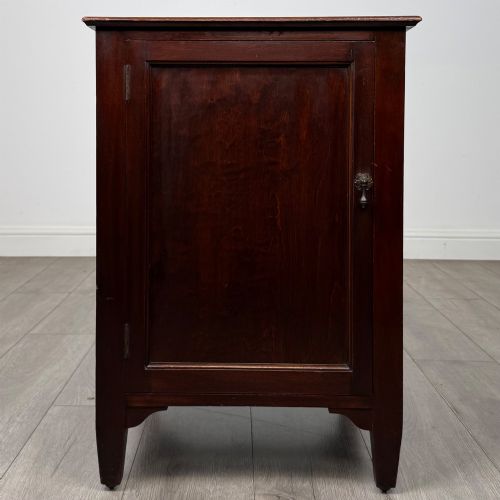
A single door pedestal offers compact bedside and corner storage, taking the form of mahogany and walnut cupboards built to serve Victorian and Edwardian rooms.
Single Door Pedestal
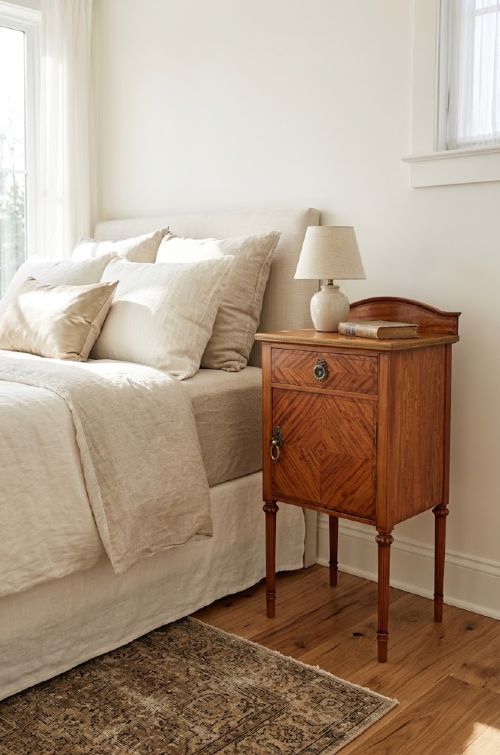
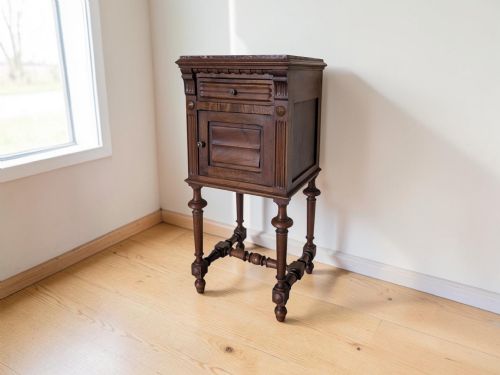
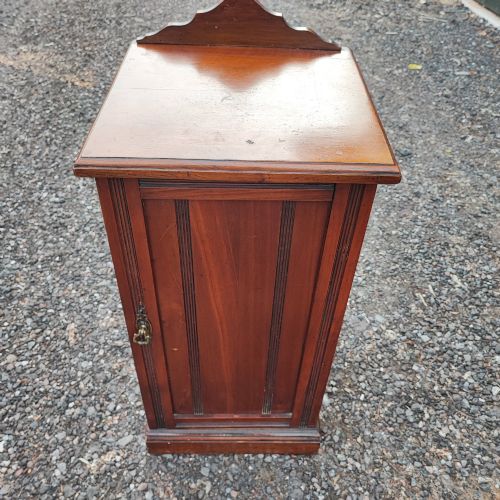
A single door pedestal functions primarily as a bedside cabinet, nightstand, or small pot cupboard designed to conceal chamber pots or personal items. Most examples seen here emerge from the nineteenth and early twentieth centuries, spanning the Victorian and Edwardian eras.
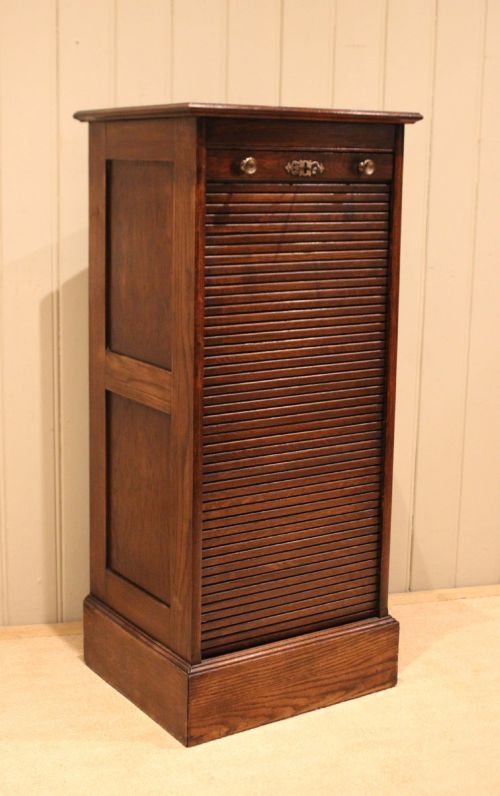
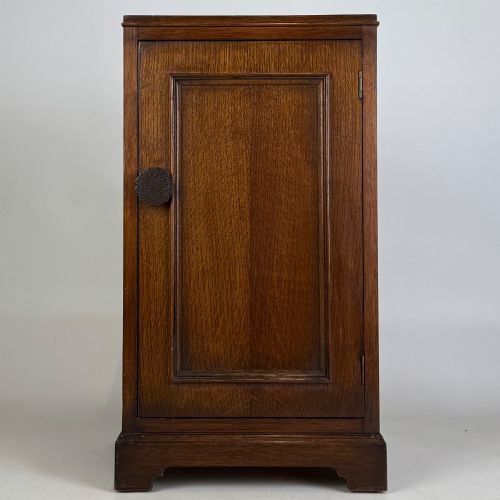
The standard form involves a single hinged door enclosing a shelved interior, often topped by a small drawer or a flat surface intended to hold a lamp or jug. These pieces appear in various configurations, including tall ash variants, low oak storage units, and tambour front filing cabinets.
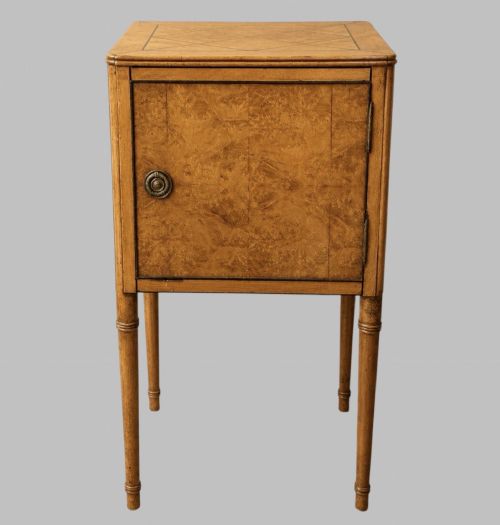
Makers shaped these items to suit domestic bedchambers, incorporating woods such as mahogany, walnut, and oak alongside decorative elements like satinwood and maple. The majority present a compact footprint suited for small spaces while maintaining practical enclosed storage.
Materials and construction methods
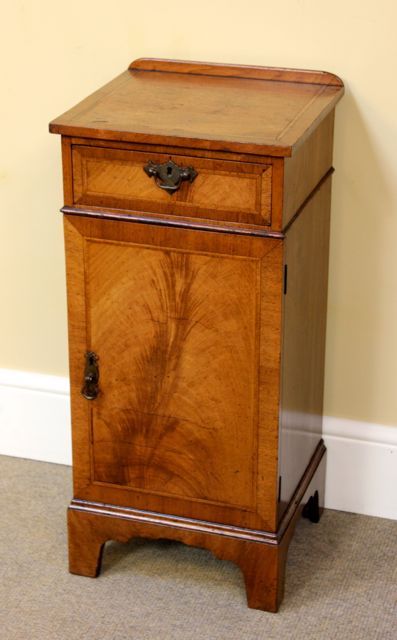
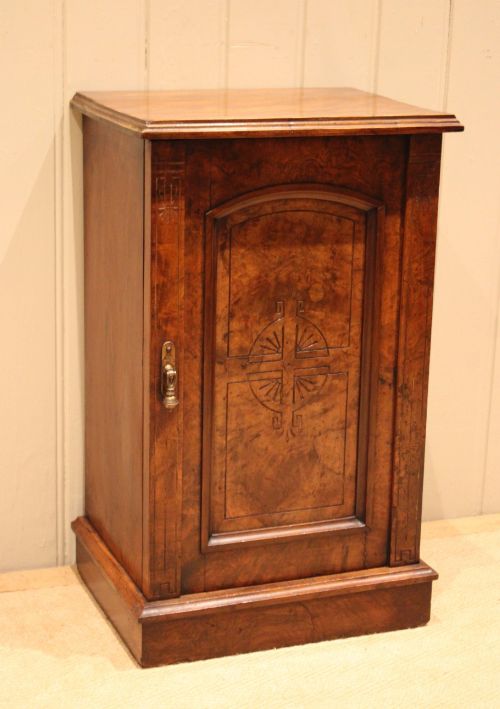
Cabinet makers relied heavily on solid hardwoods and decorative veneers, applying burr walnut and flame mahogany to primary surfaces for visual depth. Structural elements frequently employ secondary timbers like oak and pine to form robust carcases and interior drawers.
Joinery techniques from the period include dovetailed drawer construction and mortise and tenon frames, ensuring the single door hangs true within its rebate. Surface finishes involve polished shellac or varnish, protecting the timber while highlighting the natural grain.
Design styles present in the record include Gothic Revival, Aesthetic Movement, Sheraton Revival, Arts and Crafts, and Art Deco.
Evaluating craftsmanship and condition
Quality rests upon the selection of timber figures and the precision of the cabinetwork, particularly how smoothly the single door operates within its frame. Superior examples display carefully matched burr walnut or flame mahogany veneers that wrap continuously across the front elevation.
Interior fitments, original brass or ceramic hardware, and secondary wood selection distinguish higher tier workshops from standard utilitarian pieces. The integrity of the structural joints and the retention of the original surface finish dictate the standing of an individual pedestal.
Walter Carter Harrods·Howard and Sons·Holland and Sons·Simpson Halifax·Maple and Co
The Single Door Pedestal Glossary
- Pot cupboard
- A small enclosed cabinet originally designed to house a chamber pot behind a single door. These pieces often feature a panelled door and an internal shelf.
- Tambour
- A flexible shutter made of narrow vertical strips of wood glued to a canvas backing, allowing a door to slide around a curved track.
- Burr walnut
- A prized timber veneer harvested from the irregular growths on walnut trees, known for its swirling, highly figured grain patterns.
- Aesthetic Movement
- A late nineteenth-century design style that emphasised visual beauty over moral narrative, often incorporating simplified forms and Ebonised or carved details.
- Pedestal cupboard
- A freestanding vertical storage unit with a single upright carcase, typically taller than its width and fitted with an enclosed door.
Single Door Pedestal: Frequently Asked Questions
What was a single door pedestal used for?
These cabinets served primarily as bedside storage in Victorian and Edwardian bedrooms, holding night-time necessities and chamber pots out of sight.
Their compact proportions allowed them to fit tightly beside a bed or in small corners where larger furniture would not go.
How do I date a pedestal cupboard?
Dating relies on observing the timber choices, construction methods, and stylistic cues such as Gothic Revival mouldings or Edwardian stringing. Comparing the secondary woods inside the drawers also helps narrow down the period of manufacture.
Pieces from the mid-nineteenth century often display heavy flame mahogany, while Edwardian versions favour lighter satinwood and simpler inlaid lines.
Are these cabinets suitable for modern bedrooms?
Their compact dimensions make them practical bedside tables for contemporary homes, providing enclosed storage for books and charging devices. The flat top surface readily accommodates modern bedside lamps.
They mix easily with other furniture styles while adding period character and warm timber tones to a room.
What is the difference between a pot cupboard and a bedside cabinet?
While the terms are often used interchangeably today, a pot cupboard historically denoted a specific ventilated cabinet built to contain a chamber pot. Standard bedside cabinets frequently served the same domestic role without the historical ventilation aperture.
Both types share the single door pedestal format seen across Victorian and Edwardian listings.