

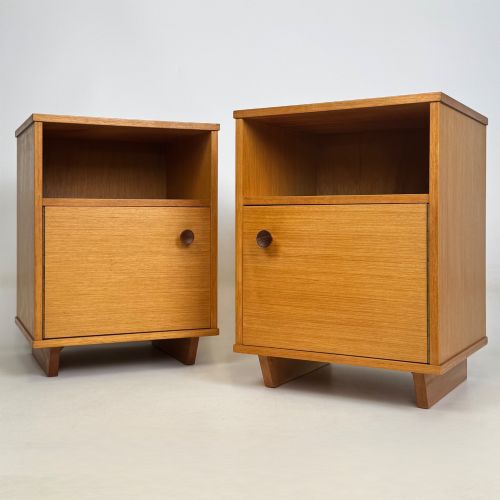

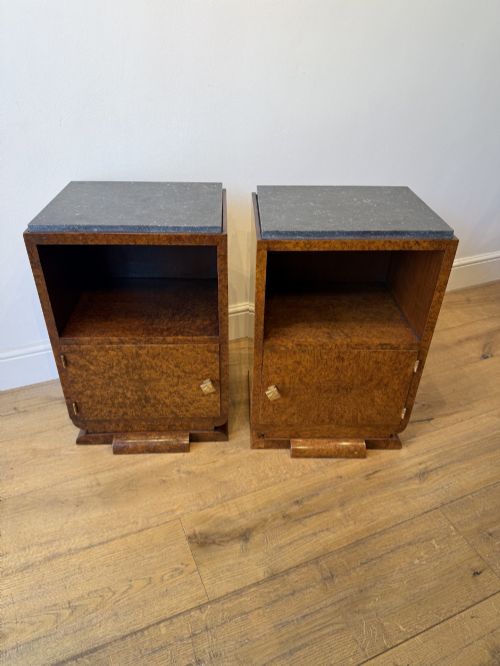
Bedroom Side Tables Pair
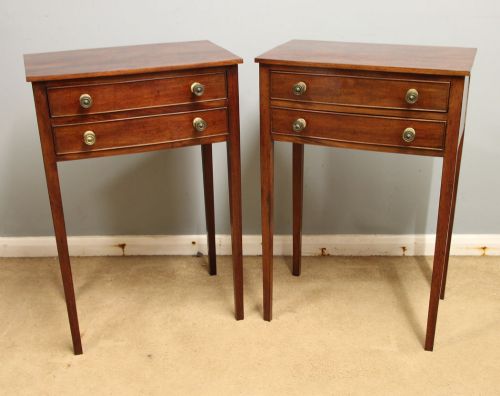
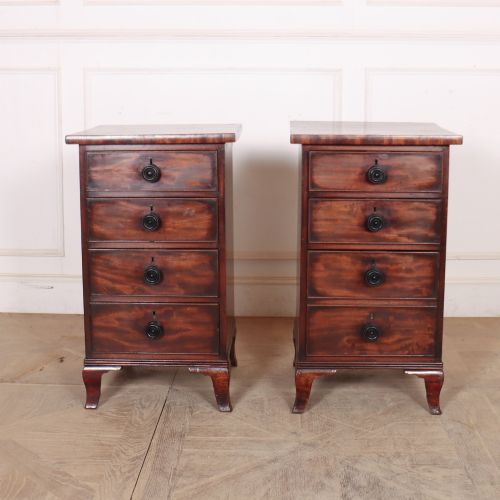
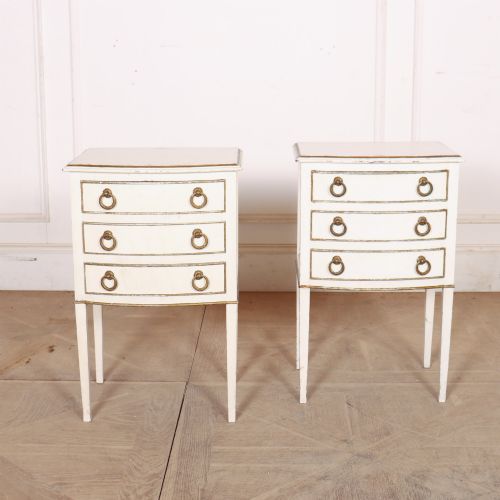
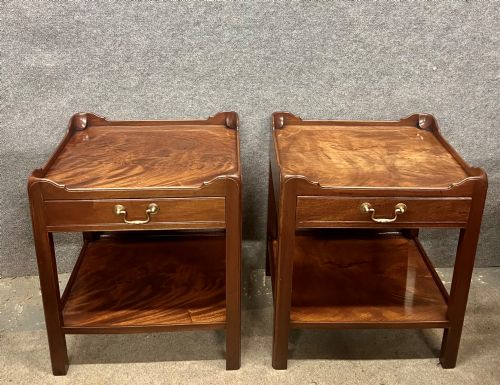
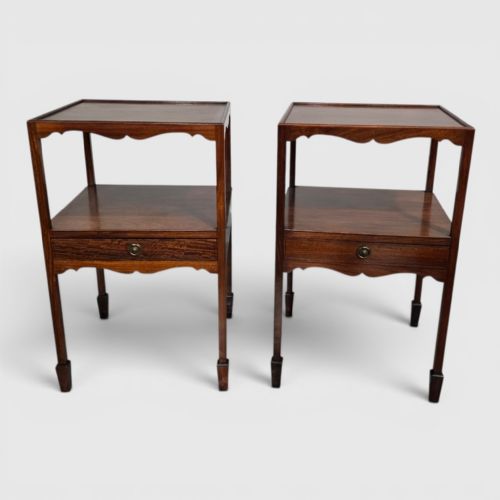
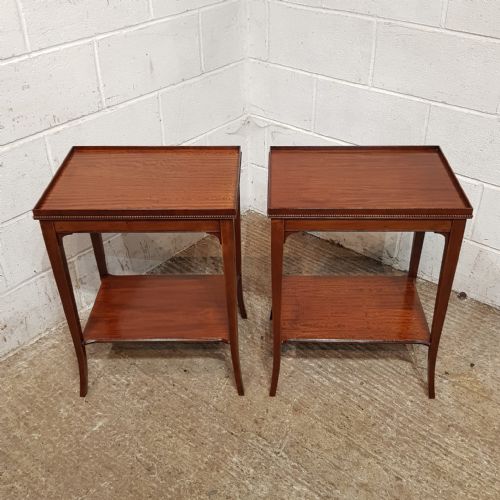
These bedroom side tables pair selections combine practical bedside storage with period character, offering matched bedside tables for symmetrical bedroom schemes.
Bedroom Side Tables Pair
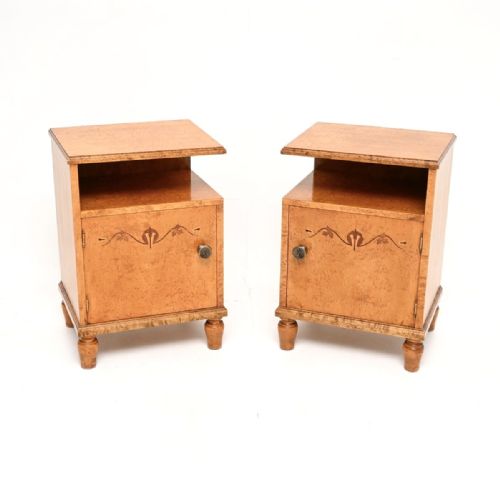
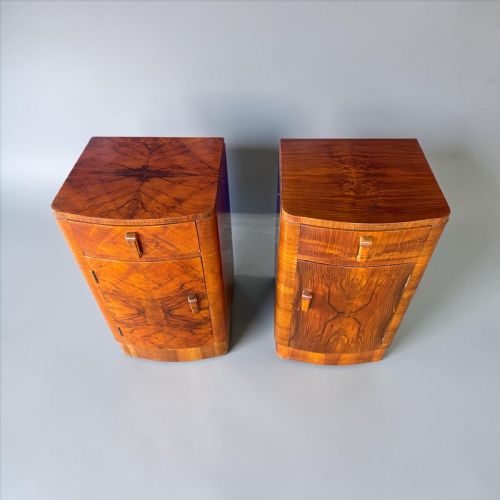
A bedroom side tables pair brings symmetry and matched proportions to either side of a bed, functioning as bedside cabinets, cupboards, or lamp tables. These matched duos emerge from periods spanning the Victorian and Edwardian eras through to Art Deco designs of the 1930s.
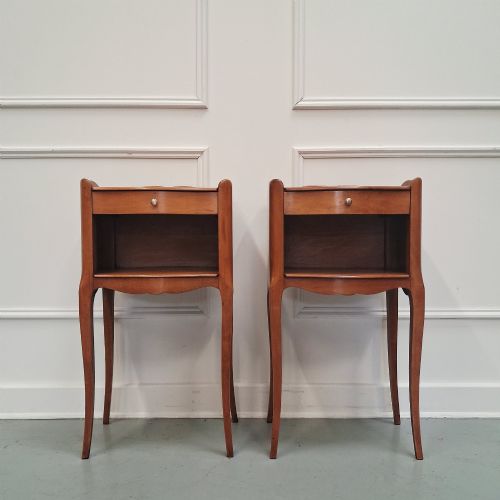
Buyers most frequently encounter matched sets in mahogany, walnut, or oak, often arranged as enclosed bedside cupboards with doors or small chests of drawers. French provincial and continental influences appear regularly alongside English cabinetmaking traditions.
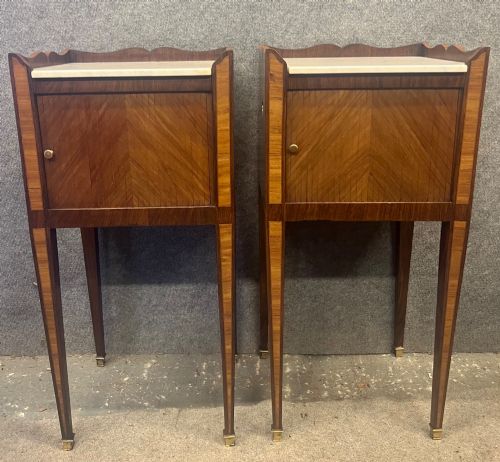
The form ranges from compact Edwardian lamp tables to elaborate marble-topped French chevets with marquetry inlay. Each matched pair provides balanced surface space and concealed storage tailored for nighttime use.
How they were made
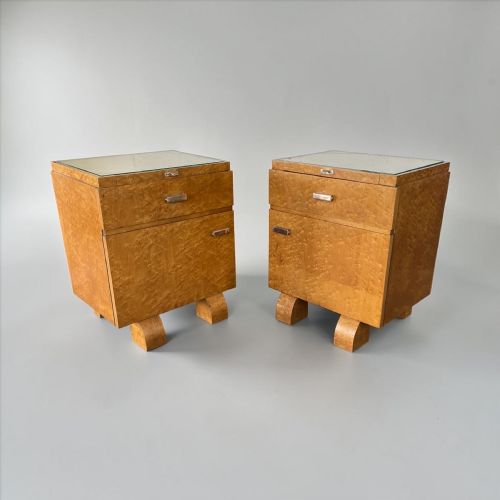
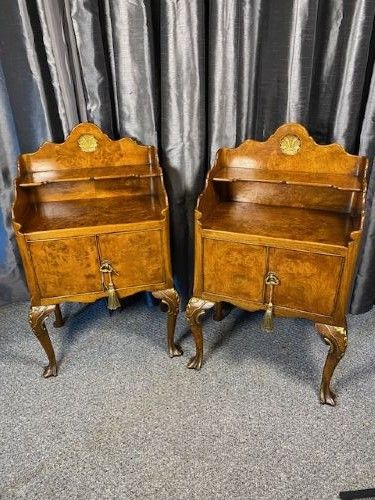
Cabinetmakers utilised dense timbers such as mahogany, walnut, and satinwood, frequently applying burr veneers to create striking grain patterns across door fronts and drawer panels. Brass handles, mounts, and galleries provide structural accents on many continental and English examples.
Marble tops appear on select French and continental tables, offering a durable and smooth surface above inlaid marquetry and fine joinery. Bleached oak and polished pine represent alternative regional finishes found across the selection.
Victorian pot cupboards were once strictly utilitarian nightstands, but today they happily hold novels and reading glasses instead.
What varies in quality
The standard of timber selection and veneer matching defines the visual appeal of a bedroom side tables pair, particularly when figured walnut or satinwood is employed. Superior examples display seamless grain continuity across both matching cabinets.
Fine craftsmanship shows in the precision of drawer construction, the integration of marquetry or inlay, and the retention of original brass hardware. The presence of fitted marble tops and intricate carved detailing distinguishes higher tier cabinetwork from simpler utilitarian pieces.
The Bedroom Side Tables Pair Glossary
- Chevet
- A French term for a bedside table or cabinet. These pieces typically feature a small cupboard or drawer beneath the top surface.
- Marquetry
- The art of applying decorative pieces of veneer to a structure to form intricate designs. This technique is common on French and revival-style cabinets.
- Satinwood
- A light-coloured, lustrous timber utilised for fine cabinetmaking during the Edwardian period and earlier centuries. It provides a pale, golden surface finish.
- Burr walnut
- A prized timber harvested from walnut tree growths, notable for its swirling grain patterns. It adds rich texture to Art Deco and early twentieth-century furniture fronts.
- Pot cupboard
- A traditional name for a bedside cabinet designed originally to house a chamber pot. These practical items now serve as standard bedside storage.
Bedroom Side Tables Pair: Frequently Asked Questions
How do I identify Art Deco tables?
Art Deco bedside tables typically date from the 1930s and display geometric lines, streamlined forms, and striking wood veneers. Burr walnut and satinwood are frequently utilised to highlight the modern aesthetic.
Unlike ornate Victorian or Edwardian pieces, these tables favour smooth surfaces and minimal carved ornamentation.
Are these tables always sold together?
Yes, the listings comprise matched pairs designed to sit symmetrically on either side of a bed. Sourcing two matching tables from the same period ensures uniform height and style.
Cabinetmakers constructed these pairs concurrently to maintain consistency in timber grain and proportions.
What materials were used?
Traditional timbers dominate the selection, with mahogany, walnut, oak, and satinwood appearing most frequently. Some continental pieces incorporate marble tops and intricate marquetry inlay.
Brass hardware and fittings add metallic contrast to the wooden structures across various Edwardian and French designs.
How do I clean marble tops?
Marble-topped bedside tables require gentle cleaning with a soft cloth and warm soapy water. Avoid acidic cleaners or abrasive scourers that can etch the polished stone surface.
Dry the marble thoroughly after wiping to maintain its natural lustre and protect the inlaid wooden frame below.