



Bed End Ottoman Bench
A bed end ottoman bench provides a practical seat and surface at the foot of a bed, drawing on historical forms from the nineteenth and twentieth centuries.
Bed End Ottoman Bench
A bed end ottoman bench serves multiple purposes in a bedroom, functioning as a seat while dressing or a low surface for textiles. The examples on this page span the Victorian era, the nineteenth century, and early twentieth century production.
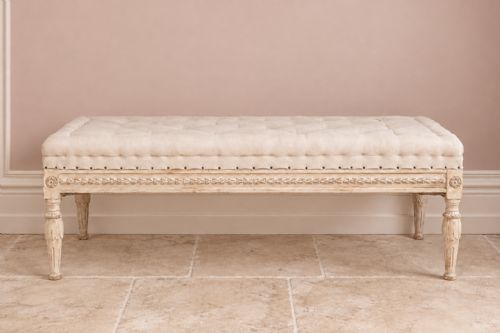
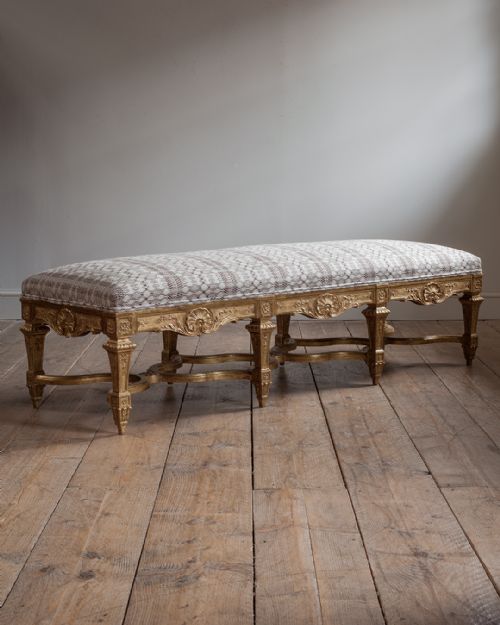
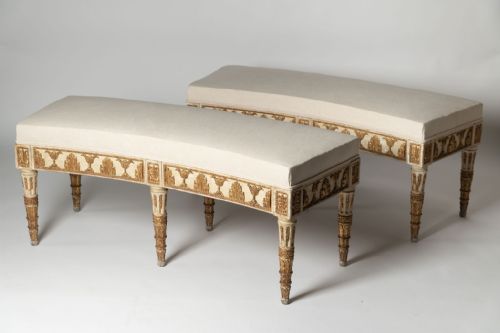
Makers drew on various historical styles including Louis XIV Revival, French Provincial, Regency, and Italian Neoclassical. These pieces often manifest as long stools, window seats, or deep buttoned ottomans designed to sit at the foot of a bed.
Construction forms vary from open framed window seats to solid mahogany or walnut frames and painted wood structures. Upholstery choices range from antique textiles to recent coverings in linen and velvet.
Materials and Construction
Frames rely on hardwoods such as mahogany, walnut, oak, and birch, selected for their structural strength. Carved details and turned legs demonstrate traditional joinery methods employed by period workshops.
Upholstered surfaces utilise traditional stuffing and deep buttoning techniques over sturdy foundations. Fabrics include linen, velvet, and patterned textiles secured with careful tension.
Bed End Ottoman Bench Retail Price Guide 2026
Typical asking prices for bed end ottoman bench among the pieces listed under this phrase on Sellingantiques today, from the lower quarter to the upper quarter. They describe what is for sale here now, not the wider market.
Upholstery materials seen across the collection include plain linen, patterned cotton, and deep buttoned velvet.
Quality and Craftsmanship
Superior pieces display crisp hand carving on the wooden frames, whether in the manner of Louis XIV Revival or English country house taste. The weight and selection of the timber dictate the longevity and presence of the furniture.
Upholstery standards differentiate fine examples, particularly where historical textile houses or specialist craftspeople have undertaken the recovery work. Proportions and the stability of the frame joints complete the assessment of quality.
Morris & Co.
The Bed End Ottoman Bench Glossary
- Window seat
- A long stool designed to fit within the recess of a window, often featuring upholstered padding and decorative legs. They share similar proportions with pieces used at the foot of a bed.
- Cabriole leg
- A furniture leg that curves outward and then tapers inward, finishing in a foot. This form appears frequently on eighteenth-century revival pieces.
- Giltwood
- Wood that has been coated with a thin layer of gold leaf. It is common on decorative seating from the nineteenth century.
- Deep buttoning
- An upholstery technique where buttons are pulled through the padding to create a geometric pattern of folds. This secures the filling and adds texture.
- Fluted leg
- A vertical column decorated with parallel shallow grooves. This classical detail appears on the legs of various nineteenth-century benches.
Bed End Ottoman Bench: Frequently Asked Questions
Where should I place a bed end ottoman bench?
These benches sit naturally at the foot of a bed to provide a convenient seat for putting on shoes or laying out garments. They also work well placed against a bedroom wall or beneath a window.
Their elongated proportions ensure they do not obstruct movement while offering useful surface area in smaller or larger rooms.
How do I choose the right upholstery?
Consider how the bench will be used daily when selecting fabric durability and texture. Linen and velvet offer different tactile qualities that complement period woodwork and surrounding bedroom textiles.
Many pieces feature recent professional reupholstery using established designer fabrics, combining antique frames with modern interior requirements.
How can I date a wooden bench?
Dating relies on observing the timber species, joinery methods, and stylistic cues borrowed from periods like the Regency or Victorian eras. Secondary woods and tool marks often reveal the manufacturing era.
Design revivals mean that a nineteenth-century piece may imitate seventeenth-century styles, so construction details remain the primary guide.