



French Dressing Table Bench
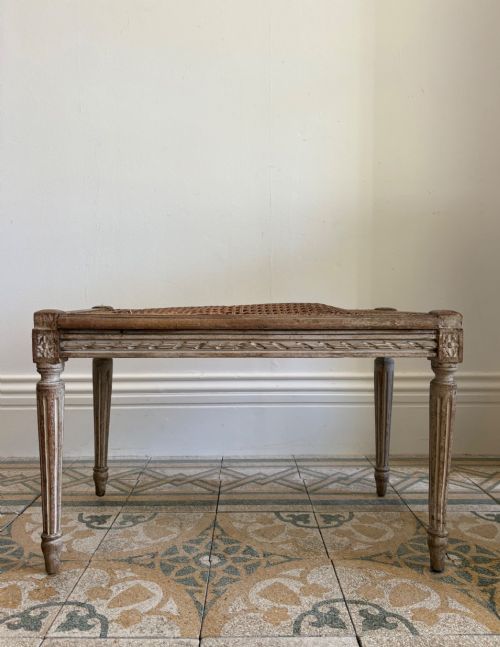
A french dressing table bench offers low seating built across the nineteenth and twentieth centuries in mahogany, giltwood, and painted finishes.
French Dressing Table Bench
A french dressing table bench brings decorative seating to a bedroom or dressing area, appearing as stools, footstools, long stools, and window seats. When searching for a french dressing table bench, buyers encounter pieces spanning the Victorian period through to the nineteen thirties.
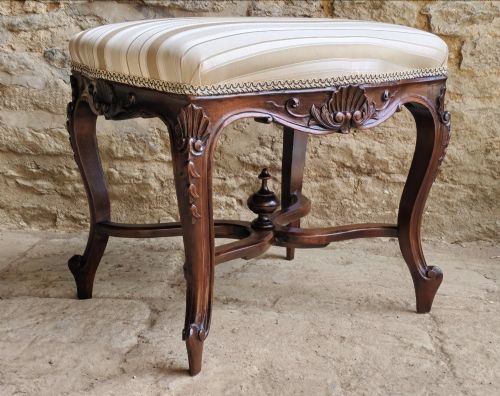
The designs draw heavily on continental aesthetics, with Louis XV style, Louis XVI style, Rococo Revival, and Grand Regency forms appearing across the selection. Stools and benches form the core of what is available, executed in mahogany, gesso, painted wood, and giltwood.
Origins vary between British interpretations of continental styles and pieces directly adopting French decorative schemes. Makers and craftsmen utilised established revival vocabularies, producing low seating upholstered in fabric, velvet, and linen.
How they were made
Construction relies upon solid timbers like mahogany alongside softer painted woods, shaped to support cabriole legs and decorative frames. Giltwood and gesso applications provide the metallic surface finishes seen on revival pieces.
Upholstery techniques complete the forms, employing fabrics such as velvet, linen, and standard textiles secured over padded seat bases. Structural framing often incorporates carved detailing aligned with Rococo and neoclassical design principles.
French Dressing Table Bench Retail Price Guide 2026
Typical asking prices for french dressing table bench among the pieces listed under this phrase on Sellingantiques today, from the lower quarter to the upper quarter. They describe what is for sale here now, not the wider market.
Several benches arrive paired, proving that even eighteenth-century French royalty occasionally needed a spare seat for a friend.
What varies in quality
The refinement of the carved wood and the crispness of the giltwood or painted finish separate standard workshop output from finer examples. Heavier timber frames in mahogany display deeper joinery and more substantial proportions than lighter variants.
Upholstery execution and the retention of original surface treatments dictate the visual success of each piece. Stylistic adherence to Louis XV or Louis XVI proportioning distinguishes superior revival pieces from simpler vernacular stools.
The French Dressing Table Bench Glossary
- Cabriole leg
- A furniture leg that curves outward and then tapers inward, mimicking an animal's leg. This form is common on Rococo and Louis XV style pieces.
- Giltwood
- Wood that has been covered with a thin layer of gold leaf or gilt. It provides a reflective, ornate surface finish on revival furniture.
- Gesso
- A plaster-like mixture applied to wood surfaces to prepare them for painting or gilding. It allows for crisp, built-up decorative relief details.
- Rococo Revival
- A nineteenth-century design movement that revives the ornate, asymmetrical scrolling forms of the eighteenth-century French Rococo period.
French Dressing Table Bench: Frequently Asked Questions
What is a french dressing table bench?
A french dressing table bench is a low seat designed for use at a dressing table or vanity, typically taking the form of an upholstered stool or small bench.
These pieces often feature revival styling from the nineteenth or early twentieth centuries, incorporating carved wooden frames and fabric or velvet upholstery.
How do I date a french dressing table bench?
Dating relies on examining the timber, construction methods, and stylistic indicators such as whether the piece follows a Victorian, Regency, or specific French revival aesthetic.
Evidence shows pieces spanning from the mid-nineteenth century up to the nineteen thirties, identified through wood types like mahogany and surface finishes like gesso.
What materials are used for these benches?
The frames are constructed from woods including mahogany, painted timber, and giltwood, sometimes enhanced with gesso relief decoration.
Seats are upholstered using materials such as velvet, linen, and standard woven fabrics to provide a cushioned surface.
Where should I place a dressing table bench?
These benches are proportioned for placement in bedrooms, dressing rooms, or beneath windows as low seating options.
Their compact forms and decorative frames allow them to function as footstools or standalone accent pieces alongside dressing tables.