





Vintage French Window Seat
A vintage french window seat offers a low profile and long proportions, providing a graceful perch beneath a casement.
Vintage French Window Seat
A vintage french window seat brings together low-slung seating forms such as day beds, long stools, and banquettes spanning the nineteenth and twentieth centuries. These pieces appear in styles ranging from French Chateau and Louis XV to Victorian and Edwardian Neoclassical Revival, often functioning as dual-purpose coffee tables or long stools.
The materials recorded across these listings include painted wood, beech, mahogany, and walnut, frequently paired with woven cane, brass, and textile upholstery like tapestry and linen. Forms extend from curule stools and duet stools to larger settees, reflecting origins in French Provincial, Régence, and Italian workshops.
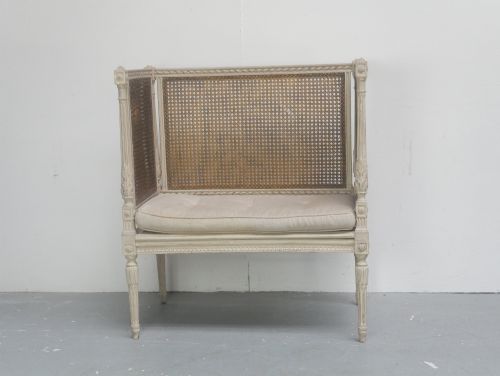
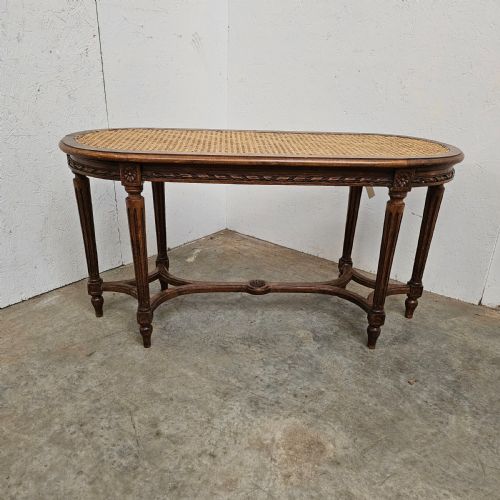
Pieces from this selection showcase varied silhouettes, including small canework couches and carved wooden frames dating from eighteen hundred up to nineteen thirty. The proportions remain tailored for placement in light-filled alcoves or at the foot of a bed.
Construction and Materials
Frames are constructed from hardwoods such as beech, walnut, and mahogany, carved with decorative motifs and assembled to support long horizontal spans. Painted and ebonised surface treatments often accompany gilded highlights on these wooden structures.
Seating surfaces utilise traditional methods combining cane work, tapestries, fabric upholstery, and linen. Brass details occasionally appear as structural or decorative accents on the frames.
Vintage French Window Seat Retail Price Guide 2026
Typical asking prices for vintage french window seat among the pieces listed under this phrase on Sellingantiques today, from the lower quarter to the upper quarter. They describe what is for sale here now, not the wider market.
One listed window seat doubles quite happily as a magazine table, proving ancestors were just as keen on clutter.
Assessing Quality and Execution
The crispness of the hand-carved wood ornamentation separates standard production from finer examples, particularly where floral or scrolling motifs adorn the beech or walnut frames. Heavier timber selection in structures like large mahogany stools indicates a higher grade of manufacture.
The tightness and regularity of the cane work or the complexity of the tapestry seat upholstery dictate the standard of the finish. Original surface treatments, such as early painted or gilded layers, retain greater integrity than later repainting.
The Vintage French Window Seat Glossary
- Banquette
- An upholstered bench or long seat, often with arms or a backrest, designed for domestic interiors.
- Curule stool
- An ancient Roman-derived form featuring X-shaped intersecting legs, frequently executed in gilded wood during later periods.
- Canework
- Woven rattan or cane material forming flexible seating or back panels within a rigid wooden frame.
- Ebonised
- Wood treated with a dark finish to imitate the appearance of ebony.
Vintage French Window Seat: Frequently Asked Questions
How do I use a window seat?
These pieces fit naturally beneath low casement windows, providing a comfortable place to sit or read.
They also function effectively as long stools or coffee tables in living spaces.
What periods do these seats cover?
The pieces span from the early nineteenth century through to the 1930s.
Various regional styles, including French Régence and Edwardian revivals, appear within this timeframe.
What materials are common?
Beech, walnut, and mahogany form the primary wooden structures of these seats.
Surfaces are frequently enhanced with cane panels, painted finishes, fabric upholstery, and tapestry.
Are these pieces strictly French?
While many pieces reflect French provincial and chateau styles, the selection also includes English and Italian examples.
Design influences range across Victorian and Edwardian Neoclassical revivals.