

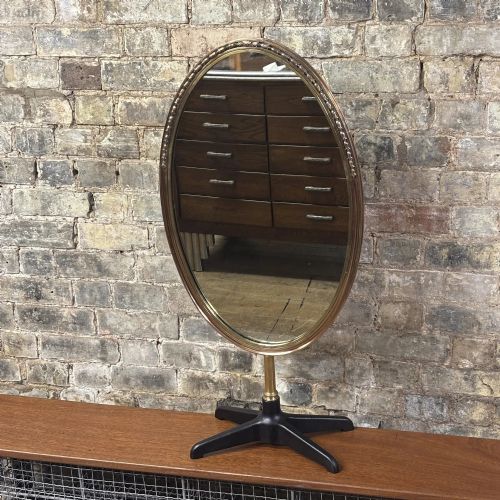
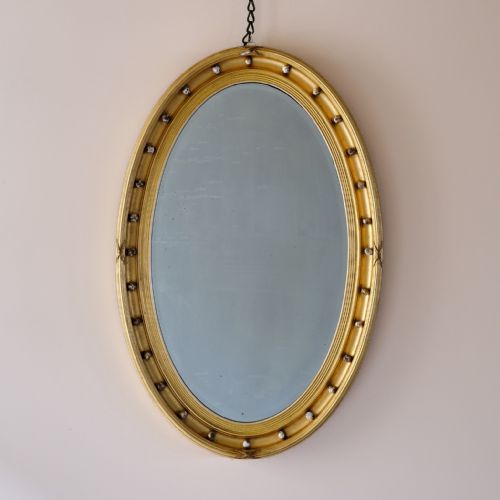


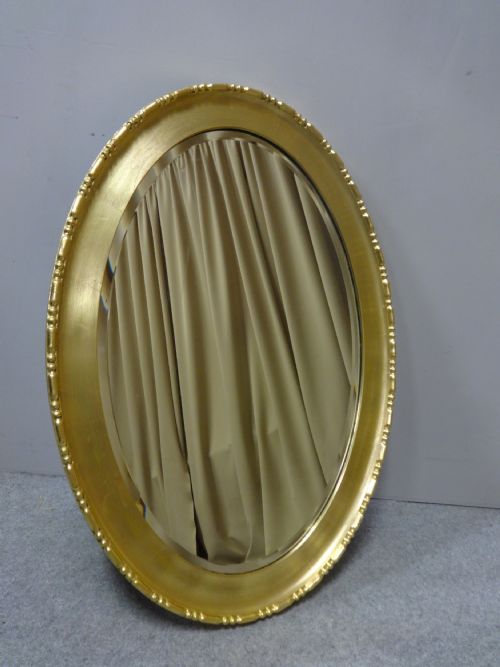
Beaded Oval Mirror
These beaded oval mirror pieces offer distinct decorative presence, bringing classic shapes and reflective light to any interior wall.
Beaded Oval Mirror
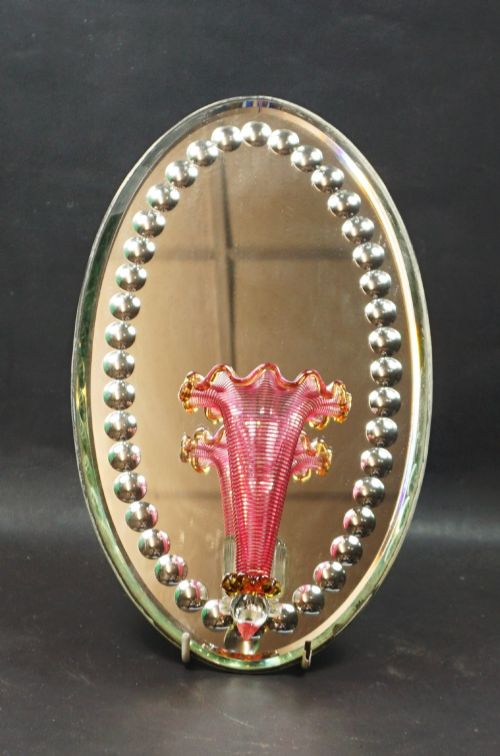
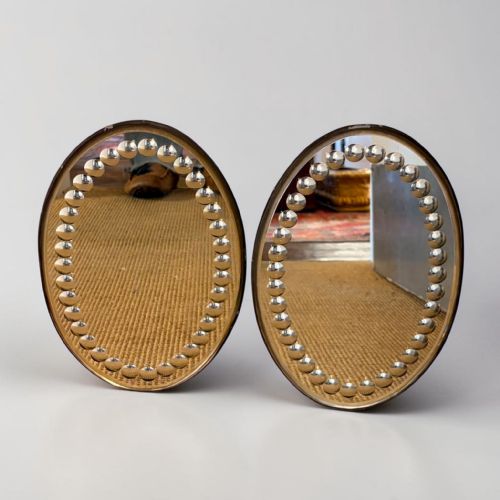
A beaded oval mirror combines a curved frame shape with small decorative relief details along the edge, appearing across Victorian, Edwardian, and Regency periods. These wall mirrors and dressing mirrors serve both functional and ornamental purposes in domestic spaces.
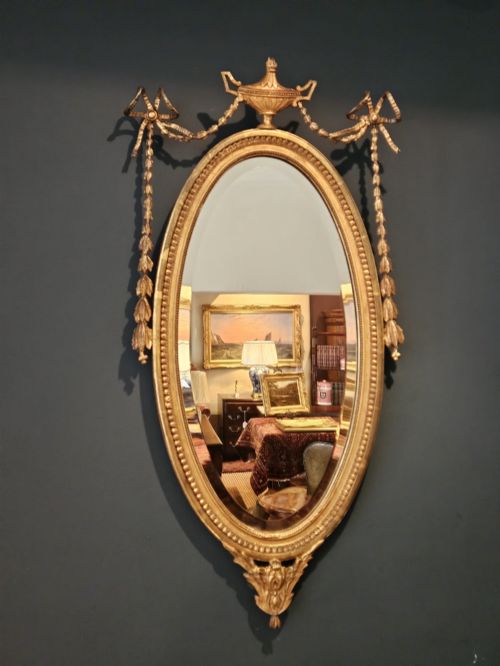
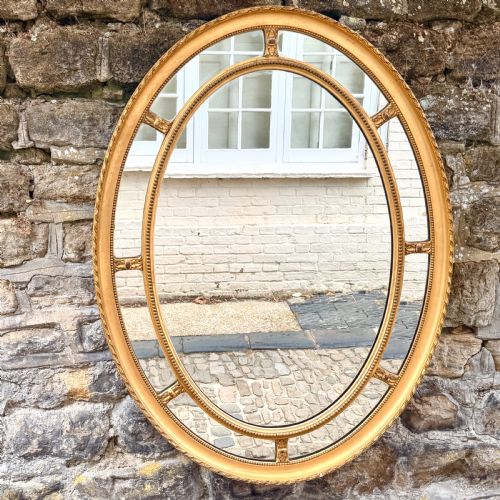
The selection ranges from miniature giltwood examples to large nineteenth-century frames finished in gold leaf or composition. Most specimens rely on traditional oval formats, occasionally incorporating brass supports or carved floral motifs alongside the distinct beaded edging.
How they were made
Frames typically utilise wood, gesso, and composition moulded into decorative profiles and finished with gold leaf or gilding. Glass panels are set within these constructed structures, sometimes supported by brass elements or cast iron components.
Makers applied gesso and composition over wooden substrates to build up the intricate relief patterns, including the characteristic beadwork. Gilding was then applied to the prepared surfaces to achieve the bright metallic finish seen on many period examples.
Beaded Oval Mirror Retail Price Guide 2026
Typical asking prices for beaded oval mirror among the pieces listed under this phrase on Sellingantiques today, from the lower quarter to the upper quarter. They describe what is for sale here now, not the wider market.
The listings span multiple periods, featuring materials such as giltwood, gesso, brass, glass, and cast iron across various wall and dressing mirror formats.
What varies in quality
The definition and crispness of the moulded beadwork and carved details distinguish finer examples from simpler production. Workmanship in the application of gold leaf and the handling of the underlying gesso shape the overall visual depth of the frame.
The integration of the glass within the wooden or gilt frame structure reflects the standard of original construction. Superior pieces maintain harmonious proportions between the central mirror plate and the surrounding decorative border.
The Beaded Oval Mirror Glossary
- Giltwood
- Wood that has been coated with gold leaf or a gold-coloured finish. This material appears frequently across nineteenth-century frames.
- Gesso
- A plaster-like mixture applied to wood frames to create a smooth surface for carving or moulding details. It forms the base for subsequent gilding.
- Composition
- A moulded mixture of materials such as chalk, resin, and oil used to create relief ornamentation. It allowed makers to produce repetitive decorative motifs efficiently.
- Cheval mirror
- A freestanding dressing mirror suspended in a frame that allows it to tilt. These pieces often include supporting uprights set on castors.
Beaded Oval Mirror: Frequently Asked Questions
How do I hang a heavy gilt mirror safely?
Heavy giltwood frames require secure fixings anchored directly into wall studs or appropriate masonry fixings.
Professional mirror hangers often utilise heavy-duty D-rings and steel wire rated well above the weight of the specific frame to ensure long-term stability.
Are these mirrors suitable for bathrooms?
Period frames finished with gesso, gold leaf, or exposed wood are sensitive to high moisture environments. Steam and humidity can damage the gilt surface and cause the underlying composition to soften.
Dry interior rooms such as hallways, living spaces, and bedrooms provide a more stable environment for these antiques.
How should I clean the glass and frame?
Dust the gilt or wooden frame gently with a dry, soft brush to remove surface particles without disturbing the finish. Avoid using liquid cleaners directly on the frame.
Apply a mild glass cleaner to a cloth rather than the mirror itself when wiping the glass, preventing moisture from seeping behind the plate.
How do I identify the period of the frame?
Examine the construction methods visible on the reverse of the wood, along with the specific styling of the gilt and gesso ornaments. Regency and Victorian frames often display different moulding profiles and joinery techniques.
Archival examples show that Edwardian pieces occasionally feature mahogany or specific bevel edge treatments that help distinguish them from earlier nineteenth-century items.