

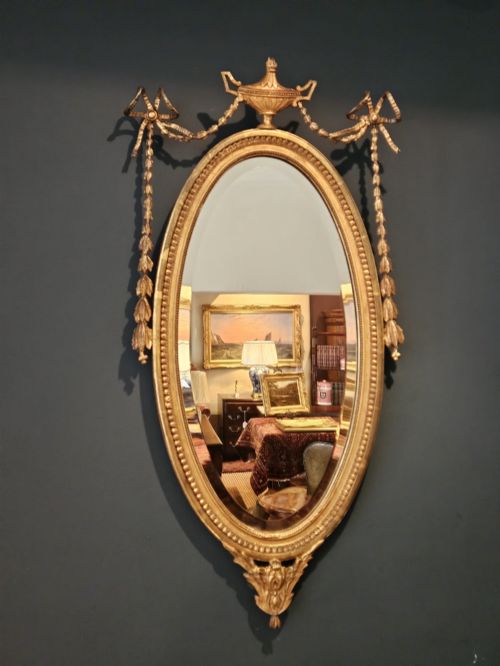
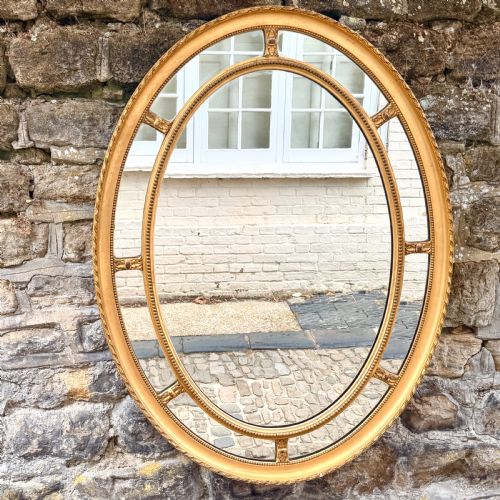

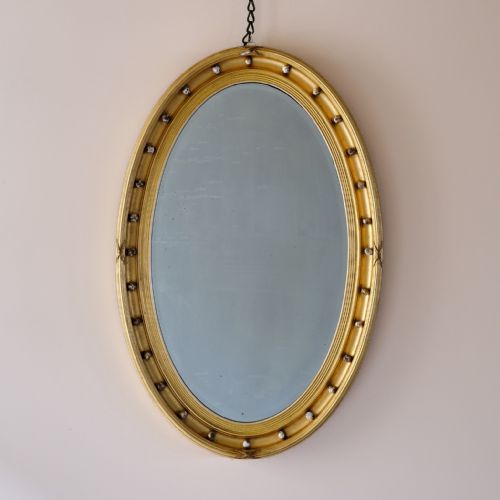


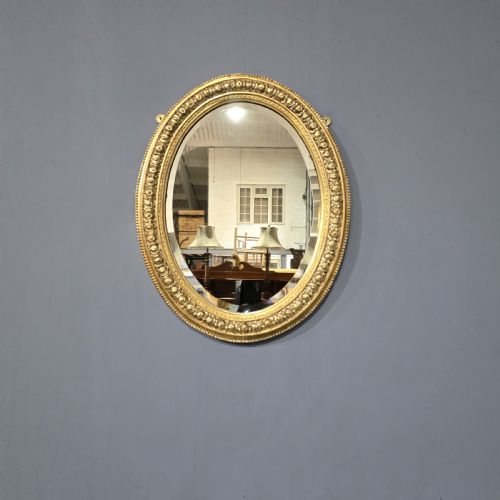


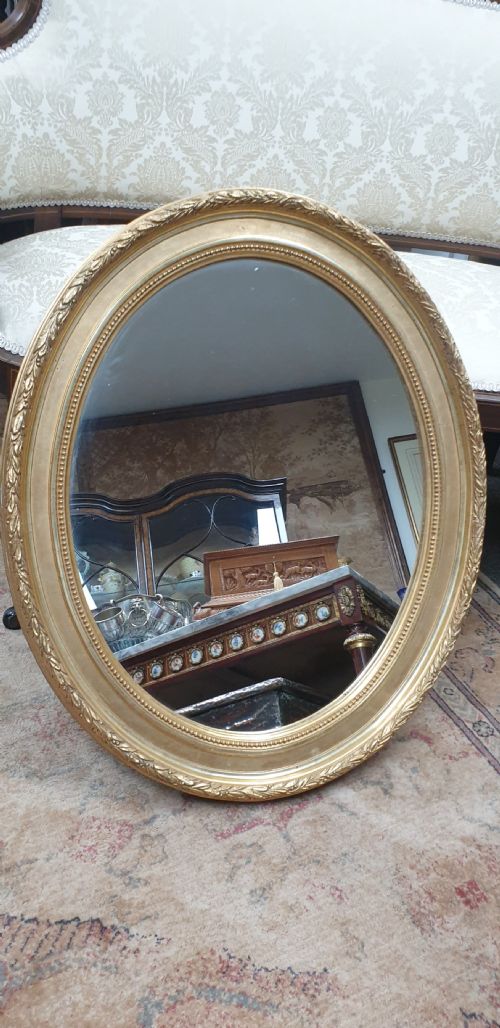

Beaded Gilt Oval Mirror
A beaded gilt oval mirror brings warmth and a sense of proportion to a room, catching the light in a way few other wall hangings manage.
Beaded Gilt Oval Mirror
When you search for a beaded gilt oval mirror, you are looking at wall mirrors defined by curved wooden frames and gilded surfaces, often decorated with small carved or moulded beads along the inner or outer edge. These pieces span from the Regency and Victorian eras through to the Edwardian period and the early twentieth century, taking forms ranging from modest domestic pieces to grander French Neoclassical examples.
The most common examples on this page date from the Victorian period, alongside Edwardian interpretations and earlier Regency or Georgian designs. Wall mirrors of this shape suit spaces above mantelpieces or console tables, where the curved frame softens straight architectural lines.
How they were made
Makers formed these frames from wood or composition material, applying gesso to create smooth surfaces before laying down gold leaf or gilt finish. The beaded decoration was either carved directly into the timber or moulded in composition and applied to the frame before gilding.
Mirrors from the nineteenth and early twentieth centuries utilised silvered glass plates set within the prepared frames, secured at the back with timber backing boards. The interaction between the metallic leaf and the gesso ground produces the characteristic luminous finish seen on these pieces.
Beaded Gilt Oval Mirror Retail Price Guide 2026
Typical asking prices for beaded gilt oval mirror among the pieces listed under this phrase on Sellingantiques today, from the lower quarter to the upper quarter. They describe what is for sale here now, not the wider market.
Object types catalogued here consist entirely of wall mirrors and decorative mirrors framed in gilt.
What varies in quality
The distinction between standard and superior pieces rests on the crispness of the framing and the quality of the gilding. Hand-carved giltwood displays sharper definition in the beaded ornament and foliage compared to moulded composition frames.
Condition of the glass and the original surface plays a major role in the standing of a piece. Retaining the original gilding and untouched mirror plate elevates an example above one that has undergone heavy restoration or re-gilding.
The Beaded Gilt Oval Mirror Glossary
- Giltwood
- Wood that has been coated in gold leaf or a gilt finish. This material forms the primary structure of many finer antique frames.
- Gesso
- A plaster-like mixture applied to wood frames to create a smooth surface for gilding. It allows for intricate relief details such as beaded borders.
- Composition
- A moulded mixture of whiting, resin, and oil pressed into shape. Makers utilised it as a cost-effective alternative to hand-carved wood ornamentation.
- Girandole
- A wall mirror featuring attached candle sconces. These pieces reflect candlelight to increase illumination in a room.
Beaded Gilt Oval Mirror: Frequently Asked Questions
How do I hang a heavy antique mirror?
These wall mirrors require secure fixings screwed directly into wall studs or heavy-duty masonry anchors. Professional hanging hardware ensures the weight distributes safely without straining the antique frame.
Checking the stability of the mirror plate and the backing boards before hanging protects both the piece and the wall.
Are these mirrors original to their glass?
Many retain their original mirror plates, which often display light foxing, minor silver loss, or tiny age spots. These natural signs of ageing confirm the age of the piece.
Replacement glass does appear on some examples, particularly where safety or severe degradation required an update during the twentieth century.
Which period does my oval mirror belong to?
Regency and Georgian examples often show sharper Neoclassical detailing, while Victorian pieces tend towards heavier moulded gesso decoration. Edwardian and early twentieth-century versions frequently present lighter, simpler frames.
Examining the construction of the timber backing and the composition of the gesso helps narrow down the decade of manufacture.