
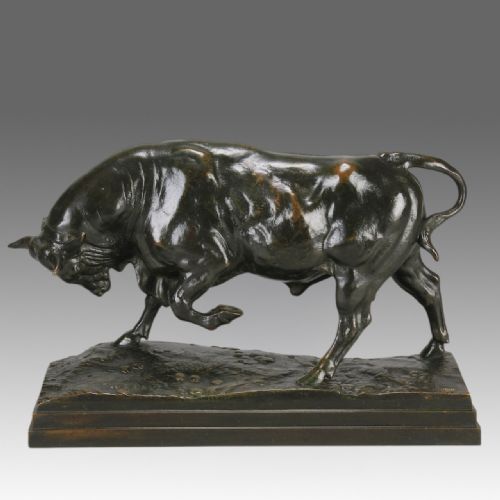
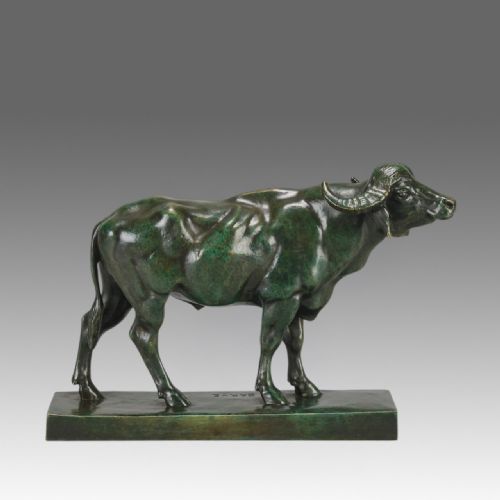
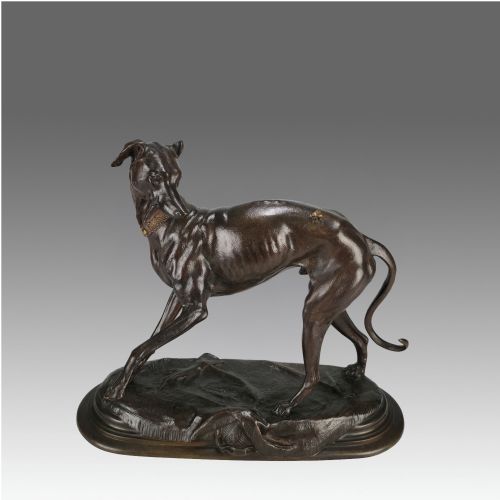


Barye Bronze Animalier
These barye bronze animalier pieces capture the tension and muscle of wildlife through nineteenth-century French foundry work.
Barye Bronze Animalier
When you search for barye bronze animalier, you encounter nineteenth-century French sculptures depicting wild and domestic animals in realistic poses. These pieces typically take the form of bulls, storks, deer, birds of prey, and large cats.
The objects on this page span the Victorian era and the mid to late nineteenth century, reaching into the early twentieth century. Most examples present individual creatures cast in bronze, frequently mounted upon a marble or timber base.
French animalier works from this tradition range from studies of reclining does to stalking jaguars and resting hounds. The sculptures originate primarily from French makers working in the animalier style during the eighteen-fifties through the eighteen-seventies and beyond.
Casting and Patination
Foundries produced these sculptures using bronze, applying chemical treatments to achieve dark patinas or gilding the metal surfaces. Selected pieces combine patinated bronze with marble or timber mounts to anchor the animal figures.
Foundries such as Barbedienne managed the casting process for works by Antoine Louis Barye and related sculptors. Skilled hands chased and finished the raw bronze surfaces to accentuate fur, feathers, and anatomical structure before applying the final patina.
Storks balanced on turtles rub shoulders with King Charles spaniels and marching jaguars across the foundry floor.
Sculptural Quality
The crispness of the chasing across musculature and fur determines the visual strength of the cast. Weaker examples lose anatomical detail where the foundry cleaned the metal too aggressively.
The depth and richness of the dark patina or gilt surface alter the presence of the animal. Finer castings retain subtle tonal shifts across the bronze rather than a flat, uniform colour.
Antoine Louis Barye·Alfred Barye·Barbedienne
The Barye Bronze Animalier Glossary
- Animalier
- A nineteenth-century artistic genre dedicated primarily to the realistic portrayal of animals. Sculptors in this movement focused on anatomical accuracy and natural behaviour.
- Patina
- The surface coloration and finish achieved through chemical treatment of the bronze. This layer protects the metal while defining the visual tone of the sculpture.
- Ormolu
- Gilded bronze produced by applying a mercury-gold amalgam to the metal surface. The technique creates a bright, durable golden finish found on select decorative bronzes.
- Cast
- The physical metal object produced by pouring molten bronze into a mould. Foundry marks often indicate the workshop responsible for this process.
Barye Bronze Animalier: Frequently Asked Questions
How do I identify an authentic casting?
Examine the sharpness of the fur and muscle definition across the bronze surface. Finer casts display crisp chisel work and deliberate handling of the metal.
Check the underside and base for foundry stamps or signature marks. Workshops like Barbedienne and makers such as Barye left distinct signatures on their editions.
What materials were used for these sculptures?
Sculptors utilised bronze as the primary medium, finished with dark patinas or applied gilding. Many figures are mounted on marble or timber bases.
The combination of patinated bronze and stone provides stability and contrast for the animal subjects. Bases vary from simple timber blocks to polished marble slabs.
Where were these pieces made?
These sculptures originated in France during the nineteenth century. Parisian foundries executed the casts for leading animalier artists.
The French animalier school flourished through the Victorian period, producing realistic studies of native and exotic fauna for domestic display.
How should I care for a bronze animalier?
Dust the bronze gently with a soft, dry cloth to prevent accumulation in the crevices of the chasing. Avoid using chemical cleaners or polishes that might strip the original patina.
Keep the sculpture away from direct sunlight and excessive moisture to protect both the metal surface and any timber or marble base.